Friday, November 11, 2011

(today's zomby) AND IT'S A LIZ PHAIR KIND OF DAY...


Ah, Nevada... America's navel, forever collecting the bellybutton lint of society.

Fun fact! Each Zomby cartoon takes about a minute (or less) to write but about 20 minutes to "compose" in Microsoft Paint. It used to take much less time, but the Houston Chronicle website -- my reliable source for nice black-and-white Ziggy cartoons -- started posting grainier, lower-quality scans on its comics page a few months ago, so I can't just click on Ziggy and turn him gray anymore. I have to "paint" him gray, pixel by tedious pixel.

And speaking of the creative process:

Liz Phair at her peak.

This rather bleak, late fall day has put me in the mood for Liz Phair.

The music you're supposed to love the most is whatever was popular while you were in high school. That's not true in my case. The music of the 1990s does not resonate very strongly with me in 2011. I have no real desire to revisit New Jack Swing, for instance, and I largely skipped out on the "alternative rock" boom. I don't have any real nostalgia for that "college rock" stuff, which mostly seemed mopey and defeatist to me. Give me Chuck Berry or Little Richard over grunge any day! But I do make occasional exceptions.

I'm not sure exactly why Liz Phair caught me off-guard in 1994 with her album Exile in Guyville. It was as mopey and defeatist as most of the music I was so actively avoiding back then. But something about the album's lead-off single, "Never Said," must have grabbed me enough to make me go buy the CD, and the entire Exile album remains a favorite of mine today. This will sound perverse, but I get the same feeling from listening to Exile in Guyville as I get from reading Peanuts. Liz Phair's music is about misery, depression, and cynicism, but it doesn't come off as miserable, depressing, or cynical somehow. It's a winning kind of glumness. It's exuberant misery, if you will. I like to think that Exile on Guyville is the album that the Peanuts kids would be listening to if they were jaded college students experimenting with sex and drugs for the first time in their lives. I'm sure that the album would be in the CD collection that Peppermint Patty and Marcie must share, and there's a particular line from "Never Said" which sounds like it could have come directly from my favorite Peanuts character, Lucy Van Pelt: "So don't look at me sideways. Don't even look me straight on."

Lucy Van Pelt, a budding Liz Phair fan

Anyway, here's "Never Said." Hope you enjoy it:


Of course, for a teenage me, Exile in Guyville was also an introduction to a world of sexual frankness which I had not previously known, especially not in music. Here is the album's best and probably best-known track. This song garnered a lot of attention for its casual use of profanities, but there's a sweet, wounded romanticism in it, too. When she sings, "I want all that stupid old shit, like letters and sodas," Liz Phair really does sound like the female Charlie Brown of rock.


Unfortunately, I -- and many others -- didn't really keep up with Liz Phair's career. Certainly, by the time she put out a record called whitechocolatespaceegg, I had long since tuned out. Her recent, much poppier music has gotten embarrassingly bad reviews, even from such notoriously softball sources as Rolling Stone. But I do have a soft spot for some of Liz's post-Exile work, like the title track from her little-loved sophomore album:


Thursday, November 10, 2011

(today's zomby) AND JERRY MATHERS AS THE BEAVER!


And speaking of unreported atrocities:

Jerry Mathers, Atlantic recording artist

Jerry Mathers, star of TV's Leave It To Beaver (a show I dearly love), is hardly the first or last celebrity to do a misguided cash-in pop record. But his ill-fated attempt at Top 40 stardom certainly qualifies as one of the most unusual of its kind. In 1962, when Beaver was nearing the end of its long run, Mathers cut a single for Atlantic Records, a label which was home to many of the all-time greats of soul music. What Beaver Cleaver was doing there is anyone's guess. And yet, his 45 RPM record of "Don't Cha Cry" b/w "Wind Up Toy" definitely exists.

The A-side is nothing special, just a drippy teen ballad. It's the B-side which has become a curiosity among collectors. At least vocally, "Wind Up Toy" sounds like a prototype for the punk music of the late 1970s. Mathers "sings" strictly through his nose and affects a kind of growling, snarling delivery throughout the song. Believe it or not, Jerry Mathers reminds me a lot of Johnny Rotten on this record! Throw in a persistent "ratchet" sound effect in the arrangement, and this makes for a very unusual record indeed.

First, here's the dull A-side, "Don't Cha Cry":


Snoozers, right? But here's "Wind-Up Toy":


Uh... yeah. Sure, Jerry.

Wednesday, November 9, 2011

(today's zomby) PLUS EDDIE MURPHY, JOE PISCOPO, AND MOZART


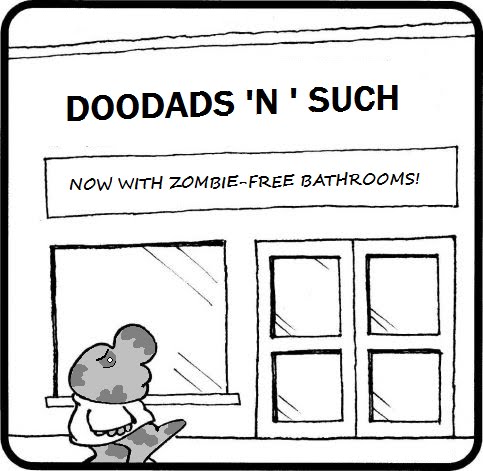
This is basically a reference to Zombieland. Those who have seen that movie will know why Doodads 'n' Such is making that promise.

And speaking of cultural references...

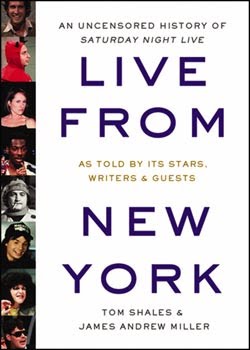
Not long ago, I read Doug Hill and Jeffrey Weingrad's fascinating 1985 book about the backstage history of Saturday Night Live, and it inspired to me to read another book on that very same topic. I'm currently about halfway through Live From New York: An Uncensored History of Saturday Night Live by Tom Shales and James Andrew Miller. The Shales/Miller book came out in 2002, about 17 years after the Hill/Weingrad book, and is therefore able to cover about 17 more seasons of SNL history. The first book ends just as producer/creator Lorne Michaels was returning to the show after a five-year absence. Lorne's been running the show ever since, of course. Of the two books, though, I'd say that Backstage History is actually a better, more compelling read than Uncensored History even though the latter covers more ground. The first book takes a tougher, more journalistic approach to the subject matter, while the Shales/Miller book is -- in the author's own words -- a "tribute" to SNL and Lorne Michaels, warts and all. Even so, both books contain a lot of dirt about the venerable late-night show, and in the latter book I found this great quote by SNL writer Bernie Blaustein describing the relationship between Eddie Murphy and Joe Piscopo. Piscopo and Murphy were the only two cast members who survived the show's disastrous 1980 season, and they became friends in real life and frequent comedic partners on the show until Eddie Murphy's ascent into superstardom changed their dynamic.
I think it was hard for Joe. It was hard for both of them. I think when Joe saw Eddie eclipsing him tremendously, it was hard. The relationship changes. They're no longer equals. Joe was a really good impressionist. He worked really hard on mannerisms, to get an impression down. And Eddie would then just be able to do that same impression -- boom -- like that.
That quote really struck me, because it reminded me so much of one of my very favorite movies, Milos Forman's 1984 Oscar winner Amadeus, which coincidentally was made right around the time that Eddie Murphy was becoming a Hollywood superstar. Amadeus is probably the best movie ever made about the creative process and professional jealousy. Please, please go read Roger Ebert's 2002 essay about it. (Wow, Ebert's essay came out the same year as that second SNL book. Freaky.) Anyway, I'd like to show you my very favorite scene from Forman's film, one which perfectly captures the relationship between Salieri and Mozart. As Ebert points out, Salieri makes composing look so difficult, while Mozart makes it look like a game:


PLEASE NOTE: I am well aware that Amadeus is mostly fictional. Its truths about the creative process are universal nevertheless. One might say that the movie fictionalizes in the interest of a greater truth.


Tuesday, November 8, 2011

(today's zomby) AND ME AS ASCII ART!


The zombie backlash is spreading, folks. One more zombie-based TV series, and God Himself may register His fatigue with the living impaired.

One of the (many) problems with being Zomby -- or Ziggy, for that matter -- is that basically anyone can tell you to your face that you suck. People always say that they hate it when others talk about them behind their backs, but let's face it. Isn't the alternative actually worse? Would you really want people to feel comfortable striding up to you with their complaints and criticism?

But enough of that! Here's an ASCII art portrait of yours truly:


I look positively dashing, wouldn't you say?

And you, too, can have your very own ASCII portrait by visiting this clever little site!

P.S. - You would think there would be more zombie-related ASCII art out there, but one of the few examples I found was this mousepad:


If you're interested, you can buy the mousepad here. Are you interested?

Monday, November 7, 2011

(today's zomby) AND KAMARR, THE DISCOUNT MAGICIAN!


This Zomby!!! cartoon has put me in a nostalgic mood. In particular, the reference to Kmart made me think of one of my favorite recurring guests on Late Night With David Letterman.

Ladies and gentlemen, I give you... KAMARR, THE DISCOUNT MAGICIAN!


And, yes, Kamarr is still at it! In addition to his many appearances on Dave's NBC talk show in the 1980s, the Greek-born illusionist appeared in such films as Ishtar and Scenes from a Mall. Although the "discount magician" nickname was a joke on Dave's part, it seems like it's actually become Kamarr's destiny. His website mentions that the magician is willing to scale back his act to fit your budget.

Interested? Why not book Kamarr the Discount Magician for your next event?

Sunday, November 6, 2011

(today's zomby) AND A CLOWN'S DOG BRINGS ON THE APOCALYPSE!


Attention alien creatures: Raising the dead and using them as muscle to conquer the earth is not, has never been, and will never be a good idea. It's time for Plan 10.

But speaking of controlling the earth:

Max Fleischer with Koko the Clown

Koko's Earth Control (1928), produced by those lunatic pioneers of animation Max and Dave Fleischer, is a cartoon that both captivated me and freaked me the hell out when I was a little kid. All these years later, it's still quite a bizarre piece of work. A clown (Koko) and his dog (Fitz) bring about catastrophic weather and other surreal calamities on Earth by pressing some buttons and pulling levers in a mysterious temple ominously labelled Control of Earth.

What could possibly go wrong?

The cartoon's lengthy list of IMDb keywords is intriguing, containing such disparate elements as "lightning," "fear," "apocalypse," and the ever-popular "character melts."

But even more intriguing is the cartoon itself. So here's that:


The cartoon gets even crazier as it goes along, incorporating live action, stop motion, and even what looks like cut-out animation 40 years before Terry Gilliam. And look, ma, no happy ending! It ends in total chaos and despair. This was, of course, only a year before the Great Depression. I wonder if the brothers Fleischer saw stormy times ahead for the country or if this was just a coincidence. Either way, this cartoon certainly anticipates the "Space Madness" episode of The Ren & Stimpy Show, specifically the infamous "History Eraser Button" scene.

Saturday, November 5, 2011

(today's zomby) AND THE POWERS OF TEN!

ZOMBY!!! returns... uh, a little earlier than expected:


So November didn't work out the way I'd planned it, but you know who can put my problems in perspective? Charles and Ray Eames!

Mr. & Mrs. Eames doing something

One of the definitive "fun couples" of the Twentieth Century, Charles (1907-1978) and Bernice "Ray" (1912-1988) Eames were pioneers of American design who worked in a variety of fields, including fine art, architecture, furniture design, and film. Still today, I covet one of their best-known creations: the iconic Eames Chair:

Technically "Eames Lounge and Ottoman." Cost: $3579.

But I'm not here today to talk about fancy furniture. I'm here instead sing the praises of the Eames' most famous short film, Powers of Ten (1968). I've watched this countless times, and I never get tired of it. I guess I just like the whole planetarium/science museum vibe of this piece. There are so many disparate elements at play here. Elmer Bernstein's memorably chilly score contrasts with the affable, plainspoken narration by physics professor Phillip Morrison. Sad to think that Bernstein, Morrison, and both of the Eames are dead now, but here's the movie which will place all of human existence into its proper context:


I've long felt that the "Galaxy Song" from Monty Python's The Meaning of Life would make a great companion piece to Powers of Ten. Same basic subject matter, but an entirely different approach:


P.S. Yes, The Simpsons did a nifty parody of Powers of Ten some years back:


I'm with you, Homer. Wooooooooowwwwwww! A big part of the appeal of Powers of Ten is its "mind blowing" trippiness, cool in that late 1960s way. Stanley Kubrick's 2001: A Space Odyssey also came out in '68 and had a similar effect on its audiences. Appropriately, The Simpsons does a little mash-up of the two films by using "Thus Spoke Zarathustra" on the soundtrack.

Friday, November 4, 2011

The (short) life and (sad) death of my NaNoWriMo novel

These generic images are supposed to represent writers block.


It was supposed to be a month of triumph. Instead it was three days of miserable failure.

November is, of course, National Novel Writing Month (NaNoWriMo) -- an event in which authors are faced with the challenge of writing a 50,000-word novel in only 30 days. I'd known about NaNoWriMo for a few years, but I didn't attempt it until 2010. That year, I actually completed the challenge with a full-length novel called Perforated. I waited until the very last moment -- the morning of November 1st -- before I even picked a subject matter for the book. I had absolutely no plot in mind, so I more or less improvised the entire novel day-by-day. Each day for about two hours, I would sit down at the computer in my kitchen (I hadn't gone wireless yet and was still "anchored" to the phone jack) and type whatever came into my head. Once I (barely) reached the 50,000-word mark, I stopped and pasted an arbitrary conclusion onto the end.

The trouble with all this was that Perforated ended up being a lot of random garbage, and it felt like I'd spent all month writing something that would never be worth reading ever again. I was proud of myself for finishing the challenge, but I wish I had something to show for it other than a downloadable banner -- something like an actual good book, for instance.

I vowed then that 2011 was going to be different. I was going to be prepared this time and would have a subject picked out well in advance so that the resulting book had a shot at being entertaining and readable. Back in June, I posted my plan for the second novel. Inspired by a terrible zombie movie called Buddy Bebop Vs. The Living Dead, I planned to write a novel in which the founding fathers of rock 'n' roll -- Elvis, Chuck Berry, Little Richard, Buddy Holly and Jerry Lee Lewis -- joined together to form a Ghostbusters-type group of monster hunters. I actually did many months of research for this book, reading multiple biographies and autobiographies of my five main characters. I wanted my book to have a grounding in actual rock history, something sorely lacking from Buddy Bebop.

As late as mid-October, I was still planning to do the rockers vs. monsters book. I was nervous, though, that I couldn't quite figure out the plot. I'm not good on plot. It's not a strong suit of mine. As November 1st neared, I was feeling shakier and shakier about the upcoming challenge. That's when INSPIRATION struck! As I was driving to the train station to get to work one morning, a phrase started echoing through my mind:
"We are giving you all the evidence, based only on the secret testimony of the miserable souls who survived this terrifying ordeal!"
As b-movie fans know, this is a quote from Criswell's opening speech from Plan 9 From Outer SpacePlan 9 is one of my all-time favorite movies, and something about the words "secret testimony" and "miserable souls" must have triggered something in my brain. What was this "secret testimony?" Why were the "souls" so "miserable?" I thought I would write a book all about that testimony. It would be a series of statements from the surviving characters in Plan 9. I thought -- incorrectly, as it turns out -- that this was going to be a great idea for a book. My title? The Secret Testimony of Miserable Souls. So in preparation, I watched Plan 9 about a half-dozen more times and printed out a copy of a fan-made transcript to use as a reference guide. I ran into one problem right away: there were many pivotal events in the film for which there would be no witnesses. The deaths of the gravediggers, for instance -- since no one else was around when they died, who knows what their final moments were like? Even more damaging, we only ever see three aliens: two of them die and the third never gets anywhere close to Earth. So who was the "witness" to their scenes on the space station? Nobody!

The final death knell for Secret Testimony was the fact that the survivors of Plan 9 would include a lot of really dull, interchangeable policemen and military men who would not make for very captivating characters on their own. And since Criswell was not involved in the story at all, there was no justifiable reason for having him in the book. I was left with dullards like Col. Edwards and Lt. Harper. Just try writing for those guys! The most interesting of the survivors is Jeff Trent, the square-jawed pilot whose short fuse, overdramatic ramblings, and endearingly low IQ make him one of Plan 9's funniest and best characters. For a while I toyed with the idea of doing the entire book from Jeff's point of view, after he's been locked away in a mental institution as part of a government conspiracy to cover up the whole UFO story. But then that would make Secret Testimony a 50,000-word rant by a madman, which is too close to what I did with Perforated.

"I can't say a word. I'm muzzled by Army brass!"

Faced with these obstacles, I gamely flogged away at the NaNoWriMo project for three joyless, guilt-inducing days in which the words came very, very slowly. By day four, it was clearly time to fish or cut bait. I cut bait. This has been a really depressing, disheartening experience for me. It's like that moment in Barton Fink when Michael Lerner tells John Turturro, "You ain't no writer, Fink -- you're a goddamn write-off." Sigh. Well, at least I got a blog post out of the experience and maybe learned a valuable lesson about my own limitations. For the sake of closure, let's now all bow our heads for a moment of silence in honor of my dead novel:


Holy crap! Is that a real guy or some kind of animatronic dummy?