Showing posts with label Ann Gora. Show all posts

Monday, March 14, 2022

Ed Wood's When the Topic is Sex: "Youthful Boobs" (1972)

Ann sure knew a good title when she saw it.

NOTE: This article continues my coverage of Ed Wood's When the Topic is Sex (BearManor Media, 2021).

The article: "Youthful Boobs." Originally published in Young Beavers (Pendulum Publishing), vol. 6, no. 2, July/August 1972. Credited to "Ann Gora."

Excerpt:" The girls like to feel the material rubbing up against their breasts. It gives them a feeling of sexiness at all times . . . the soft wool . . . the tickle of the angora . . . but they are smart enough . . . most of them . . . to know that without their support it will only be a few short years until their breasts are down around their belt line."

A 1964 Bali bra ad.
Reflections: When you think of feminists from the 1960s and '70s, you probably picture women burning their bras at protest rallies. That's what all those kooky women's libbers did back then, right? Torched their Maidenforms as a show of strength against the patriarchy? Well, here's the thing: they didn't. Yep, surprising as this may be, bra-burning is largely a myth. It's been debunked over and over and over. This urban legend seems to have started with media coverage of a protest at the 1968 Miss America pageant. One woman at this event was photographed throwing her bra into a trash can, along with other symbols of traditional femininity such as lipstick, and somehow that spawned a myth about feminists burning bras that persists to this day.

Ed Wood definitely believed it. A devoted cross-dresser, he was deeply obsessed with women's underwear, including bras. He must have been horrified by the prospect of these precious undergarments being lit on fire by angry feminists, so he wrote the 1972 broadside "Youthful Boobs" in response. Think of this as Ed Wood's official position paper on bras. He used his "Ann Gora" pseudonym this time around, possibly because readers would be more likely to believe a female writer on the subject of brassieres. 

Eddie seems to believe that feminists burn their bras because "men are more interested in a girl's set of boobs than anything else." He also posits that radical feminists deemphasize their bustlines and affect a mannish appearance because they "want to do men's work," a la World War II icon Rosie the Riveter. There's no need to panic, though, because most women, aka "girls who are real girls," want nothing to do with this bra-burning nonsense. "Coming right down to it," Ed writes, "most girls like their brassiere."

I previously described "Youthful Boobs" as Ed Wood's position paper on bras, and he has a lot to say on the subject, beyond the mere "bra-burning" kerfuffle. He addresses, for example, the issue of women going braless. This requires women to have breasts that are just the right size. If they're too small, "there certainly can be no swinging to the action." And if they're too big, the breasts become "like the smashing of two trains on a one-way track." Better stick to wearing bras, ladies.

But what about those women who want to accentuate their nipples and don't want them hidden under brassieres? No problem. Today's lingerie manufacturers now produce platform bras or nude bras that leave the nipple unencumbered. There are also bras with built-in nipples for those unfortunate ladies whose own nipples are inverted. At this point in the article, Eddie just starts naming brand names of bras. One company he mentions repeatedly is Bali, a lingerie manufacturer that is still in business in 2022! The company's prominence in this article may simply come from the fact that Ed Wood saw one of their ads in the December 5, 1971 edition of The Los Angeles Times West magazine and decided to pilfer a lot of the ad copy. 

Eddie looked far and wide for resources when assembling "Youthful Boobs." He also quotes from Ann Landers' December 28, 1971 column in which she talks about the infamous "pencil test." That's when a woman sticks a pencil under her breast to determine whether or not she needs to wear a bra. (If your boob is big enough to hold up a pencil, you need a bra.) Ann has been credited with devising this test herself, but Ed's article seems to imply that the idea came from a reader and that Ann simply publicized it. Eddie further supplements his research with an article called "Bouncy Boobies" from The National Close-Up. This is yet another of those obscure tabloids that Ed Wood must have read obsessively in the '70s. I'm sure he loved their motto: "Daring Enough to Print the Facts."

Eventually, after naming even more bra brands and discussing women whose breasts are so saggy that they look like turkeys (???), Ed/Ann delivers these closing thoughts:
And there you have it, girls. The brassiere is here to stay and once you get used to it . . . the guys never will . . . they've got to drool when what they are looking at is just the right thing. You don't see the male attracted to the cow's udder do you . . . except the Farmer at milking time? Besides if the brassiere manufacturers went out of business . . . what would the transvestites do for putting up their front? 
Finally, he gets to the heart of the issue, the real reason he wrote this article. Ed Wood may not give a damn whether or not women wear bras, but the lingerie companies have to keep making bras so that men like himself can wear them!

Next: "The A.C.A.R. Revisited" (1973)

Sunday, February 20, 2022

Ed Wood's When the Topic is Sex: "College Interview" (1974)

Perhaps our young college students have some thoughts on sexuality they'd like to share.

NOTE: This article continues my coverage of Ed Wood's When the Topic is Sex (BearManor Media, 2021).

The article: "College Interview." Originally published in Cherry (Gallery Press), vol. 3, no. 2, January/February 1974. Credited to "Ann Gora."

Excerpt: "With the girls today going to college as I am I suspect there are very few that would ever consider going to an all girl's school . . . unless they were dyed-in-the-wool lesbians . . . but even then few of the lesbians, at this point in their life will completely admit that they are lesbians, and besides there is no problem in their finding lesbian affairs in a co-ed school . . . the same with the male homosexual element."

Reflections: The counterculture of the 1960s and '70s was supposedly about effecting political and social change—stopping the war in Vietnam, combatting racism and sexism, and just generally challenging the long-held beliefs of previous generations on a number of topics. In short, it was a very idealistic movement. At least, in theory it was. In reality, the counterculture was often hedonistic and irresponsible in ways that undercut the message. Simply put, hippies took a lot of drugs and had a lot of sex... not for political reasons, but because it was fun.

Men of Ed Wood's generation looked at this new generation with a combination of contempt, confusion, and undeniable jealousy. I don't think Ed had much affinity for the antiwar movement, and he probably didn't care much about challenging raical prejudice or gender norms either, but he couldn't resist drooling a little when he thought about those college kids screwing like rabbits on every campus across America. 

A poster advertising The Drunkard.
And so we get articles like "College Interview," in which Eddie (or "Ann Gora") pretends to interview a liberated young woman, Dolores S.—named, I suspect, in honor of Dolores Fuller—about her active and varied sex life. By an amazing coincidence, Dolores thinks and talks just like Edward Davis Wood, Jr. She even uses one of Eddie's pet expressions: "the rubber room at the happy farm." I don't know if I've ever mentioned that phrase before, but it's one that turns up a lot in Ed Wood's books and articles.

Before we meet this college student, however, there's a brief preamble about the state of the world. Just as in Glen or Glenda (1953), Ed Wood uses the airplane and automobile as examples of how much life has changed in the 20th century. But this time, there's a twist! In 1974, the United States was suffering through an energy crisis. Gasoline was scarce. The car might be on its way out, Ed says, replaced by the horse and buggy. Somehow, Eddie frets that this could also mean a return to the stifling values and morals of the early 1900s.

Dolores S. doesn't think so. To paraphrase a hit song from the 1970s, she knows too much to go back and pretend. Specifically, she knows about birth control and contraceptives. After that, what's there to fear? Again, this is the 1970s; AIDS hadn't happened. Like so many other Ed Wood characters, Dolores expresses contempt for those old bugaboos, puritanism and the missionary position. She'd rather change things up occasionally, as she discusses in this passage:
Sure I've experienced just about every form of sex there is. I don't have to discuss here which is my preference but I've tried them all and I've rejected some and maybe in the future I'll reject more. But those are things which must happen in trial and error. Just because I don't want one form the first time out I won't condemn it for myself I'll try it again and possibly more times until I'm sure. But just because I reject it it doesn't mean that I should condemn anyone else who possibly might like the action. 
It's that freedom to choose one's path that so captivates Eddie. I think, when he was growing up in Poughkeepsie in the 1920s and '30s, people really didn't have a lot of choice when it came to sex. You pursued a "normal" heterosexual relationship, got married, had children, and didn't think much about it. As someone with a strong desire to cross-dress and an insatiable fur fetish, Ed probably had to keep a lot of his thoughts to himself until he got to Los Angeles and started hanging around with more free-thinking people in the entertainment industry. No wonder that, in this and other articles, he marvels at how we discuss sex so openly these days.

I mentioned earlier that Dolores S. talks suspiciously like Ed Wood. She has the same set of cultural references, too. In this interview, she talks about how the old days of sexual repression probably led a lot of men to alcoholism. "There were never more drunks in the history of the world than there was in that period," she insists. As proof, she refers to the existence of "songs about the drunken father" and "plays like The Drunkard and The Blackguard." The latter title should be familiar to all Ed Wood fans, as Eddie's participation in this obscure 1940s play by Alice C. and Leonard C. Newman was a key milestone in his early acting career. Were it not for Ed, this particular work may have been forgotten entirely.

William H. Smith's temperance play The Drunkard, on the other hand, had much more cultural impact. Debuting in 1844, this "moral domestic drama in five acts" focused on the evils of alcohol and the ruinous effect it has on a family. A favorite of prudes, puritans, and teetotalers everywhere, it ran for decades and was being produced well into the 1960s. Ed Wood certainly would have been familiar with this play, although he manifestly ignored its message. I only learned about The Drunkard when I reviewed a  merciless parody of it called The Villain Still Pursued Her (1940). Even though this drama was one of the most popular stage shows in American history, my exposure to it was by pure happenstance.

P.S. "College Interview" is one of the articles in When the Topic is Sex that I had reviewed previously. Here is my original assessment from 2019. At the time, I called it "minor but interesting."

Next: "Greenwich Village Lure (by Someone Who's Been There)" (1971)

Sunday, February 6, 2022

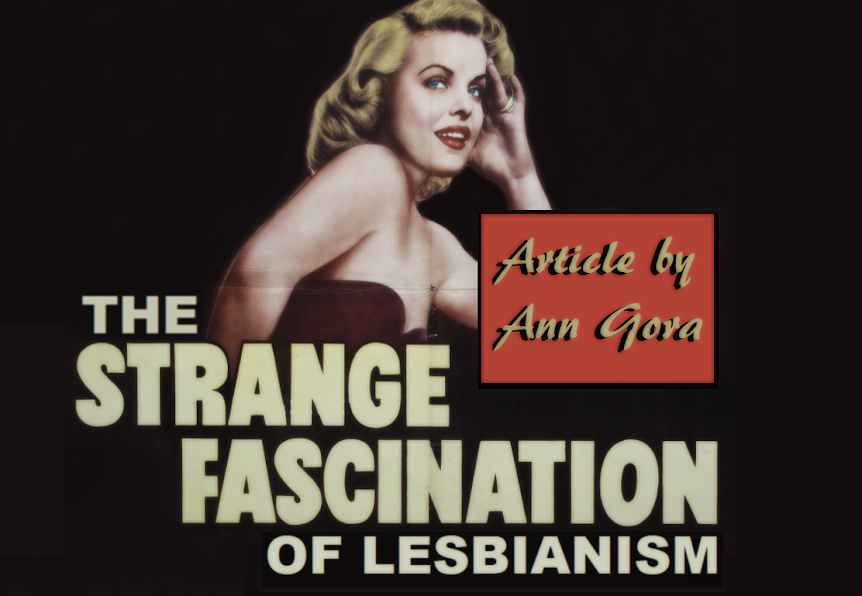
Ed Wood's When the Topic is Sex: "The Strange Fascination of Lesbianism" (1972)

"Strange fascinations fascinate me." - David Bowie

NOTE: This article continues my coverage of Ed Wood's When the Topic is Sex (BearManor Media, 2021).

The article: "The Strange Fascination of Lesbianism." Originally published in Pussy Willow (Pendulum Publishing), vol. 4, no. 1, April/May 1972. Credited to "Ann Gora."

Excerpt: "The dildo is well known to the lesbian world and has been in use all through antiquity. But then with the advent of electricity the dildo has become mechanized and has been put to the market under a different name. That is the vibrator. But call it what you will a dildo is a dildo with or without electricity."

An issue of The National Informer.
Reflections: When I reviewed the article "A Thought on Fetish Love Objects" a couple of weeks ago, I noted that Ed Wood quoted extensively from some sexually-explicit tabloids released by a company called Beta Publications in the early 1970s. Specifically, Eddie cited The National Spotlite and The National Bulletin. I'd never heard of Beta before then, but their formula seemed pretty straightforward: salacious stories and softcore cheesecake photography. The company's name rather amused me, given the current sexual connotation of the word "beta." They'd likely go with a different moniker today.

Before reading When the Topic is Sex, I didn't even know these kinds of publications existed. I knew of pornographic magazines, but the only tabloids I was familiar with were the ones being sold at the local supermarket: The National Enquirer, Star, Weekly World News, etc. The "dirty" ones Ed was talking about were beyond my ken. They certainly weren't available at our local Hamady. Perhaps these X-rated tabloids are not as well-remembered today as adult magazines of the era simply because they weren't preserved as well. Most of Beta's output (on flimsy, fragile newsprint) probably crumbled away to dust decades ago. God bless Pulp International for saving at least some of this material.

In "The Strange Fascination of Lesbianism," Ed Wood doubles down on the Beta tabloids, quoting extensively from The National Spotlite and The National Bulletin again, but he also draws from other pornographic tabloids, including The National Informer, which seems to be from a company called Aladdin. In all, here are the articles quoted in "The Strange Fascination of Lesbianism":
  • "Wild Gals in Prison" by George Davis (The National Spotlite). The article describes how women are routinely subjected to lesbian attacks in prison, not just from other inmates but also from the staff. Some of the interviewees, like Georgina Sloots and Angela Brutesome, sound like Roald Dahl characters.
  • "I, a Lesbian" by an unnamed author (The National Spotlite). This is supposedly a first-person account by a young woman named Liza, who has all kinds of Sapphic fun with her friends Susan, Lorraine, and Madeleine. Susan opines that lesbians are not perverted, simply more "imaginative" than straight women.
  • "Tumblin' in the Tumbleweeds" by Curt Randall (The National Spotlite). This is a Western tale about a gang of lesbians who take over a ghost town and love to torture men. This is so much in Ed Wood's wheelhouse, he must've been jealous he didn't write it.
  • "Troilism: When Three's Good Company and Not a Crowd in Bed" by Larry Bell (The National Examiner). While this article is technically about a threesome consisting of one man and two women, Ed assures us that "lesbianism is quite prominent" in it.
  • "Sexy Gift Ideas" by Paul Zenda (The National Bulletin). Perhaps written with an eye toward the Christmas shopping season, Paul describes various dildos and vibrators one can purchase. Did you know these were available in Day-Glo colors?
  • "Rumor Has it That" by an unnamed author (The National Bulletin). Eddie tells us that this is a regular column that contains what he calls "dig stories about the movie stars." I think by "dig story," he means a negative and possibly libelous article. In this case, it's about a love triangle consisting of Liz Taylor, Liza Minnelli (her name butchered as "Martinelli"), and Greek-American soprano Maria Callas.
  • "Reform School Breeds Lesbians" by an unnamed author (The National Spotlite). This is very much in the spirit of "Wild Gals in Prison," albeit with younger characters. Eddie explains, "The girls in jail idea seems to rank highest for the reporters of lesbian activities." He promises that male readers will "go ape" over this article.
  • "A Thousand and One Nights" by an unnamed author (The National Spotlite). It seems to be a prequel to the aforementioned "I, a Lesbian." Together, Ed says, the articles form "a running account of lesbian life." Perhaps there are other articles in this series.
  • In addition to the publications already named, Eddie mentions The National Close-Up but does not cite any particular articles from it. He also describes ads for a book called The Sensuous Lesbian and an 8mm movie called Women Who Love Women. I cannot confirm the existence of either of these, but I fully believe that Ed saw ads for both of them.

Apart from all this second-hand material, does Ed Wood have anything original to contribute to "The Strange Fascination of Lesbianism"? Eh, sort of. He acknowledges that many of the books and articles about lesbians are actually written by and for men. This is a strange admission, considering he's using his "Ann Gora" pseudonym for this one, presumably to make readers think he's really a woman. It seems like he started with this basic premise (men sure do like lesbians) and then cribbed as much as he could from the tabloids. Then, at the end, he indulges in some typical Wood-ian philosophizing:
The male is also a rather strange specie. Let another male do something out of line and he is shunned. But it is seldom that the little lady can do anything which does not give the male some sort of pleasure. And when that something is sexually oriented the male is all eyes, and all ears . . . and all emotionally, physically and sexually excited. There is no doubt that the lesbian world will continue to be spelled out in many male publications.
Ah, snips and snails and puppy dog tails.

Next: "Did You Ever Know?" (1973)

Thursday, February 3, 2022

Ed Wood's When the Topic is Sex: "Test of Time" (1972)

Clocks were really something back in the 1970s, huh?

NOTE: This article continues my coverage of Ed Wood's When the Topic is Sex (BearManor Media, 2021).

The article: "Test of Time." Originally published in Two + Two (Pendulum Publishing), vol. 4, no. 1, January/February  1972. Credited to "Ann Gora."

Excerpt: "The butch may or may not be the truck driver type which is depicted in so many pictures and cartoons. There are just as many butch types who are more feminine than the fluff types and one would not know the difference, on the street, from any other girl. And it may be just the opposite for the fluff. Then again an affair may really be accomplished by two fluffs, both ultra feminine and each will take turns at being one or the other."

The Bible doesn't condemn lesbians.
Reflections: Back when I reviewed Blood Splatters Quickly in 2014, I noted that "time" was one of Ed Wood's most-used keywords. In fact, he uses it 252 times throughout that collection.  Evidently, Eddie thought about the concept of time an awful lot... and not just in his later, sadder years either. Remember that his debut film, Glen or Glenda (1953), starts with Bela Lugosi's Spirit character delivering this speech:
Man's constant groping of things unknown, drawing from the endless reaches of time brings to light many startling things. Startling? Because they seem new... sudden! But most are not new... to the signs of the ages.
That bit of cosmic wisdom sets the scene extremely well for "Test of Time," the second Ed Wood article in When the Topic is Sex with "time" in the title. (I reviewed the first, "Time Out for Pleasure," just two days ago.)

In this article, Ed Wood's thesis is that lesbianism has certainly withstood the test of time—an uncontroversial claim, I'd say. Ed argues that, over the centuries, lesbians have largely survived by flying below the radar. Since they don't really stand out in society that much, neither the government nor the church has bothered to persecute them. Or at least, not as much as they've persecuted gay men. I remember reading in Ken Smith's book, Ken's Guide to the Bible (1995), that the Bible condemns male homosexuality but doesn't specifically forbid lesbianism. Eddie makes a similar observation here, saying that the church largely ignores lesbians, hoping they'll go away, rather than damning them.

I don't know if this qualifies as a feminist statement, but "Test of Time" espouses the viewpoint that lesbianism is womankind's attempt to escape or overthrow the patriarchy. For too long, woman has been the victim of male vanity and the male ego. Her own pleasures and desires have been ignored because the man's needs have always taken precedence. "Down through the ages," Ed writes, "the male has been the dominating factor in all history. And the woman was his thing . . . his plaything." Thus, when a woman enters a same-sex relationship, she is throwing off the shackles of male oppression.

Again, though, let's not be too hasty in calling Ed a proto-feminist hero or anything. "Test of Time" contains his usual, stereotype-ridden schtick about "butch" and "fluff" lesbians. And, just as in "The Divorcee's Dilemma," Eddie describes lesbians as predatory, fickle, and promiscuous. According to Ed, these women are constantly "cruising" the cocktail lounges and beer bars in search of new bed partners with no thought toward long-term relationships.

But, just like Walt Whitman and Bob Dylan, Ed Wood contains multitudes. In its final passages, "Test of Time" becomes quasi-philosophical. As he has demonstrated throughout this entire book, Eddie is dazed and dazzled by the sweeping changes the Sexual Revolution has wrought in a relatively short amount of time. Above all, people now have more information about sex than they ever had before, and this information is no longer couched in the obscure technical language used by "medical men." No, we can now read about lesbianism (and other sensitive topics) in plain English. Eddie suggests that this will eventually lead to greater understanding and acceptance. He puts it this way:
There is no one so superior as to be able to look down upon another because he or she is different . . . and that goes for the difference in their own sex life. Sex lives are as different as any personality. And the lesbian is part of the personality phase of life. They are with life and they are living it the way it pleases them. What most lesbians want to learn is the truth about themselves . . . what makes them tick . . . and what makes others tick. Happiness sometimes must be learned. Sometimes it is not born in all of us. And learning ones own shortcomings or long comings, as the case may be, is all part of the search for happiness. 
Almost makes you misty-eyed, doesn't it?

Next: "Sappho Revisited" (1973)

Wednesday, February 2, 2022

Ed Wood's When the Topic is Sex: "The Divorcee's Dilemma" (1973)

"I laid a divorcee in New York City."

NOTE: This article continues my coverage of Ed Wood's When the Topic is Sex (BearManor Media, 2021).

The article: "The Divorcee's Dilemma." Originally published in Swap (Pendulum Publishing), vol. 7, no. 1, January/February 1973. Credited to "Ann Gora."

Excerpt: "A lesbian who has eyes for some good looking divorcee isn't going to be easily swayed. But then also, the lesbians are generally a fickle bunch. Once they have made their conquest it is seldom that they will stick around with the same bed partner very long. It would seem that they are ever on the look out for new recruits."

An Apostolof/Wood joint.
Reflections: One recurring element in the movies that Ed Wood wrote for director Stephen Apostolof in the 1970s is that women who have been wronged by men will naturally take comfort in the arms of other women. This will often happen after a female character has been beaten or even raped by a man, but this isn't always necessary. Sometimes, the woman will simply be unsatisfied physically and emotionally by her relationships with men.

Whatever the cause for their disillusionment with the male gender, the wronged woman and her female friend will commiserate about how men are such insensitive beasts, and this will typically lead to a tender lesbian love scene. See Drop Out Wife (1972) , The Snow Bunnies (1972), The Beach Bunnies (1976), The Cocktail Hostesses (1973), and The Class Reunion (1972) for variations on this theme. I've often thought that the scenes of domestic abuse and/or rape in the Apostolof films work against their intended eroticism, but it seems that Eddie was insistent on telling these types of stories.

"The Divorcee's Dilemma" finds Ed Wood exploring this trope once again, this time as part of a supposedly nonfiction article for Swap magazine. According to Ed, a newly-divorced woman is a prime target for sly, on-the-make lesbians. The unsuspecting divorcee, whose only knowledge of sex may have come from her former husband, is powerless here. Ed tells us that "when the divorcee encounters a lesbian who has an interest; the hots for her, she is brainwashed right from the start." Just as in the Apostolof films, the women in this article may turn to lesbianism because they have been abused by men or simply have found heterosexual relationships unfulfilling.

Yet again, however, Ed Wood finds it impossible to stay on topic. For some reason, in an article supposedly about divorce, Eddie starts talking about lesbianism on college campuses. "Colleges which house only girls have been notorious for fostering the lesbian life," Ed claims, reminding me of the "Seven Sisters" scene from The Simpsons. Another claim: "It has been told that every girl who has gone to college has had a least one lesbian experience." I'm not sure what this has to do with divorce. I think Ed is just trying to explain why some women turn to lesbianism even after marrying men.

But, really, Ed is veering all over the road in "The Divorcee's Dilemma." One minute he's talking about the difference between "butch" and "fluff" lesbians. The next, he's pontificating about the Women's Lib movement. And does he get to mention sweaters? But of course. For Eddie, all roads eventually lead to sweaters. Oddly enough, for a magazine called Swap, there's nothing in here about wife-swapping.

P.S. Would you forgive me for referencing one more Saturday Night Live sketch? The 2015 sketch "Forgotten TV Gems" details the quick rise and fall of a fictional '50s sitcom called Whoops! I Married a Lesbian. While introducing a clip from the show, host Reese De'What (Keenan Thompson) says, "Part of the problem with the series was that it was written solely by male writers who knew nothing about the social issue the show was based on."

Next: "Test of Time" (1972)

Tuesday, February 1, 2022

Ed Wood's When the Topic is Sex: "Time Out for Pleasure" (1975)

Make time for pleasure in your busy day! You'll be glad you did!

NOTE: This article continues my coverage of Ed Wood's When the Topic is Sex (BearManor Media, 2021).

The article; "Time Out for Pleasure." Originally published in Girl Mates (Gallery Press), vol. 1, no. 1, September/October 1975. Credited to "Ann Gora."

Excerpt: "The lesbian wife sooner or later will not be satisfied with just a night or two out with the girls. She will become more and more demanding for her freedom. She will want full-time lovers because the lesbian has a tremendous appetite for sexual thrills and pleasures. The man can't give it to her. She is like a vegetable under him. He is getting no sex pleasure and neither is she. The only thing left is separation. "

A haven for homosexuals? Ed Wood says yes.
Reflections: Sometimes, the title of an Ed Wood article will give you a good idea of its contents. In this series of reviews, for instance, we've already encountered "Necrophilia: Love of the Dead," "Origins of a Fur Fetishist," and "Witchcraft in America Today." At other times, however, an article's title will yield no useful information whatsoever. All I knew about "Time Out for Pleasure," beyond its very vague name, was that it was included in the chapter about lesbianism. What could that phrase mean? To me, it sounded like an advertising slogan, perhaps the motto of a cigarette company. ("Gals, take time out for pleasure with Virginia Slims.")

The article is indeed about female homosexuals. In fact, it's very similar to yesterday's article, "Lesbian Understanding," in that it tries to offer a big-picture, broad-spectrum view of the lesbian lifestyle. Eddie, once again writing as "Ann Gora," even includes a few biographical details about the Greek poetess Sappho (c. 630 BC-570 BC), whose very name has become synonymous with same-sex love. "Her name lives down through the ages," Eddie tells us, "because she made famous an aristocratic society of women which decreed that the only true love was woman to woman."

Eddie then fast-forwards to the present day and says that "there have been vast changes in the lesbian makeup during the past few years in our own generation." People are more open and honest about their sexuality, he tells us, and some psychiatrists are even starting to give the A-OK to this lesbianism thing. Without citing any specific names or dates, Ed Wood offers this example of how things have improved for male and female homosexuals in a relatively short amount of time:
Little can be said of the gay guys and girls of the past because they were hiding in some kind of obscurity, except for the clinical studies and many were telling the interviewer what they would like their lives to be and not what they really were. But one thing for sure was the fear of losing their job. It happened in the state building in Washington, D.C., a few summers ago. A great majority of the state employees were of the gay world and it was felt that they were good prospects for blackmail, and since they were in positions of importance they had to be dismissed. Finally the courts took up the case and most of those who wanted to be reinstated were, by law, put back on the job. They were no more dangerous to security than any other person who tastes of sexual happenings of a different nature than the old missionary position. 
I guess, when Eddie says "state building" and "state employees," he's referring to the United States Department of State, headquartered in the Harry S. Truman Building. Was there a "gay scare" in Washington in the late '60s or early '70s? Perhaps Ed Wood is obliquely referencing the "lavender scare" of the 1950s.

Shifting focus from the political to the personal: Ed tells us that lesbians occasionally find themselves trapped in unsatisfying heterosexual marriages, leading to some major emotional and legal problems. Sure, some husbands may understand and even let their wives have occasional nights out with "the girls" (wink, wink). But the true lesbian soon wants more, and a divorce is inevitable. I couldn't help but be reminded of the "divorce court" scene from Glen or Glenda (1953). 

Speaking of that film, compare this passage from "Time Out for Pleasure": 
Times are changing. Few are hiding their problem. To them it is not a problem, it is their way of life, their enjoyment and to hell with who cares one way or another.
To this speech from Glen or Glenda:
Very few transvestites wish to change their strange desires. This is their life. To take it away from them might do as great a harm as taking away an arm or a leg or life itself.
Remarkably similar, right? It would seem that Ed Wood tries to understand lesbianism by comparing it to his own penchant for cross-dressing. 

P.S. This article was first published in 1975 in the premiere issue of a lesbian-themed Gallery Press magazine called Girl Mates. That makes "Time Out for Pleasure" one of the later pieces included in When the Topic is Sex. Greg Dziawer has indicated that the Pendulum/Gallery magazine empire was slowing down a bit by '75. But it looks like they were still occasionally tossing some work Eddie's way. This may well have been the only issue of Girl Mates ever released. Ed Wood likely wrote the editorial for this particular magazine. He references this briefly in "Time Out for Pleasure." This issue of Girl Mates also included Ed's short story "The Loser."

Next: "The Divorcee's Dilemma" (1973)

Monday, January 31, 2022

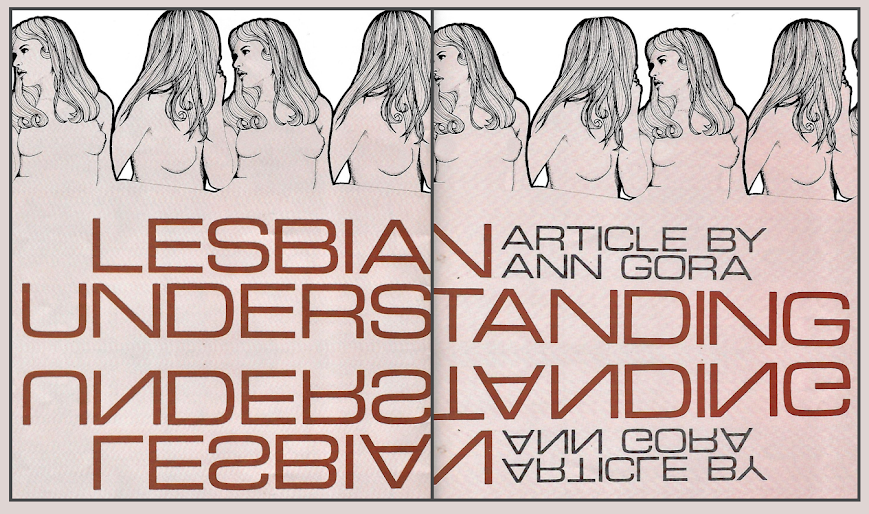
Ed Wood's When the Topic is Sex: "Lesbian Understanding" (1973)

Some lovely original art accompanied this article when it was first published.

NOTE: This article continues my coverage of Ed Wood's When the Topic is Sex (BearManor Media, 2021).

The article: "Lesbian Understanding." Originally published in Hellcats (Calga Publishing), vol. 2, no. 1, January/February 1973. Credited to "Ann Gora." 

Excerpt: "A certain number of lesbians are highly disordered, as are homosexual men. They are acting out a role in an unhealthy mental condition, and they are not enjoying themselves. On the other hand, there are women who are frank about lesbianism and see no harm in a lesbian orgy situation. There, they are permitted to act as they please with who they please. One thing is certain, lesbian orgies are on the increase and they are an important sociological phenomenon."

Stephen King used this photo of his agent, Richard
Manuel, for his "Richard Bachman" novels.
Reflections: Ed Wood's fans know that he used pseudonyms frequently in both his film work and his literary work. It's never been totally clear to me, however, why he used pen names on certain projects and not others. And is there any connection between particular aliases and particular projects? For instance, does the use of Eddie's most famous pseudonym, Dick Trent, indicate anything special about a film, novel, article, etc.? Stephen King famously wrote several novels under the name "Richard Bachman," but I don't see any obvious connection between the Bachman novels, such as The Running Man (1982) and Thinner (1984), that separates them in a meaningful way from the rest of King's work.

But there is one Ed Wood pseudonym that may have some real significance. I'm currently making my way through the chapter of When the Topic is Sex devoted to lesbianism, and I soon noticed that nearly every article in it was attributed to "Ann Gora." In addition to being a pun on Eddie's favorite fabric, the name gives the (false) impression that an article was written by a woman. It's my working theory that Eddie called himself "Ann Gora" whenever he felt that having a female author would lend credibility to some work.

Take today's article, "Lesbian Understanding," as an example. As the title indicates, this article's ostensible purpose is help the average straight male reader "understand" lesbians a little better. I'm not sure how effective it would have been at that goal. Eddie is in "no-research" mode here, completely winging it and quoting zero experts. The closest he gets to making a specific factual claim in this article is: "Statistics show there are fewer lesbians than male homosexuals. However, such statistics might be misleading." Where these "statistics" might've come from is anyone's guess.

Eddie gives lesbianism pretty much the same treatment he gave sadomasochism in the previous chapter. Namely, he tries to maintain a serious, scholarly, and (above all) impartial tone, as if he's delivering a report in front of the class. But, in doing this, his messaging is very contradictory. Based on this article, I can't tell if lesbianism is widespread and normal or some kind of vaguely-frightening deviation from the norm. Like his S&M articles, Ed Wood's lesbianism articles are basically pleas for tolerance and understanding. But they also make these subjects seem alien and even a little threatening. Perhaps Eddie himself hadn't made up his mind about these topics.

Relatively late in the article, Ed asks some important questions: "What are the facts of lesbian life? Why do women become homosexuals? How do they make love?" He doesn't really get around to answering these questions, per se, except to indicate that women are more attuned to each other's physical needs than men could ever be. 

The fact that women have sexual needs and desires, just the same as men, must have been news in 1973. Ed writes: "Women have the same drive that men have, and women seek satisfaction of it." Did people not know this? It's important to keep in mind that "Lesbian Understanding" is nearly 50 years old. A lot has changed over the last half-century, both in terms of information and morality. It's easy for us to read an article like this and scoff at how out-of-touch it is, with its talk of "dykes" and "fluffs." But maybe Ed Wood was cutting-edge for a straight male pornographer of this era. As an example, check out this passage:
However, the lesbian has also been maligned, the cruel stereotype of a cigar-smoking leather-jacketed DYKE being often the media portrayal. And yet, in reality, the average lesbian may be even more difficult to spot than a male, especially when we consider that there is much more bisexuality among women than men.
So at least he's calling out the hurtful, harmful stereotypes. That's kind of progressive, right?

Next: "Time Out for Pleasure" (1975)

Sunday, January 30, 2022

Ed Wood's When the Topic is Sex: "The Housewife/Lesbian" (1973)

Being a housewife isn't all bake sales and PTA meetings.

NOTE: This article continues my coverage of Ed Wood's When the Topic is Sex (BearManor Media, 2021).

The article: "The Housewife/Lesbian." Originally published in Gemini (Gallery Press), vol. 2, no. 1, March/April 1973. Credited to "Ann Gora." Ed Wood's resume claims he wrote this in 1972.

A Letnze book from Pendulum.
Excerpt: "So far my husband suspects nothing, but I have been tempted to come right out and tell him. Since Clara and I have been making it with each other, we've met several other women, housewives like us, who have similar outlets for their homosexual desires. A few of them have even organized clubs that meet on Saturday afternoons, while others sneak off to a lesbian bagnio a few blocks away. What's really amazing though, is that many of these women have actually told their husbands what they're doing and their husbands are not upset."

Reflections: With this article, we leave behind the topic of sadomasochism and embark upon the portion of When the Topic is Sex devoted to lesbianism. Specifically, "The Housewife/Lesbian" is about women who experiment with same-sex love affairs despite being involved in heterosexual marriages and having children. Keep in mind, Ed Wood is writing this for a straight male audience, so his version of lesbian love is the kind most likely to fuel men's fantasies—think bored, big-boobed housewives rubbing suntan oil on each other while their husbands are away at work.

In fact, Ed Wood attributes many of these lesbian dalliances to sheer boredom. Even with their housework and child-rearing duties, these women simply don't have enough to do all day while the menfolk are making money to support their families. So the gals inevitably turn their attentions toward each other. Hey, you have to do something after Match Game '73 goes off the air.

Tonally, "The Housewife/Lesbian" reminds me somewhat of Ed's script for Steve Apostolof's Drop Out Wife (1972). In that film—and other Apostolof softcore romps—women complain to each other about how useless men are, especially as lovers. This article echoes that sentiment: "The lesbian feels that men simply don't know how to make love." When it comes to pleasing a woman in the bedroom, who knows better than another woman?

In the interest of fairness, Ed Wood presents the cases for and against lesbian housewives. One woman reports that her marriage has never been better. She explains in detail:
Since Clara and I began having our sexual affairs it has affected my marriage marvelously. It's been like a shot in the arm. I feel much more intimate with Tom and our sex life is better than it's ever been. In fact, most of the time he has to hold me off, instead of the other way around. I don't know how a psychologist would explain it, but I think that, by having an outlet for my homosexual needs I have somehow lifted a great weight off my heterosexual nature. 
Uh huh. But Ed immediately follows this with testimony from a woman who is wracked with guilt and shame for the way she treats her husband and children. She wonders aloud where her lesbian tendencies come from. Genes? Chromosomes? She even suspects she may be a product of an anxiety-plagued age, saying that "the bomb-laden, fear-ridden environment" is possibly to blame.

One thing that briefly flummoxed me about this article is that Ed Wood repeatedly cites a book called The Gay Girls that he attributes to someone named "P.M. Vd. Leinze, Ph.D." I couldn't find any author, pornographic or otherwise, named Leinze and thought Ed must be making this up. But, no, the last name is just slightly misspelled. It's actually P.M. Vd. Letnze, Ph.D. This Letnze person is the author of such adult paperbacks as The Cherry Pickers (Impact Library, 1967), The Ultimate Orgasm (Impact Library, 1968), Oversexed Broads (Pendulum, 1968), and, yes, The Gay Girls (Erika Press, 1970). That last one is subtitled Scalding Case Histories of the Fiery Passions That Roil.

Incidentally, changing "Letnze" to "Leinze" is something Ed Wood did in his original article. Here's the relevant portion as it appeared in Gemini magazine:

The article erroneously cites Leinze rather than Letnze.

You'd think, since Letnze had at least one book out from Pendulum, there might be more of an effort to make sure the author's last name was spelled correctly.

Next: "Lesbian Understanding" (1973)