Showing posts with label Mill Creek. Show all posts

Wednesday, May 4, 2022

Ed Wood Wednesdays, week 129: Chilling Classics (2005)

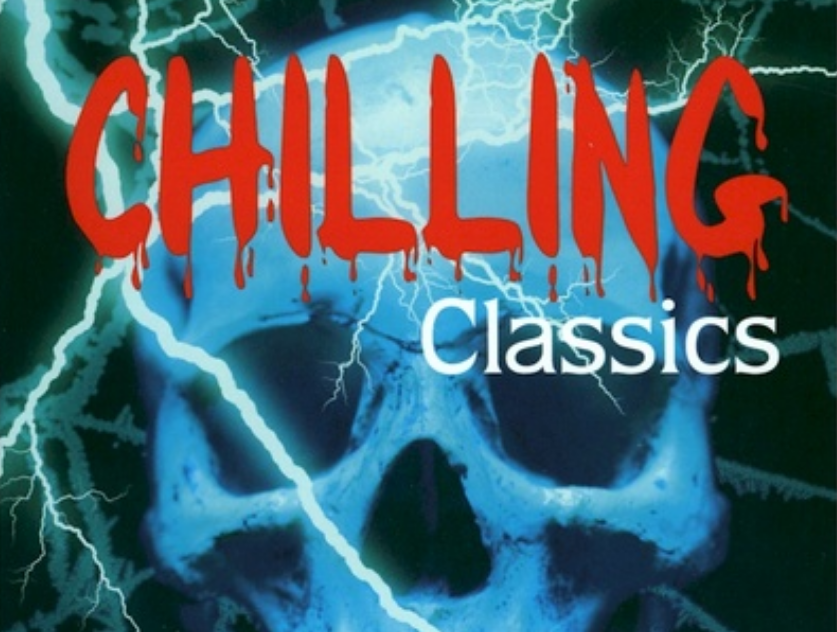
The front cover of Mill Creek's Chilling Classics, a 50-movie boxed set.

Let me tell you about the first time I saw Venus Flytrap, the Japanese-made monster movie known under a variety of titles and widely believed to have been written by Edward D. Wood, Jr. I caught up with this movie in 2009, which is several lifetimes ago by internet standards. Way back then, my friend (and fellow film fanatic) Craig J. Clark maintained a simple but informative blog called A Stuffed, Legless Duck Production in which he would briefly review a different film pretty much every single day of the week. That blog introduced me to a lot of titles I might otherwise never have heard of, and Craig always brought a unique perspective to the material he covered.

This boxed set kind of changed my life.
One of Craig's pet projects was making his way through a 50-movie boxed set from Mill Creek called Chilling Classics (originally released in 2005). If you're not aware, Mill Creek Entertainment is a Minnesota company that specializes in no-frills, "el cheapo" boxed sets containing public domain films—not just horror movies but sci-fi flicks, Westerns, crime thrillers, war films, and comedies, too. The transfers are usually atrocious, but the sets are so cheap, you can't really complain. I don't know how Mill Creek has been faring since the death of physical media, but their boxed sets used to be everywhere, even turning up in grocery stores and drug stores.

Well, after reading some of Craig's Chilling Classics reviews and becoming significantly intrigued, I decided to buy a copy of the set myself. It set me back a whopping eight bucks. I wanted to follow his lead and review each and every movie. At the time, I was a very active participant at a website called The Four Word Film Review, so I posted my reviews to that site's message board. The resulting thread is a true epic that I still remember fondly. If you like this blog, I recommend that you read through the entire thread. Not only did I review all 50 of the movies in the set, I held a mock awards ceremony and even posted some song parodies based on the films. 

As you have probably guessed by now, Venus Flytrap is one of the movies included in that Mill Creek collection. There, it is presented under its best-known title: The Revenge of Dr. X. The print is an absolute disgrace—blurry, washed-out, and barely watchable. Unfortunately, no better print of the film has yet surfaced. Mill Creek refers to the movie as a 1970 release, and that's the date I've assigned to it as well. Today, the IMDb calls the film Body of the Prey and says it was released in 1967. While I'm not sure where they got that information, I don't necessarily dispute it. 

I devoted the summer of 2009 to reviewing every movie in Chilling Classics. I decided to start with the movie with the lowest IMDb rating, Richard Ashe's Track of the Moon Beast (1976), and work my way up to the movie with the highest IMDb rating, Dario Argento's Deep Red (1975). My reasoning at the time was that the movies would gradually improve as the project went along. Since Revenge of Dr. X was one of the lowest-rated films, I got to it early. In fact, it was the twelfth film I reviewed! Only 11 films out of 50 were considered worse. Here's what I said about Revenge of Dr. X at the time:
This was the one supposedly scripted by Ed Wood, and it seems plausible that this is his work. For one thing, there's no one called "Dr. X" in this movie, and nobody gets "revenge" on anyone. Instead, a grouchy NASA scientist needs a vacation, so he decides to spend it on a mountaintop in Japan where he performs bizarre botany experiments involving the crossbreeding of carnivorous plants. The result of his work is a lumbering, flesh-devouring plant monster who goes on the prerequisite rampage. Pretty much a Frankenstein ripoff, complete with a "creation" scene, a hunchbacked assistant, and villagers wielding torches. When the movie takes a brief detour into sexploitation territory, it does so the Ed Wood way: randomly and with a certain naivete. Here, the mad doctor's plant-finding research is aided by topless scuba-diving nymphs, though nothing remotely sexual occurs. The plant monster itself is quite a creation, a whimsical-looking thing who would not be out of place in a Sid & Marty Krofft TV show.
Thirteen years later, I basically stand by those words. 

I mentioned holding an awards ceremony near the end of the thread. I called it The Chillies, and in addition to the usual categories (Best Actor, Best Picture, etc.), there were also categories like "Best Use of a Slumming Celebrity," "Most Boring Picture," and the coveted "Best Nudity." One category was called "The Edward D. Wood Memorial Award for Enjoyable Incompetence." The Revenge of Dr. X was nominated in this category, but the prize actually went to something called The War of the Robots (1978), which I vaguely remember as an Italian Star Wars knockoff. Yes, Ed Wood was out Wood-ed in his own category!

This may all seem incredibly trivial to you, but reviewing that Mill Creek boxed set was a major breakthrough for me as a writer in 2009. It was an endurance test, and I proved I could go the distance. In retrospect, that led me to reviewing the stories in Blood Splatters Quickly, Angora Fever, and When the Topic is Sex individually years later. Actually, Chilling Classics may have been one of the inspirations for the entire Ed Wood Wednesdays project, which I started in 2013. In the very first post in the series, I posted some pictures of my fledgling Ed Wood DVD and VHS collection. If you look very closely, you can see that Chilling Classics boxed set, peeking out from behind Necromania.

Can you spot the Mill Creek boxed set in this picture?

 I had no idea back then what I was getting myself into. I still don't.

Thursday, April 10, 2014

Mill Creek Comedy Classics #78 : "That Uncertain Feeling" (1941)

Burgess Meredith is an unlikely homewrecker in That Uncertain Feeling.

The flick: That Uncertain Feeling (United Artists release of an Ernst Lubitsch/Sol Lesser production, 1941) [buy the set]

Current IMDb rating: 6.9

Director Ernst Lubitsch
Director: Ernst Lubitsch (highly esteemed German-born director known for his witty comedies like The Shop Around the Corner, To Be or Not to Be, and Ninotchka; given an honorary Oscar in 1947, the same year he died at age 55; his films were touted as having "the Lubitsch touch")

Actors of note
  • Merle Oberon (The Scarlet Pimpernel, Wuthering Heights, The Private Life of Henry VIII; Oscar-nominated for The Dark Angel)
  • Melvyn Douglas (Oscar winner for Being There and Hud; other films include The Tenant, The Candidate, Captains Courageous, and Lubitsch's Ninotchka)
  • Burgess Meredith (Oscar nominated for Rocky and The Day of the Locust; other films in his six-decade career include Grumpy Old Men, Clash of the Titans, Foul Play; well known for roles on TV's Batman and The Twilight Zone)
  • Harry Davenport (long-time stage actor with late-blooming film career; credits include Gone with the Wind, You Can't Take it With You, The Ox-Bow Incident, and Hitchcock's Foreign Correspondent)
  • Olive Blakeney (Auntie Mame, Leave Her to Heaven; lots of TV work on shows like Perry Mason, Gunsmoke, and The Donna Reed Show)
  • Richard Carle (also appeared in Lubitsch's Ninotchka and The Merry Widow; other appearances include San Francisco, The Devil and Miss Jones, and Preston Sturges' The Great McGinty)

The gist of it: After six years of marriage, bored and pampered housewife Jill Baker (Oberon) is starting to have psychosomatic hiccuping spells. At the urging of her friends, she visits Dr. Vengard (Mowbray), who quickly discovers the root of the problem: she's become resentful of her husband, Larry (Douglas), a well-to-do insurance man. While Jill diets, Larry feasts. While Jill sits up with insomnia, Larry slumbers peacefully. While Jill frets about her day, Larry cheerfully tunes her out. Mr. Baker, it seems, is just a contented married man who cannot fathom why his wife should have any complaints when everything she wants is handed to her. Instead, he concentrates on landing his next big account.

While sitting in Dr. Vengard's waiting room, Jill meets eccentric pianist Alexander Sebastian (Meredith), a curmudgeonly nonconformist whose philosophy of the world boils down to his catchphrase: "Phooey!" Jill has never met anyone like Alexander, who introduces her to modern art and classical music, and she becomes enamored of him, much to Larry's dismay. Things come to a head when Larry arrives home early from work to surprise Jill, only to realize that she was expecting Alexander instead! Knowing that Jill's fixation on Alexander -- whose piano-playing is loud and near-constant -- is a temporary whim, he decides to initiate divorce proceedings. His hope is that she will give up the silly little piano man and come running back to her husband. Will she?

Meredith, Oberon, and Douglas: Three virtuoso performers.

My take: That Uncertain Feeling was not a box office success at the time of its release, and film historians do not rate it among Ernst Lubitsch's best films. It generally gets filed away in the "good but not quite great" category. (The IMDb's users dutifully regurgitate this "accepted" belief.)

I doubt my little review will reverse 70+ years of history, but I strongly feel that this sharp, funny little comedy deserves to be rediscovered. I know this can be difficult for "serious" cinephiles, but maybe it's best to temporarily forget about the director's other films and just concentrate on the one that's right in front of you.

There are so many good lines and funny moments in That Uncertain Feeling, it's a shame to let them go to waste simply because this isn't Ninotchka. As part of this project, I've watched dozens of comedies from the '30s and '40s, and I can tell you that this one is in the top 5% in terms of quality. Besides, Uncertain is in the public domain and available for free, so what do you have to lose except an hour and a half of your time?

Lubitsch has an excellent cast at his disposal, and his talent for working with actors is easy to see. The quips are flying at 90 mph, and Oberon, Douglas, and especially Meredith deliver them with enviable skill. If you are a student of comedy, there is so much to learn here about the importance of posture and inflection and body language. The actors don't really ham it up in the Vaudeville style that's so common to these movies. The cast is operating at a whole other level. It's like comparing a symphony orchestra to granddad's jug band.

Don't get the impression that That Uncertain Feeling is "perfect" (whatever that means) or some kind of unassailable masterpiece. Ultimately, it is just a silly little comedy. But I'd say it's a gourmet silly little comedy.

Critics can -- and usually do -- point out that the film's plot is flimsy and implausible. Here, after all, are two very immature people playing a ridiculous game of "chicken" with their marriage, essentially daring the other to be the first to flinch. I doubt people would truly behave this way. But then again, maybe they might. I mean, human beings are pretty thick-headed and irresponsible, especially when it comes to marriage. So the plot is not entirely outside the realm of possibility.

If there was something that bothered me, it's that Larry Baker really is sort of an oblivious clod, and Jill Baker does have some legitimate complaints about the way she's treated in her marriage. But this is the 1940s, so it's preordained that Jill will be exposed as a selfish ninny who realizes, almost too late, the error of her ways while Larry learns absolutely nothing.

This also requires turning Burgess Meredith into the film's villain, so about midway through the movie, the script makes him a greedy, petulant, peevish little coward. That's a disappointment, because when he first appears in this movie, he's so drastically different from everyone else in Merle Oberon's life that it's easy to see why she'd fixate on him. Jill's married life seems pretty stifling and homogeneous, so can we really blame her for looking elsewhere in her search for meaning and fulfillment?

Is it funny: I've already referred to it as "funny," so yes. The laughs start pretty early and really don't let up until the end. Burgess Meredith gets the majority of the good lines as Alexander, who rants about just about everything which crosses his path. But looking back on the film, Meredith does a lot of quite-good physical or at least non-verbal comedy in the film, too, as when he pitifully hides behind a lamp to somehow escape the wrath of a jealous husband. Or when he continually places a knick-knack he finds offensive in a drawer so he doesn't have to look at it. Or when he repeatedly gets up from the piano bench before playing so much as a note in order to whisper various demands to Merle Oberon. (Things have to be just so before he'll play.)

At first, I worried that Melvyn Douglas was just going to be a boring nice guy throughout the movie, but his character turns into something much more interesting once he realizes his wife is infatuated with another man. Critics and civilians alike refer to this movie as "lightweight" and "frivolous," but Douglas goes down some darkly funny paths here, like when he brings Burgess Meredith into his den in order to alternately flatter and threaten him.

And then there's the movie's most twisted, unimaginable-by-today's-standards scene in which poor Larry has to work up his courage to slap Jill across the face in front of a witness as part of their divorce proceedings. Yes, he has to do this for legal reasons! Trust me, it makes sense in context... sort of.

My grade: A-

P.S. No racial stereotypes in sight, but this was released several months before the United States entered WW2, so it was still possible for Melvyn Douglas to briefly imitate Hitler and do a Nazi salute as part of an otherwise-lighthearted scene.

Tuesday, March 25, 2014

Mill Creek Comedy Classics #77: "Made for Each Other" (1939)

Jimmy Stewart's mother faints when she meets her new daughter-in-law, Carole Lombard.

The flick: Made for Each Other (Selznick International Pictures/United Artists, 1939) [buy the set]

Current IMDb rating: 6.5

Director: John Cromwell (Dead Reckoning, Of Human Bondage, Since You Went Away; acted for Robert Altman in A Wedding and 3 Women)

Lucile Watson
Actors of note
  • James Stewart (popularly known as Jimmy, he appeared in Hitchcock's Vertigo, Rear Window, Rope, and The Man Who Knew Too Much; Capra's It's a Wonderful Life and Mr. Smith Goes to Washington; much, much more; the AFI ranked him the #3 male star of all time, behind only Humphrey Bogart and Cary Grant)
  • Lucile Watson (appeared in Hitchcock's Mr. and Mrs. Smith along with Carole Lombard; also acted in Song of the South, The Women, The Razor's Edge, etc.)
  • Eddie Qullian (The Grapes of Wrath, Mutiny on the Bounty; episodes of TV's Batman, The A-Team, Moonlighting, Columbo)
  • Alma Kruger (Hitchcock's Saboteur; Hawks' His Girl Friday)
  • Raymond Bailey (best known as Milburn Drysdale on TV's The Beverly Hillbillies, but also appeared in Vertigo, The Incredible Shrinking Man, Tarantula, Picnic, The Absent-Minded Professor, etc.)
  • Donald Briggs (After the Thin Man, Captains Courageous)

Other notables: The film was produced by legendary movie mogul David O. Selznick, the man largely responsible for the Oscar-winning film adaptation of Margaret Mitchell's Gone With the Wind. That movie, Selznick's signature production, was released the very same year as Made for Each Other. According to multiple sources, the medical drama that constitutes the third act of this film is derived from a real-life incident involving David's brother, Myron.

Weaselly Donald Briggs
The gist of it: Young New York attorney John Mason (Stewart) returns to the Big Apple from a brief business trip to Boston, bringing with him a surprise new bride, Jane (Lombard), a woman he wed impulsively after their first meeting. John's boss, crotchety, hard-of hearing Judge Doolittle (Coburn), is a little peeved at the news. After all, everyone expected John to marry Doolittle's daughter, Eunice. (John claims never to have had any interest in Eunice.) John's rather snooty, old-fashioned mother, Harriet (Watson), faints when she hears the news. John and Jane, however, insist that Mrs. Mason will continue to live with them.

The two lovebirds soon encounter problems. First, their honeymoon is canceled due to John's work obligations. Then, John is passed over for partnership at his law firm in favor of scheming, brown-nosing Carter (Briggs). Several housekeepers either quit or are fired. John and Jane then have a baby, which only makes their financial problems worse. Bills go unpaid, and John worries that he's never going to make it as a lawyer, despite his talent for the profession. Jane and Harriet's relationship is also quite strained, with the young wife enduring a constant barrage of criticisms from her interfering mother-in-law.

Just as the Masons' marriage seems to be falling apart, a tragedy occurs. Their infant son contracts pneumonia, and his only hope is a serum that has to be flown in from Salt Lake City in a very dangerous snowstorm. Only Conway (Quillian) is brave and/or insane enough to attempt the mission of mercy. Meanwhile, the baby's life or death struggle brings John, Jane, Harriet, and even Doolittle closer together.

Just shy of a classic.
My take: The makings are here for a classic. After all, Made for Each Other boasts two iconic leading actors, an obviously talented director, above-average production values, and an excellent supporting cast. The performances here, especially by put-upon everyman Stewart, are engaging and believable, and the film is quite impressive from a technical standpoint, too, with inventive camera angles and dramatic lighting effects.

But I'll wager you've never seen or heard of Made for Each Other, and I only discovered it as an obscure public domain offering in a Mill Creek boxed set. Why is that? Well, I'd say a rather hokey and melodramatic script is what keeps this movie from being truly essential. Part of the blame for that rests on the shoulders of producer David O. Selznick, who insisted on shoehorning his brother Myron's medical crisis (which he deemed "too good to waste") into a plot where it didn't belong.

That gets to the heart of this movie's real problem: tone. As in, this movie never settles on one for very long. This is a story about two decent, reasonable people who get married on a whim and then find themselves entirely unprepared for the consequences of their actions. There is a lot of comedy to be mined from that situation, and the script occasionally acknowledges that, but every time the movie threatens to become fun, it takes a nosedive into soap opera misery. Jimmy Stewart and Carole Lombard are never able to enjoy themselves -- or each other -- for more than a minute or so at a time, since the plot requires them to take their problems seriously... and those problems occur at regular intervals for the entire running time.

Judging from his filmography, director John Cromwell's forte was clearly drama, not comedy. He revels in the dark and depressing aspects of this story, even when he doesn't have to. Take the sequence in which John and Jane's baby is born. Jimmy Stewart wakes up in some sort of guest room at a maternity hospital, then runs to his wife's room, which is unoccupied. He dashes to the delivery room, only to be told by a nurse that everything is fine. Which it is. But the sequence has a spooky, film-noir quality to it that makes it feel like a Twilight Zone episode.

That same eerie, uneasy feeling seeps into the very downbeat New Years Eve sequence, during which the miserable Masons are surrounded by drunken revelers and garish party decorations on the worst night of their lives. And the last half hour or so, with pilot Eddie Quillan trying desperately to deliver the life-saving medicine to the hospital, seems like it was imported from another movie entirely. It's a well-paced, exciting sequence, but it's obviously at odds with anything even approaching comedy. Again, this is a script problem, not an acting or directing problem. (One minor quibble about the storytelling: There are four, perhaps five montages in this movie. Maybe two or three would have been enough.)

James Stewart and Donna Reed
But there are good aspects to the script, too, and they arrive in the form of intimate little moments that reveal the nature of the characters. I was especially taken, for instance, by a sequence in which a dejected John returns home from his college reunion, feeling like a failure compared to his classmates, then is cheered up by Jane, who has never stopped believing in him.

I think it's noteworthy that the script for Made for Each Other was written by Jo Swerling, who also contributed to the screenplay for It's a Wonderful Life (1946), arguably James Stewart's signature role. In many ways, Made for Each Other plays like a decent first draft of the enduring Capra classic. In both movies, Jimmy Stewart is an honest, hardworking guy who can't seem to catch a break and nearly loses his faith in himself and humanity until a last-minute miracle changes his mind.

Since I've seen Wonderful Life several dozen times, I could not help but find cognates, counterparts, and parallels in Made for Each Other, right down to the prominent use of "Auld Lang Syne" and the presence of a generous and wise African-American servant character. There are no supernatural elements in the 1939 film, but the two characters played by Jimmy Stewart face many of the same obstacles and anxieties. John Mason, for instance, is just about to take a honeymoon cruise to Europe with his new bride when he is summoned back to work. That's exactly the kind of thing that keeps happening to George Bailey. There are even matching scenes in which these fellows find out -- in equally cute ways -- that their wives are pregnant. And Carole Lombard's character, too, has a great deal in common with Donna Reed's Mary Bailey. Both are playful, intelligent, loyal, and justifiably worried about their husbands. At the beginning of Wonderful Life, Donna Reed's character is heard praying for the deliverance of her husband. In a similar scene in Made for Each Other, Carole Lombard visits a hospital chapel to plead with God to spare her baby.

Is it funny: Well, that's a little tricky since Made for Each Other isn't strictly a comedy. It's more like a domestic drama with occasional comic relief. What comedy is there works pretty well, I'd say, though I got a little tired of Charles Coburn's unreliable hearing aid after a while. Probably the funniest sequence in the film is one in which John and Jane struggle to get through a truly awful dinner party with doddering Judge Doolittle, slimy Mr. Carter, and Doolittle's obviously-spiteful daughter.

But there are funny little moments scattered throughout the proceedings, as when James Stewart seriously considers punching a wind-up toy drummer or when Harriet faints upon hearing of her son's nuptials. Though not named in the credits, Frank Ryan (The Cowboy and the Lady, A Night to Remember) is said to have contributed "humorous situations" to the film. Mr. Ryan, your efforts were appreciated. I just wish you'd found more opportunities to add some levity to a disconcertingly down-in-the-mouth movie.

My grade: B

P.S. - The modern-day viewer may cringe a little at Lily, the character portrayed by Louise Beavers, again playing a black domestic. It's true that Lily's philosophy is, "Never let the seeds stop you from enjoying the watermelon." And it's also true that, during the New Years Eve sequence, Lily stops by the Masons' apartment to deliver a chicken. So chicken and watermelon are both associated with the character. But Lily is also one of the film's most positive and honest characters, much superior to the other domestics in the film (the rest of whom are white). And she is Carole Lombard's only female friend in the entire movie... really, the only person with whom she interacts other than her husband and mother-in-law.

Saturday, March 22, 2014

Mill Creek Comedy Classics #76: "Swing High, Swing Low" (1937)

Love behind bars: Carole Lombard and Fred MacMurray's  memorable first date in Swing High, Swing Low.

The flick: Swing High, Swing Low (Paramount Pictures, 1937) [buy the set]

Current IMDb rating: 6.6

Director: Mitchell Leisen (known for romantic comedies like Midnight, Remember the Night and Easy Living; directed three episodes of The Twilight Zone; was a costume designer on The Thief of Baghdad)

Charles Butterworth
Actors of note
  • Charles Butterworth (Forsaking All Others, Second Chorus, and Love Me Tonight; no connection to the pancake syrup lady)
  • Jean Dixon (My Man Godfrey, Holiday, You Only Live Once; not to be confused with the famed psychic Jeane Dixon)
  • Harvey Stephens (Hitchcock's North by Nortthwest and Alfred Hitchcock Presents; plus Sergeant York, The Young Lions, Beau Geste, and more; not the Harvey Stephens who played Damien in The Omen)
  • Cecil Cunningham (despite the masculine-sounding name, an actress; The Awful Truth, Mr. Deeds Goes to Town)
  • Anthony Quinn (Mexican-born Oscar winner for Viva Zapata! and Lust for Life; nominated for his signature role as Alexis Zorba in Zorba the Greek; varied film career includes La Strada, Lawrence of Arabia, The Guns of Navarone, much more)

Other notables: Among the contributors to the screenplay was Oscar Hammerstein II, half of one of the most successful musical theater writing duos of the 20th century. The pair's Broadway shows were frequently turned into movies, including Oklahoma!, Flower Drum Song, The Sound of Music, State Fair, Carousel, and The King & I. R&H compositions include "My Favorite Things," "Some Enchanted Evening," "People Will Say We're in Love," "Getting to Know You," "You'll Never Walk Alone" and dozens more. There are several songs in Swing High, Swing Low, but Oscar had no hand in writing them. This movie is actually based on a hit play called Burlesque, which ran on Broadway from 1927-1928 and 1946-1948 and whose original stage cast included Barbara Stanwyck.

Carole Lombard considers her romantic options.

The gist of it: Accompanied by her pal Ella (Dixon), Maggie (Lombard) works as a beautician aboard a passenger ship so that she can travel to California and meet Harvey (Stephens), a wealthy California "cattle baron" she doesn't love but who wants to marry her anyway. At a stopover in Panama, Maggie meets Skid Johnson (MacMurray), a hotshot trumpet player just out of the army. Maggie and Ella decide to hit the town with Skid and the trumpeter's piano-playing buddy, Harry* (Butterworth).

That night, though, one of the locals (Quinn) tries getting "fresh" with Maggie, and Skid decks him, setting off a full-scale melee. Maggie and Skid spend the night in the clink, so Maggie misses her boat and has to move in with Skid and Harry. Sensing the trumpeter's true talent, Maggie gets Skid a job at a prominent night spot owned by crusty old Murphy (Cunningham). To get the club owner's sympathy, Maggie tells her that she and Skid are already married, and the young lady starts working there herself as a showgirl, putting her in direct competition with singer Anita Alvarez (Lamour), a sharp-tongued vixen who has a romantic past with Skid. Anita lands a job at New York's El Greco Club and moves to the Big Apple, and Skid soon gets a contract to work at the very same place. This is his shot at the big time! He and Maggie, who have recently gotten married for real, much to Harvey's disappointment, tearfully depart with the understanding that the trumpeter will send for his bride as soon as he can.

Skid is a sensation in NYC, quickly being crowned "the King of the Trumpeters," but he gets distracted by the fast life and doesn't send for Maggie like he said he would. Maggie then asks Murphy to pay for her ticket and travels to New York herself. Scheming Anita, however, has intercepted Maggie's telegram to Skid, and he doesn't pick her up when her ship arrives in town. Instead, Skid goes clubbing with Anita and then falls asleep on her couch. When Maggie calls Anita's place and Skid answers, she assumes the worst and begins divorce proceedings against Skid. The trumpeter is devastated and goes into a career tailspin, and Maggie isn't too thrilled either, even though she plans to now marry nice guy Harvey. Can Skid and Maggie's marriage be saved? And what about Skid's trumpeting career? Harry has a band of his own now, and they need a trumpet player for a big radio show. But Skid might be too tipsy to make his big comeback.
* Confusingly, this movie has characters named Harry, Harvey, and Henri.

Screenwriter Virginia Van Upp
My take: I didn't know how my luck was going to break when I cued up Swing High, Swing Low. After all, Carole Lombard was the star of one of the films I'd liked best in this series, Nothing Sacred, while Fred MacMurray had toplined one of the flicks I'd truly despised, My Love for Yours (aka Honeymoon in Bali). The DNA of Swing High, Swing Low is actually much closer to that of the latter than the former. They even share a co-screenwriter, Virginia Van Upp. They have other elements in common, too: an exotic locale (Bali vs. Panama), a frumpy female best friend for the heroine (Helen Broderick vs. Jean Dixon), a vampy romantic rival for the heroine (Osa Massen vs. Dorothy Lamour), a wimpy romantic rival for the hero (Allan Jones vs. Harvey Stephens), and a pivotal song which reminds the hero and heroine of the good times they once had ("Mama Don't Want No Peas..." vs. "I Hear a Call to Arms"). Little wonder that both My Love for Yours and Swing High, Swing Low measure a 6.6 on the IMDb.

But Swing High isn't nearly as objectionable as My Love for Yours, largely because it isn't so preachy and misogynistic. Fred MacMurray's character is again a smarmy, overconfident jerk whose personality should make the heroine run, not walk, in the opposite direction. But at least Swing High knows better than to treat MacMurray as a god among men. When Skid and Maggie's romance temporarily hits a rough patch -- as the central relationships in pretty much all romcoms must do at some point in the narrative -- it is Skid who really falls to pieces, becoming a penniless, zombie-like alcoholic who staggers around New York in a daze. And it's Maggie who comes to his rescue, even though she has a viable second option in dull but reliable Harvey.

Still in all, I didn't see why it was necessary for this movie to become so weepy and depressing on the back nine. Carole Lombard is a delightful screen comedienne, with a personality that's part Lucille Ball and part Dorothy Parker, and this movie would have been well-advised to emulate the anarchic, anything-goes spirit of Nothing Sacred. Instead, Lombard gets to have lots of fun in the opening passages of the movie, but the frivolity basically evaporates after Maggie and Skid get married. Although it's heresy to say so, I would have been fine if Skid had wound up with Dorothy Lamour's character, the slinky, sexy Anita, whose "Panamania" is probably the film's most arousing musical number.

Director Mitchell Leisen keeps things moving nicely but largely tries to stay out of the way and not make his presence overly felt. From the look of it, Swing High was a fairly low-budget picture, with generous use of stock footage and some not-too-convincing rear projection shots. None of this is helped by the fact that the film is in pretty terrible condition these days, obviously mastered from a video tape transfer of a scratchy film print rather than the original negative. Anyway, the public must have liked the Lombard-MacMurray pairing, as they made four other films together.

Is it funny: Tough to say. I didn't laugh much, especially during the film's soggy, melodramatic last half. The first half is pretty heavy on the rapid-fire 1930s romantic comedy banter, with MacMurray and Lombard trading scripted-sounding quips within seconds of their first meeting. But through most of this, I was just nodding in appreciation and thinking, "Heh. That's cute." Now, as I see it, "cute" and "funny" are not mutually exclusive, but they are distinct from one another. Swing High is one of those movies which gets along on its likability. The film is so darned ingratiating that many viewers won't actually notice that it really isn't that funny and that the jokes are just sitcom-type zingers done at twice the normal speed.

That said, I will allow I quite liked the scene in which Lombard tells MacMurray why she hates trumpet music ("It's just noise!")... only to learn that her date plays trumpet music. (Whoops!) And it's kind of funny that Maggie and Skid's first date lands them in jail and that their total incomprehension of Spanish gets them in further hot water with the annoyed judge, who keeps raising their fine each time they try to argue their way out of paying. There are some nice supporting turns here, too. When she's still on the ship, for instance, Carole Lombard tests the patience of her boss, our good pal Franklin Pangborn, with her total incompetence on the job. She's not really a beautician, you see, and she manages to burn off the hair of one of her customers -- an unfortunate situation she unconvincingly blames on the humidity.

Anyway, Pangborn does his usual long-suffering fussbudget routine, and it's about as funny as it always is. Charles Butterworth, too, manages to steal some scenes with his deadpan, detached bemusement as Fred MacMurray's unflappable buddy. I can't recall anything particularly funny that he says, but he says them in a funny-enough way. Oh, there's one weird little scene where he takes off his coat only to reveal a second coat underneath the first. It's just a nice little moment of unexplained absurdity. I would have prescribed a few more.

My grade: B-

P.S. - Just like My Love for Yours, Swing High is not too sensitive in its depiction of non-white characters. The actual Panamanians in the Panama scenes are treated as little more than gibberish-spouting primitives who must acquiesce to the English-speaking white characters, i.e. the only people whose lives truly matter. And the movie does use a subservient, "yes, ma'am"-type Negro in a Santa Claus costume as a quick visual joke. Again, the movie is not as heavy-handed in its racism as My Love for Yours. But modern-day viewers should expect to cringe a little at the depiction of Central American people in this film nevertheless.

Friday, January 31, 2014

Mill Creek comedy classics #75: "Three Broadway Girls" (1932)

The Greeks may have had a word for them, but Hollywood had at least two names for their movie.

The flick: Three Broadway Girls (originally released as The Greeks Had a Word for Them* by United Artists, 1932; rereleased and retitled by Astor Pictures, 1947) [buy the set]

*The movie is based on a Zoe Akins play called The Greeks Had a Word for It; Zoe won a Pulitzer, but not for this.

Current IMDb rating: 6.5

Director: Lowell Sherman (successful actor-director of the 1920s and '30s; directed Mae West's She Done Him Wrong; also cameoed in The Stolen Jools; died two years after this while making a film called Becky Sharp)

Joan Blondell
Actors of note:
  • Joan Blondell (durable supporting actress who played a lot of "best friend" parts; lengthy resume includes Grease, The Champ, A Tree Grows in Brooklyn, much more)
  • Madge Evans (perennial "nice girl" of the '30s; films include Dinner at Eight, David Copperfield, The Mayor of Hell, etc.)
  • Ina Claire (1920s Broadway star; film career didn't amount to much, but she appeared in Ninotchka, Stage Door Canteen, and a few others)
  • Lowell Sherman (directed this movie; see above)
  • David Manners (frequent star of classic Universal horror films, including Dracula, The Mummy, and The Black Cat)
  • Phillips Smalley (super-prolific actor-director of the 1910s; later appeared in the Marx Brothers' A Day at the Races and A Night at the Opera, plus Sunrise, The Phantom of the Opera, etc.)
  • Sidney Bracey (Tod Browning's Freaks, the Marx Brothers' Duck Soup, plus Sunrise, Angels with Dirty Faces, hundreds more)
  • Betty Grable (famous and beloved pin-up girl of WWII;  noted for "Million Dollar Legs"; movies include How to Marry a Millionaire and The Gay Divorcee; twelve years after this movie, she was the highest-paid star in America, earning $300,000 a year)

Seductress Jean (Ina Claire) plies her trade.
The gist of it: Roommates Schatzi (Blondell) and Polaire (Evans) welcome their mutual friend, would-be gold digger and habitual schemer Jean (Claire), back to New York after a disastrous trip to Paris which left her (deservedly) penniless. Jean is initially angry that Schatzi is now involved with the unseen Pops, an elderly "sugar daddy," since Jean always wanted to land Pops for herself. But that night, the three single gals go out on the town with Polaire's steady beau, nice guy Dey (Manners), and pretentious concert pianist Feldman (Sherman), who's supposed to be Jean's escort for the evening. Feldman invites them all over to his place and focuses all his attention on Polaire, whom he promises to turn into a successful pianist in her own right. Sensing defeat, Dey slinks off. But Jean sticks around and manages to seduce Feldman anyway.

The humiliated Polaire gets into a cab, which crashes into a milk truck. She survives, but the accident puts her in the hospital. As Schatzi predicted, Jean and Feldman's relationship doesn't last. When Dey finds out Polaire is in the hospital, he rushes to visit her and their romance is immediately rekindled, resulting in an engagement. Seeking revenge, Jean frames Polaire for stealing a strand of pearls, humiliating Polaire in front of both Dey and Dey's wealthy father, Justin Emery (Smalley). Dey and Polaire break up, and Jean ends up engaged to Justin! On the day of Justin and Jean's wedding, Schatzi and Polaire show up at the Emery home, supposedly to retrieve a good luck charm Jean borrowed from Polaire. Instead, they get Jean drunk and convince her to accompany them on a trip to Paris. The three women sneak out of the house while the wedding guests are arriving. Realizing he can't live without Polaire, Dey chases after them, hoping to catch them before they board a cruise ship bound for Europe.

My take: "Throughout the Ages, half of the women of the world have been working women... and the rest have been working men." So says the not-too-funny caption which begins this slight, forgettable battle-of-the-sexes comedy. Three Broadway Girls plays like a Prohibition-era version of a TV sitcom I wouldn't normally watch. It's about three worthless young women who spend their lives in pursuit of some equally worthless men. The characters party, drink, smoke, and lounge around constantly, and no one seems to have any real problems. So it was difficult to give a good goddamn what happened to these folks.

As indicated above, this movie was based on a successful stage play, and its roots in the theater are fairly obvious. This is a very talky, set-bound movie which is limited to a small handful of locations. Director Lowell Sherman, who is also fairly funny as pianist Boris Feldman, moves his camera around a little more than other low-budget comedy directors of the era, but there's no disguising the claustrophobia of this movie. The script is very heavy on self-consciously witty banter, and I think it might have played a little better with a live audience. Onscreen, it just kind of lays there, and the film feels inert and airless.

The trio of actresses at the center try to overcompensate by saying their lines with a lot of nervous energy, but it gets kind of shouty and annoying for my taste. Maybe they're trying to distract us from the fact that the so-called "friendship" between Jean and the two other girls is simply not believable. You could almost call Jean a "frenemy" to Schatzi and Polaire, but she never does a single nice thing for either of them and is eternally ungrateful. selfish, and duplicitous. Why were they ever friends with this woman in the first place? The likely reason is that the movie desperately needs a "wild card" character such as Jean to enliven the proceedings.

Joan Blondell and Madge Evans are given underwritten, unexciting roles, while outrageous, wisecracking Ina Claire walks away with the film and seems to be the only one really having any fun here. It's no surprise that Lowell Sherman also directed a Mae West film, since the sex-loving, man-hungry Jean is very West-like in Three Broadway Girls. She seems to have very little in common with the two others. The character of Jean, then, is both an asset and a liability to this film. She gets most of the script's funniest lines, but her character is so implausible that she's a distraction.

Is it funny: Well, I'd say I got a good, solid laugh about once every 10-15 minutes during Three Broadway Girls. The flirtatious game of cat-and-mouse between Jean and Feldman is good for a few slightly naughty chuckles, and I liked how utterly unimpressed Jean was by Feldman's concertizing. She blatantly snoozes through the one recital she attends and informs Feldman on their first meeting that she hates music. I also liked how Jean skillfully cons a fellow cruise ship passenger into paying for her hefty bar tab early in the movie. There are a few amusing moments that don't involve Jean, too, as when a drunk bumps into a snooty maitre d'.
Drunk: Waiter, I'm looking for a place to wash my hands. 
Waiter: (gesturing) There's a room there marked "Gentlemen," but don't let that stop you. You go right in.
Now I'm waiting for an opportunity to use that line in real life. By the way, there's some good visual humor in the film, too, as when Schatzi and Jean meet at a beauty parlor where women pay to have their hair attached to what look like dozens of ceiling-mounted electrodes.

My grade: C+

P.S. - Racial/ethnic content is fairly low in this flick. Much is made of Jean's status as an "Eye-talian," but I couldn't be sure if it was supposed to be a compliment or an insult. There are a few African-American servant (or servile) characters seen in the background, including our old pal Louise Beavers, but nothing offensive.

Tuesday, December 31, 2013

Mill Creek comedy classics #74: "Bowery Blitzkrieg" (1941)

Don't these posters make Bowery Blitzkrieg look exciting?

"The noisier the better is the rule when ballyhooing any East Side Kid picture. For Bowery Blitzkrieg get a bunch of rascals dressed as carelessly as the East Siders themselves and send them parading through town with instructions to create as much noise as possible. Have them carry placards with slogans similar to the scorehead teasers suggested in another column of this exploitation section. Supply the youngsters with any noisemakers available -- tin pans, horns, drums . . . and if it's at all possible get them some firecrackers which will take the town by storm when set off out of season."
-excerpt from a vintage Bowery Blitzkrieg pressbook

Charlotte Henry

The flick: Bowery Blitzkrieg (Banner Productions/Monogram Pictures, 1941) [buy the set]

Current IMDb rating: 6.9

Director: Wallace Fox (Million Dollar Kid)

Series regulars: Leo Gorcey, Bobby Jordan, Huntz Hall, Ernest Morrison, Bobby Stone, David Gorcey (all in Mr. Wise Guy), Donald Haines (Pride of the Bowery)

Other actors of note: Keye Luke (The Gang's All Here), Warren Hull (A Bride for Henry), Charlotte Henry (Murders in the Rue Morgue, Laurel & Hardy's Babes in Toyland), Martha Wentworth (Clancy Street Boys), Jack Mulhall (Mr. Wise Guy), Eddie Foster (Buster Keaton's The General, Hitchcock's Saboteur), Dennis Moore (East Side Kids), Pat Costello (Lou Costello's brother; worked as an actor, stuntman, and producer on many Abbott & Costello movies as well as their TV show), Dick Ryan (Mr. Wise Guy), Minerva Urecal (Boys of the City), Tony Carson (John Ford's They Were Expendable)


The gist of it: Danny (Jordan) has split with the East Side Kids due to personal differences with his ex-best-friend Muggs (Gorcey). Danny's now palling around with local hoodlum Monk (Stone), who dupes naive Danny into helping him commit robberies and sets up Muggs to be arrested and thrown into reform school. Fortunately, local beat cop Tom Brady (Hull), who is also dating Danny's sister Mary (Henry), sees potential in Muggs as a boxer and takes him into his own apartment. The former juvenile delinquent proves him right and is a success in the ring. But Mary mistakenly thinks of Muggs as a bad influence on Danny, which throws a monkey wrench into her relationship with Tom. Things get worse when gangster Slats Morrison (Foster) tries to bribe Muggs to take a dive in a Golden Gloves title bout. Muggs turns it down, but Slats plants the money on him anyway to make him look like he's cooperating.

Everyone is suspicious of Muggs, even true believer Tom, who tells Muggs that he'd better put up a good fight to prove he's on the level. But there's a twist, you see! During a post-robbery shootout, Monk is fatally wounded and Danny badly injured. Danny's only hope is a blood transfusion, which he gets from Muggs just hours before the fight. Danny recovers, but Muggs is in no condition to box. And yet, for obvious reasons, he cannot afford to lose this match.

In training... again: Huntz Hall with Pat Costello.
My take: To the best of my knowledge, Bowery Blitzkrieg is the second-to-last East Side Kids movie in this collection. The last one, Spooks Run Wild, doesn't show up until almost the very end of this set (#98 of 100) and it features Bela Lugosi, so I'm actually kind of looking forward to it. I can't say I'm exactly sorry to see the East Siders go. Their movies are formulaic as hell, indifferently made, and generally not that funny. Plus their annoyance factor is pretty darned high, with the Kids talking in those exaggerated Noo Yawk accents and loading nearly every sentence with "dem," "dese," and "dose," plus all that obscure 1940s street slang that I'm not sure anyone ever really used.

But I must have developed some kind of Stockholm syndrome with this series, because I actually started to care what happened in Bowery Blitzkrieg by the time it reached its dramatic apex with poor, depleted Muggs fighting for his life and his reputation in the boxing ring. Blitzkrieg isn't especially good in any noticeable way, though, and it contains many of the elements I've seen in previous ESK comedies. Muggs is trying to make it as a boxer again, so there are plenty of scenes set in a gymnasium. But the East Siders spend their time in gyms in every movie no matter what the plot is about. Hell, even the vaguely pedophilic philanthropist in Million Dollar Kid had a suspiciously-elaborate workout room in his house!

Come to think of it, none of these young men ever display more than a fleeting interest in the opposite sex, and they spend almost all their time cloistered together (often with their shirts off) in basements and back rooms. I think I've spotted them hanging out by the docks a lot, too, and they're forever being hauled off to jail or reform school. Maybe this series is the softest gay porn ever. But how, then, to explain the Kids' atrocious clothing and sloppy hairdos? (Leo Gorcey's hair, in particular, is an absolute disgrace throughout Bowery Blitzkrieg.) Well, maybe they're going for a punky "anti-fashion" thing. Modern day bohemians could learn a few things from these palookas.

A complex guy: Muggs with "Ma" Brady
Anyway, like I was saying, this movie has a lot of stuff I've already seen in other ESK flicks. These boys are always landing in the hospital, for instance, waiting for last-second miracles as their very lives hang in the balance. How often was Monogram planning to play that particular card, I wonder? And why don't these kids ever wise up and steer clear of the unctuous sharpies who are always trying to steer them down the wrong path? I swear, these morons fall for every smooth-talking con artist with a pencil mustache, a cool nickname and a pinstriped suit.

Maybe they're so easily led astray because the good-guy cops in these flicks are total weenies. Warren Hull's Tom Brady might just be the weeniest of them all. He lives with his doting mother (Wentworth) in a very old-lady-ish apartment and has a passionless, sexless relationship with Charlotte Henry's pure, virginal character, who is (not coincidentally) named Mary. The other major cop character, a police lieutenant who spends all his time behind a desk, is played by the cadaverous Dick Ryan, who was much more believable as the sadistic guard in Mr.Wise Guy but is supposed to be one of the heroes here.

Speaking of casting choices, this was apparently the first East Side Kids movie to feature Huntz Hall. (He gets an "introducing" before his name in the credits.) He wasn't exactly a newcomer. He'd been a part of the franchise since at least 1937's Dead End, in which he appeared alongside Leo Gorcey and Bobby Jordan. But this was technically the first of Monogram's East Side Kids films to feature Hall. (If you'll think back, he was absent from Boys of the City and Flying Wild.) He does the same "slow-witted sidekick" routine I've already witnessed several times before, so his supposed debut did not make much of an impact on me.

If there's a reason to watch Bowery Blitzkrieg, it's Gorcey. When I first started watching these movies, I found him extremely irritating, and I'm still not ready to call myself a "fan," exactly. But he brings a real intensity to his role and gives this movie a much-needed shot of adrenaline, even though Muggs McGinnis would never be able to correctly pronounce either "intensity" or "adrenaline." Gorcey's the most complex of the Kids: essentially decent and principled but also deeply insecure and vulnerable. He puts up a tough front, defending himself with sarcastic wisecracks and his fists if necessary. But there's a sad little man behind the bluster and bravado, and that comes through in Gorcey's performance in Bowery Blitzkrieg.

Is it funny: It's not totally unfunny. I'll go that far, but no further. I've run hot and cold on Leo Gorcey's confrontational, aggressive brand of humor. Sometimes I find it winning, other times just irksome. This time around, though I would have advised him to rein it in a little, Muggs is easily the movie's funniest character, especially when he refuses to take life seriously or show the tiniest bit of respect to those in power. One good though underused foil for Muggs is Minerva Urecal's dour reform school matron, whom he playfully nicknames "Picklepuss." The best comedic moment in the movie is the one in which Muggs (newly arrived at the reformatory) pretends to flirt with this humorless woman, to her utter horror: "Oh, Picklepuss, you an' me wuz made fer each udda! We c'd do t'ings! We c'd go places!" It's made all the funnier by the fact that uniformed cop Tom Brady is standing about a foot away from them, watching in total non-comprehension.

Like some other early ESK movies, Bowery Blitzkrieg takes its story pretty seriously but pauses occasionally for moments of levity, as in a self-contained vaudeville-type skit in which Pat Costello and Huntz Hall (both playing dum-dums) discuss how to tend to a boxer's injuries properly during a fight. It's very obvious from this scene that Pat was aping the mannerisms of his younger brother, Lou, but without much success.

My grade: C+

Clancy's shirt
P.S. - Scruno is in this one, so there's the expected racial humor at his expense. Same old, same old. He's a shoeshine boy and as lazy, larcenous, and cowardly as ever, liable to bolt from a room at the mere sight of a cop. There's nothing particularly vicious about the portrayal of his character, but he's still a poor role model.

More interesting is the treatment of Clancy, an Asian-American man who runs the pool hall where the East Side Kids hang out. Just like in The Gang's All Here, Keye Luke gives a dignified, positive, non-stereotyped portrayal. His ethnicity, for most of the film, is not an issue. But there's one weird scene in which Clancy shows up with a t-shirt with Muggs' name on the back and Chinese characters on the front. Muggs thinks the writing must be "propaganda," but Clancy claims he doesn't know what the characters mean. ("I got it off a Chinese calendar.") Muggs demands that he read it anyway, and... well, not speaking the language myself, I can't be sure if what Keye Luke says is real or not. But it's an off-putting, gratuitous moment either way.

Friday, December 27, 2013

Mill Creek comedy classics #73: "Million Dollar Kid" (1944)

Adjusting for inflation, this would be The $13.2 Million Kid today.

The flick: Million Dollar Kid (Monogram Pictures, 1944) [buy the set]

Current IMDb rating: 7.1

Director: Wallace Fox (Smart Alecks)

Character man Robert Grieg
Series regulars:
  • Leo Gorcey, Huntz Hall, Gabriel Dell, Bobby Stone (all in Smart Alecks)
  • Jimmy Strand (cameoed in Clancy Street Boys and stayed with the series from 1943-1944; non-ESK films include Faces in the Fog and Are These Our Parents?)
  • Buddy Gorman (this is the first of his ESK films I've reviewed; he was with the series from 1943-1951; he also appeared in White Heat and Meet Me In St. Louis)
  • David Durand (did three ESK films at the end of his career; had previously appeared in Angels with Dirty Faces and Bob Hope's The Ghostbreakers, plus a series of "Terry Kelly" short films at Columbia)
  • Bernard Gorcey (Leo's dad; appeared in quite a few ESK/Bowery Boys movies, including Clancy Street Boys; other films include The Picture of Dorian Gray and Chaplin's The Great Dictator)

Other actors of note:
  • Herbert Heyes (Miracle on 34th Street, The Ten Commandments)
  • Robert Grieg (Hollywood and Vine; the Marx Brothers' Horse Feathers and Animal Crackers; Preston Sturges' The Palm Beach Story, Unfaithfully Yours, Sullivan's Travels, and The Lady Eve)
  • Mary Gordon (James Whale's The Bride of Frankenstein and The Invisible Man)
  • Patsy Moran (a Monogram stock player; worked on TV and in films with Lucille Ball, Laurel & Hardy, W.C. Fields, Bob Hope, and more)
  • Stan Brown (Only Angels Have Wings, You Can't Take It With You)
  • Al Stone (nothing else; this was his first and last movie)
  • Louise Curry (Citizen Kane, The Reluctant Dragon)

Funny lady Iris Adrian
The gist of it: Muggs (Gorcey) is upset about a string of muggings that have been giving the East Side a bad rep and nearly as upset that dimwitted Glimpy (Hall) has invited his even-more-dimwitted cousin Herbie (Stone) to join the East Side Kids. One night, the Kids save wealthy Mr. Courtland (Heyes) from being mugged by some tough gangsters. Courtland is grateful and gives the Kids his card. Later, Glimpy and Herbie find Courtland's wallet and the money inside it, leading Police Captain Matthews (Beery) to believe that the East Side Kids themselves are the muggers.

At the police station, Courtland exonerates the Kids and invites them to his home to use his elaborate gymnasium. The Kids get along surprisingly well with Courtland, but they soon notice that not all is well with the rich man's children. His older son is away, flying for Uncle Sam in WWII. His lovely daughter Louise (Curry) is engaged to charming conman Andre (Brown) who claims to be a French military officer but is actually an American phony whose "uniform" came from a costume shop. After tailing him, Muggs and Glimpy discover that Andre is two-timing Louise with a floozy nightclub singer named Mazie Dunbar (Adrian).

This little conundrum is pretty easily (and cleverly) solved when Muggs brings the outraged Mazie to Andre and Louise's engagement party, but there's a more serious issue with Courtland's younger son, Roy (Duncan). You see, Roy is part of the gang of muggers that's been terrorizing the neighborhood -- not because he needs money, but just because he's bored and looking for kicks. When the Kids learn that Courtland's older son has been tragically shot down in combat overseas, they do everything they can to bring the real muggers to justice without incriminating Roy so that nice Mr. Courtland won't lose both of his sons. Things get complicated, though, when the crooks kidnap one of the Kids, Skinny (Benedict).

Perry juxtaposes silly and serious.
My take: Since the unexpected success of Diary of a Mad Black Woman (2005), critics have complained about writer-director-star Tyler Perry combining deadly serious issues with broad, silly comedy in a clumsy and artless fashion, i.e. juxtaposing domestic violence with the sketch-comedy buffoonery of "Madea." But Million Dollar Kid proves that this is nothing new. Yet again, an East Side Kids movie takes an entirely unwanted detour into heavy melodrama, then still tries to keep the Three Stooges-type wackiness going. I get emotional whiplash from these movies.

As Danny Peary points out in his book Cult Movie Stars, the Dead End/East Side movies are liberal sermons at heart. The point is that uneducated, lower-class youths are not inherently bad; they just need kindly benefactors, including policemen and wealthy philanthropists, to set them on the right path. His level of moral turpitude varies from film to film, but Leo Gorcey is usually a goody-two-shoes in these movies, despite his tough talk. Huntz Hall is weak-willed and therefore more fallible. He always ends up doing the right thing, but it's because Gorcey slaps him around if he doesn't.

The writers and directors at Monogram had apparently stopped trying to give any of the other Kids individual personalities by 1944. Other than Muggs and Glimpy, the other gang members are interchangeable. Obviously, Monogram was trying to switch things up a little by bringing in the new character Herbie, who manages to be even dumber than Glimpy. But just as obviously, that little experiment didn't work and the character (and the actor) disappeared forever. Frankly, though, all this is moot.

When Mr. Courtland gets that most-dreaded telegram from the War Department, Million Dollar Kid stops being a goofball comedy, and no amount of pratfalls or malapropisms can bring it back. Oh, and I couldn't help but notice that this movie yet again took the East Side Kids out of their natural environment. In this case, Muggs and the boys spend virtually all their time at the ritzy home of the Courtlands. I felt really badly for the butler (Grieg) who gets fired for being slightly snooty to the rude, destructive Kids. The movie forgets about this character, and I shudder to think what must have happened to him after losing his job. Damn those East Side Kids!

Leo and Bernard Gorcey
Is it funny: Nah, not really. If there's humor here, it's in the subplot about the fake Frenchie and his bottle-blonde bimbo girlfriend. I would have made this the main focus of the movie and completely left out the "prodigal son" story, which only serves to drag the movie down.

For me, the funniest moment of the movie is when Stan Brown tries to keep his pathetic charade going after the jig is clearly up. There was some real potential with these characters, but they don't get enough screen time. "New guy" Herbie, on the other hand, gets way too much screen time. While all of the East Side Kids are overaged to one degree or another, Al Stone looks like a middle-aged man. Muggs cracks wise about this very topic, but that only makes the situation worse by calling attention to it.

For these reasons and more, Million Dollar Kid just didn't do it for me. Leo Gorcey does have a funny little scene with his dad, Bernard, who looks like a shrunken, older version of his son. However, Bernard plays a delivery man who arrives at the Courtland house to bring the fateful telegram. Therefore, it's monstrously inappropriate to have these two engage in vaudeville-type banter at this point in the movie. What could the makers of this film have been thinking?

My grade: C

P.S. - Scruno had dropped out of the East Side Kids by this point -- Ernest Morrison fought for real in WWII, then got out of acting altogether -- but Million Dollar Kid still manages to sneak in a little bit of old-timey racism when Muggs makes a crack about "Ubangis" and Glimpy responds by grabbing his lips and stretching them out. This is a reference to a cultural misnomer about Ubangi tribeswomen wearing lip plates. Hey, folks, don't blame me. I didn't write these movies.