Showing posts with label Dick Trent. Show all posts

Wednesday, March 19, 2025

Ed Wood Wednesdays, week 220: "Never Too Late—Never Too Soon" (1973)

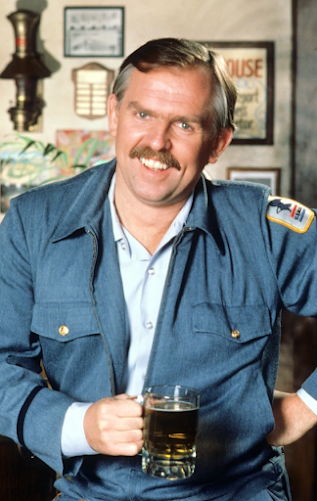
This article captures Ed Wood in his "Cliff Clavin" mode.

Ed Wood died less than four years before the TV sitcom Cheers debuted on NBC in September 1982. Isn't that wild? They seem like they belong to two very different eras of popular culture, but they were closer than you'd guess. In fact, I think Eddie would have been a great character on the show, had it taken place in L.A. instead of Boston. From his writing, I gather that Ed was contemptuous of "beer bars" and "beer joints," but the man clearly loved to drink and to socialize, and a bar like the one in Cheers would have allowed him to do both. (Fun fact: Eddie's last apartment was only two miles from the Paramount soundstage where Cheers was filmed.)

In the 1960s, director Joe Robertson owned a bar in North Hollywood called the Surf Girl, and Ed Wood was a regular there, sometimes even showing up in drag. I bet everyone there knew his name. I can imagine a bedraggled Eddie coming into the bar after a hard day—his wig crooked, his makeup smeared—and everyone yelling, "ED!!!!"

In the past, I've compared Ed Wood to Cliff Clavin, the motormouthed, know-it-all mailman John Ratzenberger played so ably on Cheers. I think Eddie considered himself something of an expert on numerous topics, and he was not one to keep his opinions to himself. This side of his personality comes through in his writing occasionally. I've also referred to this as Eddie's "professorial mode" in which he aims to dazzle us with his knowledge. And this week, we encounter another sterling example of this phenomenon.

Wednesday, March 12, 2025

Ed Wood Wednesdays, week 219: Exploring Ed Wood's contributions to Boyplay magazine (1973)

Two gentlemen frolic in the pages of Boyplay.

Do you have a "good" pair of scissors in your home, one that cuts more cleanly and assuredly than the others? How about a "good" flashlight that you always reach for whenever there's a blackout? Perhaps in your closet is a "good" pair of jeans that fits you just right, even when you've cheated on your diet a little. Chances are, if you own multiples of any item, one always becomes your favorite, simply because it works so reliably.

Here's to the "good" things in life.

For publisher Bernie Bloom—who oversaw a multimedia porn empire in the 1960s and '70s—Ed Wood was definitely his "good" writer. Bernie published a wide variety of adult books and magazines in those days under such banners as Pendulum, Calga, and Gallery (all the same company), and Eddie was his man-of-all-work. If Bernie needed text of basically any description, Ed Wood could provide it, quickly and dependably. This could mean full-length novels or nonfiction books, but it could also mean short stories, editorials, or even photo captions. When Bernie's son Noel got into making adult features and loops, he also hired Eddie frequently, but that's a whole other story.

The point is, in the final decade of his life, Ed Wood wrote a massive amount of text for Bernie Bloom. Some of that was written under his own name, making it easy enough to spot. Some was written under well-known pseudonyms like Dick Trent and Ann Gora. That's fairly easy to identify, too. Eddie himself kept track of this kind of material on his own resumes. But, once you start delving into this subject, you start to realize that a great deal of the Wood text in the Bloom publications is not attributed in any way; sometimes it's not even titled.

One thing (among many) that the late Greg Javer taught me is that, if a Calga/Pendulum/Gallery magazine contains a known Ed Wood article, it probably also contains some other, uncredited Wood text, too. As I told you in a recent blog post, I purchased a copy of Gallery Press' Boyplay magazine, vol. 2, no.2 from May/June 1973. This is the first vintage adult magazine I have ever purchased, and having a physical copy of such a publication gives me a new perspective on the world Ed Wood inhabited in the 1970s. 

Wednesday, May 18, 2022

Ed Wood Wednesdays, week 131: "Sex Clinics" (1974)

When Ed Wood writes about "sex clinics," he doesn't mean the kind with actual doctors.

A month and a half ago, I completed what might have been the most ambitious Ed Wood-related project of my entire life: reviewing every single story included in the massive 2021 anthology When the Topic is Sex. Even Bob Blackburn, the Wood superfan who compiled the book, doubted whether I would be able to do it, since When the Topic was even longer than the previous volumes of Ed's work, Blood Splatters Quickly and Angora Fever

Admittedly, the project was not always convenient, especially now that I'm working a full-time office job again. But I set aside a particular time each day to read and review each of the articles, and I managed to get through it with my sanity relatively intact. It helped that When the Topic is Sex gave me new insight to a part of Ed Wood's career that I had barely broached, i.e. his nonfiction writing. In fact, I'm already jonesing for some more of this material. So today, I'm covering one of Eddie's nonfiction articles from the 1970s that didn't wind up in Bob's book.

The article: "Sex Clinics." Originally published in Fantastic Annual (Gallery Press, 1974). Credited to "Dick Trent."

Excerpt: "The voyeur is a frequent client to these establishments. Many peepers have been saved from the jail cells because the girls put on the peep shows for him. Previously, the peeper or the voyeur had to go sneaking through yards and alleys at night hoping to find an open window where he could look into and see the girl undressing or having sex acts with her boyfriend or girlfriend, as the case may be, and suffer the possibility of arrest. All this was eliminated for him."

Reflections: One thing I have learned from reviewing the writings of Edward D. Wood, Jr. is never to judge an article by its title. Ed's mind worked in mysterious, sometimes inexplicable ways, and he could take an assignment in directions that you did not anticipate. His 1974 article "Sex Clinics" is a perfect example. I assumed from the title that this was going to be about individuals and couples consulting licensed medical professionals about their sex problems. Wrong! In fact, Ed dispels this notion right away:
Now, there is always the churchman, the doctor, the psychiatrist, the sexologist and hordes of other schooled men who will take your case and their explanation is in just as many medical terms as one might find in any medical journal… and just as confusing. Where then could the guy or the girl with the sexual hang-up go to figure out something about himself? Where can the guy or the girl go to find out what they are lacking in their sex lives? How about a sex clinic? Now we are not referring to some medical type of sex clinic staffed by those of the medical profession as stated above.
Okay, so if Ed isn't talking about sex clinics staffed by medical doctors, what the hell is this article about? Well, according to Ed Wood, there are numerous underground sex clinics staffed entirely by retired prostitutes who have aged out of the profession but are still, for the most part, "young and pretty." Haven't hookers been teaching young men about sex for years? Besides, Ed says, many ex-prostitutes "have at least one year of college and they have studied sociology or sexology or one of the other courses with a sex background, therefore they know many of the terms which they will be called upon to use." Too bad they're not covered by insurance.

The great thing about these underground sex clinics is that the prostitutes "perform the physical act which is disturbing their clients… with the client or clients." Try getting that level of service from a medical doctor! These newfangled sex clinics will cater to those with particular fetishes, including cross-dressing and voyeurism. They'll also aid those who wish to experiment with lesbianism or group sex but don't know where or how to get started. The clinicians' fees may be high, Ed warns, but it's worth it because they get results.

What makes this article a special gem is that Ed Wood (writing yet again as "Dick Trent") gives us some potential biographical information about himself. While writing about sex workers of the past, he offers this personal insight: "After all the houses [of prostitution] have been closed… there are no more of the red lights hung over the door such as the ones I visited in Kinston, North Carolina in 1942." Kinston, North Carolina in 1942, eh? That would have been around the time Ed was undergoing Marine training in Parris Island, SC, so it's possible he and some fellow jarheads made a day trip up north to Kinston for some fun. This detail seems too specific to be wholly manufactured. Reader Shawn Langrick shared with me this article that ran in the September 6, 1944 edition of The Durham Morning Herald.

Kinston, NC was apparently a hotbed of vice... and a big attraction for Marines!

While reading this article, I could not help but think how perfectly it fits in with the movies that Ed Wood was making at the time. Right from the start, for instance, Ed mentions the prevalence of "sex hang-ups" in our society. This put me in mind of The Young Marrieds (1972), in which newlyweds Ben and Ginny frequently argue about their own sexual hang-ups. "You're just hung up bad," Ben tells his wife at one point. Then there are the nostalgic references to houses of prostitution. The fact that Ed refers to these establishments simply as "houses"—rather than "brothels" or "bordellos" or any other term—reminded me of his film The Only House in Town (1970), which is set in just such a place.

Above all, though, the Ed Wood film I thought about the most while reading "Sex Clinics" was Necromania (1971). I now realize that the mysterious Madam Heles character in that movie is running the kind of underground sex clinic that Ed is describing in this article. She's just added an element of mysticism or Gothic horror to it. Consider the scene in which "quickie artist" Carl complains to Tanya, "I must come first! I paid plenty to be first! Be completely cured!" Basically, he's lodging a customer service complaint.

Ed Wood ends "Sex Clinics" with a quote from a nurse who works at an underground sex clinic: "I know a lot of prudes might object to our therapeutic techniques, but our patients come in as wrecked souls and leave as happy, sexually capable lovers." Isn't that exactly the path that Danny and Shirley take in Necromania?

Friday, March 25, 2022

Ed Wood's When the Topic is Sex: "Trucking's a Ball" (1974)

Ed Wood wrote about truckers? That's a 10-4, good buddy.

NOTE: This article continues my coverage of Ed Wood's When the Topic is Sex (BearManor Media, 2021).

The article: "Trucking's a Ball." Also known as "Truckin's a Ball." Originally published in Fantastic Annual (Pendulum Publishing), 1974. Credited to "Dick Trent."

Excerpt: "The girls will stick out a thumb on the highway, but it will not be directed at the comforts of some late model automobile with the neatly dressed, freshly shaved driver behind the wheel. In fact, the girls won't even put a thumb out to those men. It is only when the roar of the truck comes along that their thighs begin to quiver and their titties begin to rise and fall rapidly under their sweaters or blouses."

Only in the 1970s: C.W. McCall.
Reflections: Are you old enough to remember trucker-mania? In the 1970s, the long-haul trucker briefly became a pop culture icon in America, inspiring movies, TV shows, toys, and even pop songs. When else could "Convoy" by C.W. McCall have topped the charts? The timing of this phenomenon actually makes some sense, if you put it into its proper historical context. In the wake of the Vietnam War and the Watergate scandal, we Americans were deeply distrustful of authority, and truckers seemed like antiestablishment heroes we could root for. They lived by their own rules, often enraging the cops in the process, but they weren't wimpy, peace-loving hippies. They were rough, tough dudes who could handle themselves in a fight.

It's only natural that Ed Wood wrote an article about truckers, but as usual, he had his own particular spin on the subject. "Trucking's a Ball" is not really about truckers, per se, but about the women who obsessively follow truckers around for sexual reasons. Ed has given this matter a lot of thought and pinpointed the exact reason that the ladies love trucker drivers: the smell. As he writes: "It's the man smell. The tough, rough man smell that seems to come off to them as all male . . . and these girls want only that . . . all male." This is one of those days when I'm glad When the Topic is Sex isn't a scratch-and-sniff book.

There's an odd double standard at play here when it comes to personal cleanliness. Ed had nothing but contempt for hippies and wrote often about how filthy they were, both in their clothing and their bodily hygiene. (It's almost never a good sign when a character in one of his novels is wearing dirty jeans.) But he lionizes those same exact qualities in truckers, even pointing out that truckers will wear "the same underwear" for days on end. Why is it okay for truckers to be slobs but not hippies? Maybe it's because truckers are at least contributing to the economy, while hippies probably aren't.

Going into more detail than anyone might want, Ed writes that a tucker's feet "are encased with grime in the heavy socks and boots he's worn for hours on end." That reminded me of a line from Glen or Glenda (1953). "His feet encased in the same, thick, tight-fitting leather that his shoes are made of." That must be one of Ed Wood's weirdest motifs: "encased" feet. 

Speaking of motifs, Ed Wood often used the curious term "pink clouds" to describe the pleasurable sensations that a woman might experience while having sex or taking drugs (or both). I first encountered it while reading his 1967 novel Devil Girls. He uses it here, too, in a passage about what it's like to have sex in a truck while it's actually in motion! Naturally, this requires two truckers: one to make love, another to drive. Ed's imagery is almost hallucinogenic: 
And as they will tell it, this is one of the really great sensations of intercourse . . . when the roar, the throb, the rhythm of the motor comes tearing through every fibre of their bodies, that's when they have intercoursed themselves right up onto pink cloud number nine . . . and it is strange when you hear all these girls telling about the smelling man, the worst of the lot, they have had, yet at all times when they speak of reaching their climax they refer to it as some sort of pink . . . cloud . . . heaven . . .blanket . . . surf . . .always pink . . . and pink in any other terms might be thought of as all the clean things in the world.
Along with those references to pink clouds, Ed makes sure to mention the odor of the truckers, too. He really thought this was a major selling point for women. Maybe there should have been a cologne for men who wanted to smell like a trucker. Eau de Diesel Fuel or something.

Incidentally, "Trucking's a Ball" is yet another article that I had already reviewed on this blog. I first discussed this article back in 2020, just weeks before the pandemic began. And now here we are, finally emerging from the shadow of COVID-19 after two brutal years, and I'm still writing about this ridiculous Ed Wood trucker article. The more things change, huh?

Next: "What Are Little Girls Made Of?" (1971)

Sunday, March 20, 2022

Ed Wood's When the Topic is Sex: "The Pimp" (1972)

If hooking is the world's oldest profession, is pimping the second oldest? (Illustration from Fetish Annual)

NOTE: This article continues my coverage of Ed Wood's When the Topic is Sex (BearManor Media, 2021).

The article: "The Pimp." Originally published in Fetish Annual (Gallery Press/Pendulum), 1972. Credited to "Dick Trent."

Excerpt: "We find that many of these relationships begin when the whore is jailed. There she meets other girls . . . and generally some form of sexual relationship comes about. And when they get out of prison the relationship continues in the pimp/whore—husband/wife lesbian relationship. But it is also a fact that it is seldom a lesbian pimp will have more than one girl working for her."

One of the many books Ed Wood used.
Reflections: As we have seen throughout When the Topic is Sex, Ed Wood sometimes did his homework when he wrote nonfiction articles and sometimes didn't. When he wrote "The Pimp" for 1972's Fetish Annual, Eddie definitely did his homework. He might have even been stone cold sober when he wrote it. Virtually the entire article consists of quotes from books on the subject of prostitution. Among these are: 
  • An unnamed book by sociologist Sara Harris; Harris wrote numerous books about sex and prostitution, including Cast the First Stone (1957) and The Puritan Jungle: America's Sexual Underground (1969).
"The Pimp" might be the most research-heavy article in this entire collection, citing works by doctors and by those who have worked in the prostitution profession. Some of these authors are colorful characters in their own right, including anarchist doctor Ben Reitman and real-life madam Polly Adler. Polly even got her own posthumous biopic in 1964 with Shelley Winters in the lead!

While this is good news for the reader who earnestly wants to know about pimping, it's bad news for Ed Wood fans, since this type of article leaves very little room for Eddie to be Eddie. When the Topic is Sex is most fun when Ed is blatantly making things up or is supplementing the facts with his own curious brand of philosophizing. There's very little of that here. In "The Pimp," he sticks to the facts... or at least what he thinks are the facts.

And what are those facts? According to Ed Wood, the pimp has largely been obscure up to this point in history, operating in the shadows of American society. "Much is written about the prostitute and the madams, and the whorehouses and, the call girls, etc.," Ed complains, "but little is expounded upon the pimp." This is tough to imagine today, since the gaudily-dressed pimp—generally seen driving a Cadillac and carrying a jewel-encrusted walking stick— has become a vaunted figure in popular culture through songs, movies, TV shows, video games, and even Halloween costumes. My own thoughts about the profession are inextricably tied to Pimpbot 5000 from Late Night with Conan O'Brien in the '90s and Eddie Murphy's Velvet Jones from Saturday Night Live in the '80s.

When Ed wrote this article, real-life pimp Iceberg Slim (1918-1992) had been writing about his life for a few years already, but the blaxploitation film Willie Dynamite (1973), which centers around a pimp, had not been released. Neither had Taxi Driver (1974), in which Harvey Keitel plays a white pimp named Sport. In that film, Sport memorably sweet talks Iris (Jodie Foster), a teenage prostitute in his employ. "The Pimp" includes a similar monologue, clipped from The Second Oldest Profession. It reads, in part:
Now I'll admit I got another woman. But you know me, she don't mean a damned thing to me; she is just helping me pay my debts; you are my heart. I love you. None of these broads can give me anything, only you. I am just crazy about you. My one ambition is to see you get out of the racket. I am just fussing around with Pearl, so as to get a little more money to pay our debts. The more money Pearl earns the sooner you will stop hustling. I wouldn't live with that woman if she was the last woman on earth. Look at your lovely hair. Hers is like a horse's tail. You have a beautiful body. I bet if the artists in town knew about you, you would be the most popular model in town.
The entire monologue is much longer, but you get the idea. I can easily imagine Harvey Keitel's character saying very similar things to his women. Actress Jodie Foster has said that Keitel imitated R&B singer Barry White for this scene.

The madams quoted in this article are divided on the merits of pimps. Beverly Davis "detests pimps and won't allow them on her premises," but Carol Erwin says that she only hires girls with pimps because the free agents are too wild and hard to control. They're lazy and they drink, and some of them even "romance" the customers, which is strictly a no-no. Better to hire a girl who's under the thumb of a pimp.

Ed Wood, for his part, seems to look approvingly upon these men. Sure, he allows, there are those who beat the girls violently, but these bad eggs are "far from being a majority." In fact, the average pimp is "a mighty good guy to have around in case of trouble." Ed even gives pimps credit for "adding to the decline of venereal infections in the United States." In a sense, then, "The Pimp" can be seen as Ed Wood's tribute to an important yet widely misunderstood profession. We salute you, Mr. Pimp! Keep up the good work. You're doing your part to keep America clean!

Next: "The Girls of the Golden State" (1971)

Saturday, March 19, 2022

Ed Wood's When the Topic is Sex: "Prostitutes as Wives" (1971)

Can you turn a ho into a housewife? Ed Wood has some thoughts.

NOTE: This article continues my coverage of Ed Wood's When the Topic is Sex (BearManor Media, 2021).

The article: "Prostitutes as Wives." Originally published in Orgy (Pendulum Publishing), vol. 3, no. 4, November/December 1971. Credited to "Dick Trent."

Excerpt: "The full time prostitute has become bored with the whole sex scene. It has meant nothing to her. And when she finally gives it up as a lost cause she is giving it up happily. Nothing is going to make her more happy then to know she has the same man coming home to her every night and it will be the same man she will wake up to the next morning."

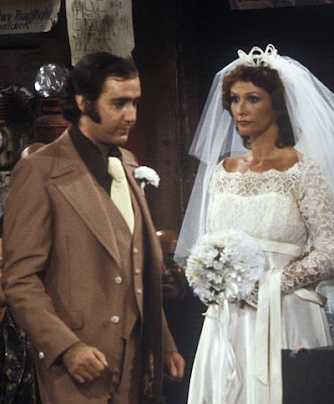
Andy Kaufman marries a hooker on Taxi.
Reflections: When I was reading Ed Wood's 1971 article "Prostitutes as Wives," I could not help but remember what actor Peter Fonda, star of Easy Rider (1969), told Rolling Stone writer Elizabeth Campbell about the title of his most famous film:
"Easy rider" is a Southern term for a whore's old man, not a pimp, but the dude who lives with a chick. Because he's got the easy ride. Well, that's what's happened to America, man. Liberty's become a whore, and we're all taking the easy ride."
"Prostitutes as Wives," I suppose, is Ed Wood's take on these "easy riders," the ones who decide to make the arrangement permanent, but he seems to view them more favorably than Peter Fonda did. In fact, this article weighs the pros and cons of marrying prostitutes and concludes that the former outweigh the latter. Yes, Ed says, men should marry prostitutes!

Ed begins this piece by describing the same sexual double standard that was at the heart of yesterday's article, "A Look at the Nymphomaniac." Namely, young men are expected to be sexually experienced by the time they marry, but young women are not. A girl is supposed to be virginal and pure until her wedding night. But this brings with it its own set of problems, as Ed explains:
But here comes the rub! Even though she must be a virgin, he expects all the pleasures of a professional. If she doesn't know what it's all about he feels cheated. She is just a 'dumb broad' who doesn't know her ass from a hole in the ground. How can women be so dumb? He might just as well do what he has done for years . . . masturbate. It would be just about as exciting. 
This is an unworkable and unfair system that is quite cruel to the ladies. Incidentally, Ed provides us with a list of derogatory terms directed as sexually-active young women—not just the usual ones like "tramp" and "bitch" but obscure ones like "turkey," "gobbler," and "clap trap." That last one is kind of clever, I must admit. Mean but clever.

So if marrying virgins is impractical, how about marrying hookers instead? Ed informs us that, after years of taking on male clients, many prostitutes are looking to get out of the business and settle down with a nice guy. They're experts when it comes to pleasing a man, after all, and they're very unlikely to cheat on their husbands and ruin a good thing. You don't have to worry about them getting pregnant unexpectedly either, because ex-prostitutes are very careful about birth control. You might worry about venereal diseases, since they've had so many partners, but Eddie says it's not a problem. He writes:
As any doctor, who has examined these prostitutes will tell . . . they are among the cleanest agents around. This is because the professional prostitute has learned early that her body is the only thing she has to sell . . . to use for making a living. And she is not going to sell a diseased or crippled body. She learns all the protections there are and she practices those protections thoroughly. And she generally has her own personal physician who takes care of her regularly. Few ever become unknowing, unwilling carriers. 
So everything's coming up roses for the man who sees a streetwalker and decides to put a ring on it. According to Ed, this type of gent "has everything, sexually, going for him." This is actually one of the more focused and coherent articles in When the Topic is Sex. Ed might've even been sober or semi-sober when he wrote it. 

What's great about Ed Wood as a writer is that he will approach a topic from an angle that I had not anticipated. I assumed, for example, that this article would be about men who marry experienced prostitutes, i.e. women who have been employed in "the world's oldest profession" for years and are looking to retire. And that is what "Prostitutes as Wives" is mostly about. But Ed also writes about housewives who become prostitutes either out of boredom or to supplement their husbands' meager income. This is an entirely different situation.

Ed Wood does not seem to approve of these "amateur" housewife prostitutes. Unlike the professionals, these silly women don't know how to protect themselves against diseases or unplanned pregnancy. Men are liable to end up with a child who looks suspiciously like the blond-haired milkman. No, says Ed, what you want is a woman who used to be a hooker, not one who aspires to be a hooker. Just one of the many valuable life lessons to be found within When the Topic is Sex.

Next: "The Pimp" (1972)

Thursday, March 17, 2022

Ed Wood's When the Topic is Sex: "Head—Heaven and Hell" (1973)

Today, Ed Wood wants to discuss oral sex with you.

NOTE: This article continues my coverage of Ed Wood's When the Topic is Sex (BearManor Media 2021).

The article: "Head—Heaven and Hell." Publication data unknown. Listed on Ed Wood's resume as having been written in 1973. Credited to "Dick Trent."

Excerpt: "Oh, the pleasures of it all . . . the dynamic thrills that builds in the scrotum and travels along the shaft to that final explosion and a willing partner gobbling it all down. It is the pleasure of all pleasures, and it isn't only the young who practice such affairs . . . prostitutes have been professionals at both fellatio and cunnilingus for centuries. Many specialize in the art."

"When I said I wanted a little head..."
Reflections: There's a little game I play whenever I'm reviewing an article from When the Topic is Sex. It's called Let's Guess How Drunk Ed Wood Was When He Wrote This Thing. Answers can range from "not drunk at all" to "completely bombed out of his mind." In the case of 1973's "Head—Heaven and Hell," my guess is "pretty goddamned drunk." Why? Because this article captures Eddie at his Eddie-est, flitting from topic to topic in a rambling, florid, stream-of-consciousness style rife with his trademark ellipses. It reads like the transcript of someone else's dream. There are days when Ed does not write as much as babble onto the page. This is such a day.

At the basic molecular level, "Head—Heaven and Hell" is Ed Wood's essay about the pleasures of oral sex. He says he'll discuss both fellatio and cunnilingus, but the former gets more attention since Eddie's audience was overwhelmingly male.  Wood seems at first to want to detail the history of this practice, mentioning the popularity of oral sex in Ancient Rome. But then he goes off on a weird tangent about how paintings from that era tend to depict "the elite of society" rather than "the rabble," probably because the latter had no money with which to pay the artists. He then adds:
But is it this way today? Not by the tail feathers of a cockatoo. The entire situation is in reverse. The elite have gone into hiding and the masses have come to the foreground . . . to have their pictures taken, painted and whatever . . . and fellatio and cunnilingus stands well out in the foreground.
See what Ed just did there? He remembered that this article was supposed to be about oral sex, so he somehow managed to steer himself back onto the main road. I'm not complaining, mind you. I like when Eddie takes the scenic route, especially if it means we'll get phrases like "not by the tail feathers of a cockatoo." This is not a common English idiom, by the way, but Ed uses it as if it were.

At several points throughout When the Topic is Sex, Ed Wood has discussed whether or not oral sex is normal and healthy. It seems that, half a century ago, this common practice was more controversial and less accepted than it is today. "Head—Heaven and Hell" repeats most of Ed's main talking points on the subject. As usual, Eddie assures us that "the psychiatrists and men of science" have given it their approval, no matter what the moralists might say. And, yet again, the author takes this opportunity to disparage the old-fashioned missionary position, comparing it unfavorably to oral intercourse. 

With all these side trips, it takes a while for Ed to arrive at his thesis statement: "Fellatio and cunnilingus can actually send a person to Heaven or Hell, as the case may be." As what case may be, Ed? What the hell are you talking about? 

The paragraphs that immediately follow offer little in the way of explanation or illumination. Ed says that oral sex is convenient for those couples who want to get romantic at movie theaters or parks without getting caught. He also says that fellatio is commonly offered to customers at "health spas and massage parlors," leading to some recent police raids. Then, he switches gears dramatically and starts describing "fleabag whores" giving blowjobs in dank alleyways. Okay, at least now we're back on familiar ground. Many of Ed's short stories in Blood Splatters Quickly and Angora Fever deal with hookers, alleys, or both.

But we still haven't gotten to why oral sex can be heaven or hell. Ed finally addresses this burning issue near the end of the article. You see, fellatio and cunnilingus can cause people to experience tremendous pleasure. That's the "heaven" part. But there's a downside. Remember those "fleabag whores" we talked about? Many of their clients, according to this article, have "dropped dead on the spot." And if you think that's an undignified way to go, Ed offers a final anecdote about a "young fellow" and his girlfriend who decided to have a little oral fun during a car trip. To say the least, they ended up regretting it.

Next: "A Look at the Nymphomaniac" (1972)

Wednesday, March 16, 2022

Ed Wood's When the Topic is Sex: "College Cherries" (1974)


College life is the pits, according to Ed Wood.
NOTE: This article continues my coverage of Ed Wood's When the Topic is Sex (BearManor Media, 2021).

The article: "College Cherries." Originally published in Fantastic Annual (Gallery Press), 1974. Credited to "Dick Trent."

Excerpt: "The day of the goldfish eating, the crowding of as many bodies as possible into telephone booths, even the panty raids seem to have disappeared into history to be replaced by pot-sex orgy parties. Taking any kind of survey would prove that few students have escaped the vapors of pot . . . and it was reported recently that the grass smoke was so thick in one dormitory that even nonsmoking visitors were enveloped and sent to their own rewards simply by being there . . . or guilt by association."
Another of Ed Wood's explorations of college life.

Reflections: Ed Wood was part of the so-called Greatest Generation, i.e. those Americans born between 1901 and 1927 who lived through the Great Depression and fought in World War II. I'm guessing many of Eddie's readers in the 1970s were also members of this fabled generation. But the Greatest Generation was middle-aged or older by this time, long past the days of having wild, uninhibited sex with multiple partners. As a result, most of the articles in When the Topic is Sex tend to focus on the erotic escapades of the younger generation. In a more general sense, then, you could say that this book is Ed Wood's critique of the Baby Boomers—their manners and morals.

"College Cherries" purports to be an exposé of what was happening on America's college campuses in the early 1970s. Namely, the students were screwing each other's brains out in every possible combination. Now, what Ed Wood didn't know about college life you could almost squeeze into the Hollywood Bowl, but he paints a pretty vivid picture in "College Cherries" anyway. He's essentially a sci-fi writer imagining what life must be like on a distant planet.

Above all, Ed wants us to know that the days of virginal college girls are over. "A cherry in the student body is something that's few and far between," he writes. So, then, why is this article called "College Cherries'? I'll chalk it up to administrative oversight. Or maybe Ed just didn't think these things through. Anyway, according to this article, the modern college girl wants to have as many sexual partners as possible. Ed also takes this opportunity to disparage the missionary position once again. (He writes about this so often that it seems like a personal vendetta.) 

Before college girls started to "put out," Ed Wood informs us, college boys had to resort to whorehouses or homosexuality. "After all when a male reaches college age his sex stimulation has become very important to him," Ed writes. I have no idea if this is true. Did straight college boys used to hump each other in their dorm rooms? This article implies that they did.

At least for the purposes of this story, Ed sides with the youngsters and their attempts to undermine or sidestep the "ancient rules" imposed upon them by the prudish, old-fashioned college administrators. These include curfews and the segregation of men and women in the dorms. Eddie even seems to approve of the students having marijuana-fueled orgies and switching partners every few weeks. At the article's conclusion, he writes:
 If anything is being done to stop the forward sex motion of these young people, either by parents or the faculties, it is being done in entire secrecy . . . secrecy from the students and themselves as well. So far little harm is being felt by these sexual friendships, and in none too few cases it is said that the sexual freedom movement has done a hell of a lot more good than bad . . . it might be a mind stopper to some, but it is a tremendous mind builder to others.
A pretty forgiving attitude, wouldn't you say?

Compare this to Ed Wood's script for The Class Reunion (1972), in which the twentysomething characters express nothing but contempt for college kids and their immoral ways. Then again, those same twentysomethings wind up having an orgy in their hotel room, so who are they to judge? Maybe Ed mellowed a bit between The Class Reunion and "College Cherries." Or he was in a grouchy mood when he wrote the former.

Incidentally, "College Cherries" is another article that I had already reviewed. If you want to know what I thought of this story back in 2019, I invite you to read a blog post entitled "Ed Wood Goes to College."

Next: "Head—Heaven and Hell" (1973)

Tuesday, March 15, 2022

Ed Wood's When the Topic is Sex: "The A.C.A.R. Revisited" (1973)

Can you guess what A.C.A.R. stands for?

NOTE: This article continues my coverage of Ed Wood's When the Topic is Sex (BearManor Media, 2021).

The article: "The A.C.A.R. Revisited." Originally published in An Illustrated Study of Erotic Love (Calga Publishing), vol. 4. no. 1, January/February 1973. Credited to "Dick Trent."

Excerpt: "Rubber or not rubber (to quip) the skin of the animal is still used. These devices, much more expensive, are produced from a finely processed animal intestine. Of course the claim from those men who use this type, is that even the thinnest rubber can't compare. They claim the feeling is all there . . . and too there is a certain amount of status involved . . . costing much more, that perhaps makes them feel they are in a higher lovemaking position."

"That's the way it was and we LIKED it!"
Reflections: If you're in the mood to read a brief history of condoms, you're in luck. The Ed Wood article I'm reviewing today is "The A.C.A.R. Revisited" from 1973, and it'll tell you more about the development of the humble but useful prophylactic than you probably ever wanted to know. I'm not sure why Eddie or his editors thought that the readers of An Illustrated Study of Erotic Love would care about any of this, but there it is nevertheless. This is already his second article about rubbers, so there must have been some demand for this material.

The titular abbreviation stands for "always carry a rubber," and Eddie starts the article with some rambling nonsense about what he calls the A.C.A.R. Club:
The story of the A.C.A.R. Club has been told before, but that was a long time ago. Perhaps you've read it . . . if you were in that particular generation gap. But if you haven't read about the A.C.A.R. Club then you don't know what the A.C.A.R. Club is all about. Actually it's a very clinical club; a very practical club; one to which the boy scouts motto, Be Prepared, is also their motto.
That excerpt suggests to me that Ed Wood had a shaky grasp on what the term "generation gap" actually means or how to use it in a sentence. He is correct, however, that  Be Prepared  is the motto of the Boy Scouts of America. Tom Lehrer had a whole song about it.

Ed Wood begins his history of the condom in the 1500s with the early, not-quite-successful efforts of Gabriel Fallopius and Hercule Saxonia. Legend has it that it was an associate of England's King Charles II, a "Dr. Condom," who gave the device its name in the 1600s. Eddie repeats this story in "The A.C.A.R. Revisited," although there is no evidence to suggest that "Dr. Condom" was a real person. But that's easy for me to say. I have Google and Wikipedia; Ed Wood didn't. He was doing his best for 1973.

Regardless of who invented or named them, the earliest condoms were made of sewn-up linen. But these leaked too much to be effective and were replaced by sheaths made from sheep guts. Better but still not perfect. Prophylactics weren't actually made of rubber until the 1800s, when Charles Goodyear (yes, the namesake of the tire company) and Thomas Hancock developed the process of vulcanization. Modern condoms are made of latex, though Ed informs us that some connoisseurs still use animal-based condoms. This, too, is accurate, even today.

Just as "Youthful Boobs" was Ed Wood's all-purpose thesis statement about brassieres, "The A.C.A.R. Revisited" is a repository of random information about condoms. Ed quotes French aristocrat Madam Sevigne (1626-1696), who expressed her dissatisfaction with the early condoms: "The device is armor against love, complained the good lady, and gossamer against infection." Isn't that a lovely way of putting it? Ed also tells us that condoms are (briefly) mentioned in James Boswell's The Life of Samuel Johnson (1791) and even gives us an early example of an advertising slogan (or "ad-poem") for prophylactics. Towards the end of the article, Ed discusses French ticklers and lubricated condoms.

So "The A.C.A.R. Revisited" starts out as a history of condoms and then degenerates into a grab-bag of (possibly dubious) information about them. Is there any point to it? Yeah, a little. Ed Wood wants modern readers to appreciate "that convenient aluminum foil packet with the life-saving (or life preventing) little balloon." All through this article, as I read about the early attempts at prophylactics, I was thinking of Dana Carvey's Grumpy Old Man character and his reactionary views on condoms:
In my day, we didn‘t have these thin latex condoms so you could enjoy sexual pleasure. In my day, there was only one kind of condom. You took a rabbit skin and wrapped it around your privates and tied it off with a bungee cord. And you couldn‘t feel nothing. Half the time, you didn‘t even know if your partner was there. And we used the same one over and over again because we were morons, just a bunch of hairless head kabobs standing around with rabbit skins on our dinks and that‘s the way it was and we liked it.
Comparatively speaking, Ed Wood is at least more progressive than that.

Next: "College Cherries" (1974)

Sunday, March 13, 2022

Ed Wood's When the Topic is Sex: "Let's Talk About It!" (1972)

Reminds me of The Morton Downey, Jr. Show. (Illustration from Switch Hitters)

NOTE: This article continues my coverage of Ed Wood's When the Topic is Sex (BearManor Media, 2021).

The article: "Let's Talk About It!" Originally published in Switch Hitters (Calga Publishing), vol. 3, no. 3, November/December 1972. Credited to "Dick Trent."

Excerpt: "Unisex has made it rather difficult to tell the girls from the boys at times. Then why must it be so different in their sex lives. Does a transvestite dressed in the clothing of a girl as he goes down on a girl make him a lesbian? Of course not; no more than it does a girl going down on her husband for oral intercourse make her some form of a homosexual or a freak which she might have been thought to be so short a time ago."

Ed Wood was like a filthy Cliff Clavin.
Reflections: In late 1972, possibly the most prolific year of his life, Ed Wood wrote an article for Switch Hitters called "Let's Talk About It!" But what was the "it" about which Ed was talking? Uh, that's tough to say. I mean, at the most basic level, this article is about the importance of discussing our problems, especially those of a sexual nature, openly and honestly with each other. As Eddie reminds us, "It's never any good for anyone to keep everything walled up inside of them." 

At first, it seems like the rest of the article is going to build on this strong central idea. But, really, "Let's Talk About It!" is one of Ed Wood's disjointed, rambling essays about nothing in particular. He's like some drunk at the end of the bar pontificating woozily about whatever comes into his mind, regardless of whether it makes any sense. He's a smutty Cliff Clavin, in other words.

In a way, this article was a stroll down memory lane because it contains some of the ideas that kept turning up over and over at the beginning of When the Topic is Sex. Eddie tells us once again, for instance, that the missionary position used to be the only acceptable sex position in previous generations but that today's young people are more daring and experimental in the bedroom than their parents and grandparents. As Ed explains:
But then came along the modern generation. They are no longer satisfied with small dishes of the sex food. They have a hearty and healthy appetite which is not going to be tossed away with simple words. 
Did you notice that phrase, "small dishes of the sex food"? That's typical of the strained metaphors and similes found throughout "Let's Talk About It!" Ed Wood tells us that people are like steam engines and will split their sides if they don't vent their frustration occasionally. Many parents, meanwhile, are like ostriches with their heads in the sand when it comes to talking about sex with their children. And then, Ed tells us that a single person's voice can be lost "in a big wind," but when an entire generation speaks, "it will not be lost in any manner of wind, hurricane or tornado." I'm not exactly sure what the "wind" is supposed to represent in this metaphor.

More recycled ideas: Housewives are having lesbian affairs while their husbands and children are out. Suburbanites in general are engaging in orgies with their friends and neighbors. (More fun than the weekly bridge game!) Oral sex is normal and healthy and doesn't necessarily mean you're gay. Information about sex used to be known only to doctors and scientists, but today it's out in the open. Books about sex are no longer hidden in the basements beneath libraries but are now available to the general public. Eddie comes back to this "library" idea time and again in his articles. I'm not sure where it comes from. Maybe, when he was growing up in Poughkeepsie, he imagined the Adriance Memorial Library on Market St. had some secret, forbidden storehouse of sex books hidden in its musty catacombs.

Next: "Youthful Boobs" (1972)

Wednesday, March 2, 2022

Ed Wood's When the Topic is Sex: "More Oddities in the News" (1973)

Someday, love will find you. Break those chains that bind you. (Illustration from Passion)

NOTE: This article continues my coverage of Ed Wood's When the Topic is Sex (BearManor Media, 2021).

The article: "More Oddities in the News." Originally published in Passion (Gallery Press), vol. 2, no. 2, March/April 1973. Credited to "Dick Trent."

Excerpt: "Most of us leaving work think about that drink waiting at home, the cocktail hour, or another great many of us stop at our local cocktail lounge to lift a couple. Few of us ever think that there are those people who are confined, because of their age, between the walls of an old people's home, and they too would like to indulge a bit. It's pleasant to think that some people are taking the trouble to look into such a situation."

The Canadian tabloid Confidential Flash.
Reflections: Some of you sharper-eyed readers may have noticed a trend the Ed Wood articles I've been reviewing lately. First, there was "Sex Oddities and the Law," then "Sex Oddities and the Newspapers," and now "More Oddities in the News." Still to come is "Odds and Ends and Oddities." Eddie obviously went through an "oddities" phase in his magazine writing career. Basically, these articles are an excuse for Ed to cram in lots of brief, unrelated news items about sex, violence, crime, death, and booze into one article. Think of them as sampler platters of sleaze. 

By Ed's own count, "More Oddities in the News" was his third article of this type. He optimistically calls it a "series," though these pieces were scattered across various Calga, Gallery, and Pendulum titles between 1971 and 1973. As near as I can tell, "More Oddities" is the only one credited to "Dick Trent." The others have no byline whatsoever. Woe to the "oddities" fan who actually tried to follow this piecemeal franchise from beginning to end.

When I reviewed "Sex Oddities and the Newspapers" yesterday, I mentioned that Ed cited no sources whatsoever in it, leading me to believe he had fabricated the entire thing. Well, the pendulum swings the other way today. "More Oddities in the News" seems entirely sourced from other publications, particularly a tabloid called Confidential Flash. From what little information I can find, this seems to have been a Canadian ripoff of the famous American magazine, Confidential. Eddie also cites a tabloid called the Star Chronicle, presumably the National Star Chronicle published in New York.

But enough dull talk of continuity! Which items did Eddie dredge up for our amusement this time? Well, he starts off with an item about senior citizens in Toronto trying to get the Ontario Liquor License Board to allow the consumption of alcohol in the city's homes for the aged. Since Eddie was a prodigious alcoholic and may have imagined himself ending up in a squalid nursing home, this is a story that would have plucked his heartstrings. Ed then mentions a Confidential Flash article about an "absentminded" rapist who mistakenly assaults his own wife. This is another example of Ed Wood taking a disturbing story and trying to pass it off as light entertainment.

Ed then moves on to a pseudo-scientific article that claims women in miniskirts have fewer traffic accidents. I thought for sure he'd make a joke about how these women also cause men to have more traffic accidents, but Ed resisted that urge. (Or perhaps the idea didn't occur to him.) Up next is the sad tale of a West German man who built his own guillotine and decapitated himself because he couldn't keep up with his mortgage payments. After that is the story of a nude woman who escaped from her would-be kidnapper and flagged down a police car.

Eddie then devotes several paragraphs to a study by one Dr. Irving Miller suggesting that job-related stress may have a ruinous effect on a man's sex life. A stressed-out businessman may even have an extramarital affair, but this will only cause him added guilt and make him even less sexually potent. I cannot help but think of the character Ben in Ed Wood's The Young Marrieds (1972) and wonder if his problems aren't rooted in his job. This is another item that seems to have struck a raw nerve within Ed Wood. As Eddie writes:
Today more than ever before in history we find the guy hitting the end of his forties or the first of his fifties and dropping dead from some form of heart disease. The guy of today feels that he has to fight harder than anyone else because the competition is that much stronger. But there's a lot of competition for the graveyard also, and the road there is much easier attainable.
As a reminder, Ed would have been about 48 when he wrote "More Oddities in the News.'

There are yet more wonders to be found within "More Oddities in the News." From the Star Chronicle comes the incredible saga of Steven Zunic, a Yugoslavian man who went to rather outrageous lengths to shame and torture his unfaithful wife, only to end up with 40 days in jail and a divorce. That same publication also included an article about incest and inbreeding that Ed clearly found fascinating. In case you were curious, Ed Wood was officially against inbreeding due to the high levels of birth defects it causes.

"More Oddities in the News" ends with an outrageous story that may have some basis in truth, though Eddie provides no source for it. It concerns two young women, Lola and Shirlene (a good start already), who took a self-improvement course from a an organization called Leadership Dynamics Institute, Inc . of San Francisco. For their $4,000 enrollment fee, the women were mentally and physically abused in a variety of bizarre and kinky ways more in line with S&M roleplaying than business training. (I think the illustration for this article is supposed to depict either Lola or Shirlene.) According to Ed, these ladies were suing LDI for $250 million. What surprised me is that Leadership Dynamics was a real, short-lived organization that lasted only from 1967 to 1973 and was accused of just such practices as Ed describes. Sometimes, the real world is every bit as strange as an Ed Wood movie.

UPDATE: Reader Shawn Langrick provided me with a very enlightening passage about Flash Confidential from a book called For Enquiring Minds: A Cultural Study of Supermarket Tabloids (1992) by Elizabeth S. Bird. Note the references to both the National Examiner and National Exploiter, two of Ed Wood's other tabloid favorites:
"The now defunct Confidential Flash was a 'singularly humorless tabloid' published out of Toronto. Its specialty, in addition to the usual sex and violence, was extreme political views. One of its columnists offered this solution to the Vietnam conflict: "Rape the women and burn the men -- that's the way to bring these scum into line." Cliff Linedecker, former National Examiner associate editor, also remembers the National Exploiter, "which they used to print on pink paper. It was terrible. It really had some outrageous stories. I remember one: 'Cement Mason Finishes Wife' showing the body of the woman and a splash cover headline. We would never get away with that kind of thing now.'"
Bird's book lumps Flash Confidential in with the "tabloid also-rans." Barry Goubler further recommends Bill Sloan's I Watched a Wild Hog Eat My Baby: A Colorful History of Tabloids and Their Cultural Impact (2001) for its insights into the tabloid industry.

Next: "Odds and Ends and Oddities" (1972)

Monday, February 28, 2022

Ed Wood's When the Topic is Sex: "Sex Around the World" (1973)

Ed Wood is in a globetrotting mood today.

NOTE: This article continues my coverage of Ed Wood's When the Topic is Sex (Bear Manor Media, 2021).

The article: "Sex Around the World." Also known simply as "Around the World." Originally published in Spice 'N' Nice (Pendulum Publishing), vol. 4, no. 1, February/March 1973. Credited to "Dick Trent."

Excerpt: "San Francisco, and especially the North Beach section, has long had a spectacular night life. However, the topless boom cut severely into straight entertainment. The fine clubs that lined Broadway and intersecting Columbus Avenue felt the bite no less severely than did the girl with the boa of the gay nineties. After all, visitors to the city can be forgiven if they passed up fine entertainment to spend their pennies on a topless fling."

A matchbook from the Blue Note.
Reflections: I may have to revise what I said previously about prostitutes being far more common than strippers in the Ed Wood canon. In retrospect, I had not taken Ed's short-form nonfiction work into account when I said that. Prostitutes sill have the edge, but the gap is narrowing. Today's article, "Sex Around the World," is at least the third piece about stripping in When the Topic is Sex, and it's similar in tone and content to the others. (One of those, "To Produce a Lovely Creature," was also written for Spice 'N' Nice magazine.) Once again, Ed tells us about the kinds of girls who gravitate toward stripping and what they have to do to make it to the top in that profession.

Based on the title of this story, I had thought it might be about sexual morality or even popular sex practices and fetishes in foreign countries. But, no, it's just about young women taking off their clothes for money. Ho hum. The article isn't really even all that concerned with international strippers. As you can see from the excerpt above, Ed devotes a portion of this column to the topless dancers of San Francisco. The strip club circuits of New York, New Orleans, and Las Vegas are discussed as well. Ed's discussion of Vegas is at least sort of interesting. According to Eddie, a number of movie and television actresses got their start while dancing there, since Hollywood producers frequent the nudie joints looking for talent. Yeah, I'll bet.

To be fair, Ed does discuss the strip joints of a few other countries. For example, he singles out a venue in Amsterdam called the Blue Note, located "just off the Leidseplein," a busy square at the south end of the city famous for its theaters and bars.  There definitely was a nightclub called the Blue Note in Amsterdam in the 1960s, and there seems to be a concert venue by that name in the city today, but I cannot confirm that the Blue Note ever featured nude or topless dancers. Did Eddie even visit Amsterdam at any point in his life and see the "high quality" entertainment he praises in this article?

UPDATE: Reader Shawn Langrick informs me that the Blue Note in Amsterdam opened on Christmas Day 1957 as a high-class music venue but was featuring topless dancers by 1970 due to audience demand. "Looks like it lasted into the early 1980s," Shawn writes. Thanks, Shawn. This confirms my theory that Ed Wood must've heard about the Blue Note second-hand, since there was no way he could afford to travel to Amsterdam by 1970.

There's another portion of "Sex Around the World" devoted to the strip clubs in Mexico. Here, Eddie may actually be speaking from experience, since he is known to have traveled to the land south of the border. He even wanted to film The Day the Mummies Danced down there. In this story, he writes with a certain wistfulness about the Plaza de Garibaldi in Mexico City:
We then look to the small burlesque houses in the Plaza de garibaldi, perhaps not what might be classed the top of the heap for around the world strippers . . . but it should be mentioned so the young girls will know it's there if they receive an invitation to work there one day. They put on a bewildering variety of performances in clubs that are nothing if not intimate. That's one of the nice results of the small sale of things in that part of town. Between the peso-a-dance girls, the bar girls, and the strippers, there's a nice display of flesh for the weary traveling man. In days gone by, the street named The Sixteenth of September used to feature cubicles right on the sidewalk where a gent could stop in and pass the time with a lady.
Eddie also talks about Tijuana, the border city that also provided the setting for his 1969 short story, "The Unluckiest Man in the World." His portrayal of Tijuana in that story was rather unflattering, but he's somewhat more complimentary to the city in this article. He says that a venue called the Torero has "a better than average floor show." and allows that "the quality of acts has been getting steadily better" at "flashy" places like the San Souci and the Panama Club.

Oddly, Ed Wood chooses to end this article with a lecture/warning for all the young women thinking of entering the stripping profession. He seems to want them to take stripping as seriously as he takes it and warns them against copying each other's acts. His little sermonette reads, in part:
The top jobs never come easy . . . and instead of attempting to copy somebody elses work ... look at it . . . study it . . . then throw the memory into the nearest ash can and come up with your own ideas. The business needs fresh ideas and routines just as much as it needs fresh talent. 
Preach, Brother Wood, preach!

P.S. Here is the artwork that originally accompanied this article in the February/March 1973 issue of Spice 'N' Nice. Enjoy! (You can see why I didn't know if this article was called "Sex Around the World" or just "Around the World.")

Fresh from the pages of Spice 'N' Nice.

Next: "Sex Oddities and the Newspapers" (1971)

Wednesday, February 23, 2022

Ed Wood's When the Topic is Sex: "When in Rome" (1973)

Don't let the title fool you. This article has nothing to do with Rome.

NOTE: This article continues my coverage of Ed Wood's When the Topic is Sex (BearManor Media, 2021).

The article: "When in Rome." Originally published Goddess (Pendulum Publishing), vol. 2, no. 3, August/September 1973. Credited to "Dick Trent."

Excerpt: "I suppose there comes a time in everybody's life that they get a little bored with the same old thing. Maybe that's why the Peeping Tom goes out looking in windows . . . he's like maybe tired of doing the same old thing with the same old broad so it's like he's right in there with the couple he's watching. He's getting his jollies . . . his good time."

The Onion's "American Voices."
Reflections: Remember the days of actual physical newspapers, the kind printed on thin, cheap paper and delivered to your doorstep (or driveway or roof) by some kid on a bike? Sure you do. It wasn't that long ago. After you read the sports and comics and skimmed the headlines, you could always use 'em to line your birdcage or train your puppy. A million and one uses, those things.

Anyway, a regular feature of newspaper editorial pages was the "question of the day" that they'd pose to four or five average nobodies they happened to find on the street. They might ask something like, "Should the speed limit be lowered to 55?" and then you'd read what these yahoos had to say about it. I'm not sure what journalistic value these articles had, but it was a way to get your name and picture in the paper. My own high school newspaper, The Blazer, ran its own version of this feature. More famously, The Onion has been parodying these articles for decades with its recurring "American Voices" feature.

"When in Rome" is Ed Wood's take on the "question of the day" article, and he predictably drags it right down into the gutter. We would expect and accept no less from him. The question he poses to several (imaginary) passersby is: what would you think of having an extra person at your sex session? Boy, Eddie sure was into group sex back in the day, huh? Or, I guess, it's what his editors were asking for. Threesomes, foursomes, and moresomes, as they say. That must've been what was selling in 1973.

Writing as Dick Trent, Eddie doesn't even pretend to take this article seriously. He's in full-on goofball mode here. There are those who think Ed Wood took himself  and his work extremely seriously, but this is not strictly true. Sure, there are many times throughout his career when Ed is quite earnest, even preachy—When the Topic is Sex has its share of pleas for tolerance—but he definitely had a playful, silly side to his personality as well. 

There's a naughty, almost schoolboy-like quality that emerges in pieces like "When in Rome." The article's standard joke is that the men practically salivate at the thought of these group sex scenarios, while the women seem to be quite offended at first but cannot help being curious. Here's a typical quote:
"For the life of me I don't know anybody who would be interested in such a question. I'm a perfectly respectful suburban housewife. . . . I'm thirty and I love my husband. . . . Would I really be interested? . . . why I . . . well I never heard of such a thing, I'm a suburban housewife, and things like that simply don't happen in modern day suburbia . . . I don't think so anyway . . . (giggle) . I wonder if any of my friends? . . . you know, sometimes . . . now that you speak of it, they do have those weekend card parties that last all through Friday night and sometimes through Saturday, and the doors are always locked, and I don't remember seeing many lights on in the house. . . . I have wondered how they could see their cards in such a dim light . . . certainly they will all need glasses before many years, those who don't have them now . . . I wonder . . . ? No it's too silly . . . they are simply playing cards as they say. . . . Such things as you suggest simply don't happen in modern day suburbia."
I think that, half a century ago, there was a much more defined double standard when it came to sex. Women had to feign being prudish in public, just to keep up appearances, but they were expected to be sexually adventurous in private. "A lady in the streets and a whore in the sheets," as the saying goes. Men were allowed to be openly lustful and lewd.

Stylistically, "When in Rome" is the kind of piece that any Ed Wood fan should be able to identify even without consulting his writing rĂ©sumĂ©. His tropes are woven all through this. For instance, Ed (writing as "Dick Trent") stops the article dead in its tracks on multiple occasions to describe in detail what the female respondents are wearing. That's something he does in both his fiction and nonfiction. No points for guessing that one of these ladies is wearing an angora sweater. But, for me, the most blatantly Wood-ian passage arrives right near the end, when a hippie-type dude gives this response, coincidentally the one that gives the entire article its title:
 "I say everybody's got a right to do their thing the way they want to do it ma'an I'd go the whole scene. I'd blow the place apart, that's what I'd do . . . smoke a little pot, and blow it right up the cavern, make it all hot with smoke. Ohhh, daddy I just got to meet up with some of them people you are asking about . . . ma'an, that's cool . . . real cool with all that heat . . . if you get what I mean . . . ma'an . . .When in Rome . . ." 
Ed Wood writes his hippie characters with the same authenticity you'd expect to find on Dragnet 1967.

Next: "Interview with the Man on the Street About Censorship" (1972)