Showing posts with label The Violent Years. Show all posts

Wednesday, February 4, 2026

Ed Wood Wednesdays, week 262: B-Movie Maniacs (2014- )

Some of the Ed Wood movies featured on B-Movie Maniacs.

It's tempting to say that social media has been nothing but a blight upon the human race. And it's not difficult to find evidence to support that argument. People tend to revert to their worst selves online, and social media platforms allow us to spread gossip, hatred, and misinformation at an alarming rate. Meanwhile, thanks to Instagram and TikTok, we're chasing after material possessions we don't need and body types we can't attain. Even when we're not attacking our neighbors or draining our bank accounts, we're rotting our brains by doomscrolling through photos and videos for hours on end.

No doubt about it, social media has done some terrible things to us as a species. It may even be the invention that ultimately dooms the human race, accomplishing what nuclear bombs, automobiles, and cigarettes couldn't do. It could be deadlier even than Solaronite. I'm definitely part of the problem. I mean, just look at the sidebar on this blog (it's that column of text on the right side of the screen). You'll see that I have accounts on over a dozen different platforms. I'm as addicted to this junk as you are. Maybe more.

To be clear, I'm no fan of Mark Zuckerberg or what he has created. For me, Faceboook is mostly a nuisance, a place where my old high school classmates post their alarming political views and brag about how well their lives are going. Yuck. But Facebook also has an active Ed Wood fan community, and that has played a major role in the history of this series. Social media has allowed Woodologists to get in touch with me and share information, photos, articles, and more. Without those fans, I might have been tempted to ditch FB and many other platforms years ago. (So, yes, you guys are enabling my addiction.)

Wednesday, August 28, 2024

Ed Wood's Warm Angora Wishes: "The Violent Urge"

Two of Ed Wood's crime thrillers come together in "The Violent Urge."
NOTE: This article continues my coverage of Ed Wood's Warm Angora Wishes and Rubber Octopus Dreams (Arcane Shadows Press, 2024).
The story: "The Violent Urge" by Brian Carney

One of Ed Wood's crime thrillers.
Synopsis: A young thug named Dirk brutally murders a young woman named Lisa at Lover's Lane. He's been instructed to do this by his boss, Janet, but Dirk views his killings as "art" and doesn't really care about any financial compensation. Janet is the leader of an underground smut ring, and Lisa was about to rat her out to the police and so had to be eliminated. Dirk has done his part, but Janet is furious that he left a pornographic picture at the crime scene. 

Dirk's solution is to commit further murders and mayhem at Lover's Lane, making the cops think there's a sex-crazed psycho on the loose. They'll be so busy trying to catch him that they'll forget all about the smut ring. Dirk's insidious plan almost works, but one of his intended victims turns out to be an undercover cop in drag. Dirk barely escapes arrest, and Janet decides that he should lay low for a while. She has her boyfriend Danny drive Dirk to the home of Paula Parkins (aka Paul), a wealthy young lady who's part of a gang of female juvenile delinquents. Dirk, Paula, and the gang enjoy a wild and violent party, during which they watch some stag films starring the girls.

Later, Janet delivers some of the aforementioned stag films to a hard-boiled lady gangster named Gloria. It turns out Gloria is having some of the same problems that Janet had been having with Lisa earlier. She sure could use a hitman right about now, someone to neutralize any threats. Janet offers Dirk's services. Gloria thinks Dirk has potential.

Excerpt:
His body was black and blue with bruises, there were bite marks on his legs and shoulders. The gash on his chest had needed four stitches but it was barely a scratch. The trunk of the Star Chief was full of 8mm film cannisters, wrapped in flowered sheets stolen from Paula's parents' bed before they could come back and see the damage. 
Dirk does his thing.
Reflections: Some prayers are answered, readers. Not all, but some. At this point in my journey through Ed Wood's Warm Angora Wishes and Rubber Octopus Dreams, for instance, I was praying for a story that had nothing whatsoever to do with ghouls, flying saucers, aliens, haunted houses, or cemeteries. I'd had my fill of all those things. Then Brian Carney, like a true hero, came to my rescue with a story inspired by two of Ed Wood's crime dramas, The Violent Years (1956) and The Sinister Urge (1960). Eddie's sci-fi and horror films tend to hog the spotlight, so it's nice to see his noir efforts get some love for a change.

"The Violent Urge" manages to answer one of the nagging questions from Ed Wood's filmography. Namely, how did gangster Gloria Henderson (Jean Fontaine) ever wind up hiring a loose-cannon thug like Dirk Williams (Dino Fantini) in The Sinister Urge? You have to admit, it's a strange pairing. She's no-nonsense; he's basically all nonsense. She demands order; he offers chaos. She tries to keep a low profile; he's bound to attract attention. And, ultimately, Dirk proves a liability to Gloria's operation.

Author Brian Carney manages to craft a convincing origin story for the unlikely Gloria/Dirk alliance, and he incorporates the juvenile delinquents from The Violent Years. I was glad to spend a little more time with those fun-loving gals. Does Paula Parkins (Jean Moorhead) get to say her famous "so what?" catchphrase from the movie? You'd better believe she does. As a little flourish, Carney includes a sly reference to Hellborn (1956), one of Ed's unfinished films. Janet and Dirk are said to have attended Wellbourne High School, known colloquially as Hellborn High.

Better yet, Carney manages to write all of this in the gleefully nasty style of a trashy pulp novel, complete with loving descriptions of lurid violence. (The story literally starts with a lengthy, drawn-out description of  a stabbing.) The author refers to the shared fictional world depicted in this story as the "Delinquiverse," which I love. It would have been nice to include mixed-up Don Gregor (Clancy Malone) from Jail Bait (1954), too. Don, like Paula Parkins, is a spoiled, bored rich kid who gets into crime for kicks, so they may have had a lot in common. But then, what would Carney have called the story? "The Violent Jail Urge"? 

Wednesday, July 3, 2024

Ed Wood Wednesdays, week 195: Eddie and the Amazing Colossal Episode Guide (1996)

Ed Wood was one of the filmmakers lampooned in The MST3K Colossal Episode Guide.

God, I loved mall bookstores. 

My idea of a perfect Sunday.
Look, I know there are still malls, and many of those malls still have bookstores. But I think it's safe to say that the heyday of the mall bookstore is long over, one of many casualties of the internet. There was a time (think: 1990s and early 2000s) when my idea of a perfect Sunday afternoon involved whiling away a few carefree hours at B. Dalton's and Waldenbooks, mostly browsing but purchasing occasionally, too. I'd always make a beeline for one of two departments, Humor and Entertainment, before wandering over to the magazine rack to see if Cinefantastique or Fangoria had something of interest for me.

In retrospect, mall bookstores played a fairly significant role in my life. Some of the last real quality time I had with my father was spent at a large shopping center in northeastern Indiana. While visiting my sister, who lives with her family in a small town near Fort Wayne, my dad and I would always find a few hours to sneak off to the local mall and see what it had to offer. Our first stop would always be Barnes & Noble, which sold a wide variety of books and magazines, plus music, movies, and various tchotchkes. I'm not a coffee drinker, but I came to love the smell of the coffee brewing at the in-store café. And I loved the light classical music playing on the overhead speakers, too. To this day, hearing Beethoven's "Rondo a Capriccio" transports me back to those very pleasant times.

I'm convinced there are a great many books that owe their entire existence to mall bookstores, particularly those books with humorous gimmicks or pop culture connections as their main selling points. A perfect example is The Mystery Science Theater 3000 Amazing Colossal Episode Guide (1996) from Bantam Books. It was typical of the TV-based books of the era: detailed descriptions of the MST3K episodes that had aired up to that time, augmented by reminiscences of the actors, writers, and crew members who worked on the show. Though not exactly essential, the ACEG is a fun souvenir for fans of the long-running comedy series, which at the time was just ending its seven-season run on Comedy Central before moving to the Sci-Fi Channel. 

When this book came out, I remember eagerly thumbing through its pages a few times at the mall before finally spending $16.95 (a not-inconsiderable amount) on my own copy. Just my luck, the binding proved extremely fragile, forcing me to transfer the pages of the Amazing Colossal Episode Guide to a Trapper Keeper. At the time, I was just becoming a Mystery Science Theater 3000 fan and there were many episodes I had not yet seen. It blew my mind to think that they'd covered both Kitten with a Whip (1964) and Monster a Go-Go (1965), two obscure cult films whose titles I only knew from the writings of John Waters. I realized from reading the ACEG that I had many hours of entertainment ahead of me.

Wednesday, September 25, 2019

Ed Wood Wednesdays: The Woodologist Odyssey, Part Four by Greg Dziawer

The infamous Circus Liquor sign in North Hollywood.

I confess that I've become obsessed with Ed Wood in recent years. It wasn't always so. Like a lot of other cultural omnivores with offbeat tastes, I was well aware and highly appreciative of Ed's work for decades. In fact, I'd long thought of Eddie's debut feature Glen or Glenda (1953) as one of the most unique and wonderful films ever made. Unexpectedly, almost five years ago, I found myself swept up into an obsession with Wood and his career. Over time, I'd learn a great deal more about Ed than is contained in the popular myth. I'd soon meet other dedicated Woodologists. I continue to find them an incredibly creative and talented bunch of genuinely great people. 

This week, it's my privilege to ask ten questions of cartoonist, animator, illustrator, and painter Milton Knight. An amazingly talented artist, Milt is also a certified Woodologist, one who is consumed by ephemeral details in Ed Wood's films and who delights in finding fresh insights into Ed and his work. Milton is exploring some heretofore unknown aspects of Woodology, and I wanted to know more about his process.

10 Questions With Milton Knight


Artist and Ed Wood fan Milton Knight.
1. Have you ever worn an angora sweater?

No. I like to wear turtlenecks, though, and love women in them.

2. You recently identified dancer/stripper/burlesque performer Bebe Hughes (aka Bebe Hughs, Bebe Barton, and several other names) in the alleged insert footage from Glen or Glenda reputed to have been shot by W. Merle Connell. She is ubiquitous in Something Weird Video's Nudie Cuties series. Tell us how you identified her and anything else you know about Bebe.

I’ve long followed cheesecake and pinup stuff, and she appeared [in] a lot [of it]. It might have been from Nightmare of Ecstasy that I learned her name. She’s in many of the Connell productions, the shorts, the burlesque and exploitation features. Also in some shorts produced for private viewing by William H. Door, credited by her first name. Never undressed; I've only seen one nude modeling shot of the "artistic" type. She was apparently regarded as the cute comedienne, always pulling faces and doing mincing little walks. I'm wondering if she had a connection because of her husband. Someone involved with Wood was quoted as saying he played the intruder who ravishes her on a couch in the nightmare sequence put into Glen or Glenda. By the way, she is [credited as] "Bebe Berto" in [Connell's] Test Tube Babies (1948).

3. I know you possess an affinity—to put it mildly—for the character Sheila the Fence in the Wood-scripted The Violent Years (1956). What's your attraction to her, and what else do you know about the actress who portrayed her, Lee Constant?

Wood had a thing for female criminals hanging around in their loungewear, waiting for the bell to ring with the next plot development, e.g. Jail Bait, The Violent Years, The Sinister Urge. It really was a lazy kind of storytelling, looking forward to television, but also sexy and incongruous. All the thrills of a criminal life, in ladylike leisure with a cocktail in her hand. So many questions left unanswered and unasked.

I know nothing about Lee Constant herself, whose only film this apparently was. It's possible she specialized in radio, as did Barbara Weeks, the portrayer of Paula’s mom. I was surprised to learn Constant was the wife of Timothy Farrell, the big bad in Wood’s Jail Bait. I like to imagine him in an onscreen criminal teaming with his real-life wife, baiting, berating, and out-"Shaddap!!"-ing each other. 
Author's note: I was also surprised to hear that Lee Constant was married to Timothy Farrell. When I expressed my happiness to Milt, he double-checked this factoid with other Woodologists and learned it was not so. But the truth is equally superb: Tim's wife Shirley appeared in The Violent Years!
4. Why Ed Wood?

It didn’t happen because I sought him out. In the '80s, I was familiar with the iconography of his horror films but had not been seduced. Friends introduced me to the series of Sleazemania tapes [from Rhino Video], and I kinda got hooked. There was something sinister about the exploitation films. I had doubted stuff so crude could be legally distributed as movies. 

Wood strikes me as a director guilelessly willing to drop his heart on the chopping block. Glen or Glenda was exploitation, but was obviously, even tragically, sincere. And, as has been noted by others, the extraterrestrial guy in Plan 9 is speaking the bitter truth regarding the arms race and "stupid minds," and it's the sterling example of the establishment that silences him with a fist. Wood's leads tend to be vulnerable, sensitive, and, when angered, even petulant. With Wood, there aren’t billions of dollars to hide behind. In many cases, [his characters] say things that people don't dare say.

"Athletic soft porn."
5. Scalli's Gym is a Quality Studios set we both know well, Quality being the cramped Santa Monica Blvd. soundstage where Ed Wood filmed parts of Glen or Glenda and Plan 9 from Outer Space. Please take us there.

A mainstay of W. Merle Connell productions was athletic soft porn—sturdy women bending and stretching, ogled from provocative camera angles. The dingy, chintzy gymnasium sets [at Quality] were used and reused for pseudo-educational cheesecake (The Body Beautiful), burlesque comedy (What Happened to Tom in the Ladies' Gym), and serving in crime features as wholesome fronts shielding evil activities [such as] bookmaking, sports "fixing," and drug pushing, as in The Devil's Sleep and Racket Girls, two films starring Timothy Farrell as the infamous hustler Umberto Scalli. (The third was Dance Hall Racket.) Farrell was probably the most charismatic of the exploitation regulars and always more personable as the villain than in his preachy, law-abiding doctor and reporter roles. 

Dens of crime such as Scalli's Gym and Scalli's Dance Hall were never convincing of menace, however, and were simply a device to provide audiences with the vicarious pleasure of watching characters drink, neck, and get stoned.

6. If there is one mystery about Ed Wood or his work that you would love to solve, what is it?

Not that it would make a major change in my life, but I'd like to know what happened in the lives of the minor players like Harry Keatan, and the actress who played Mary, the exploited Hollywood hopeful in The Sinister Urge.

7. You lived at 5637 Strohm Ave in Hollywood, a mere stone's throw away from two of Ed's residences. He and his wife Kathy were living at 5617 ½ Strohm in late 1972, and they'd lived at 1627 Strohm in 1964. Tell us about that location.

It was actually in North Hollywood, a then unglamorous city in the San Fernando Valley. The section was bland, industrial, but centrally located for film work. The main strip was Burbank Blvd., which had an array of staple businesses: restaurants, used car dealers, sound studios. Buildings over one story tall were few. There still is the "landmark" Circus Liquor [on Vineland Ave.], with its towering neon clown. On the side streets were small and probably inexpensive houses.

5617 Strohm Ave. as it looked in 2018.

From 1991 to 1998, I rented an apartment at the end of a block, near a power station. Dumpy, relaxed. Mostly families with kids. The downside was that it was right under the flight pattern of Burbank Airport. I was on the second floor, and the place shook every five minutes. A few houses down was what I only recently learned had been one of Wood's rentals in the 1970s. During my stay in the neighborhood, it was the pleasant, unobtrusive little place it had probably been twenty years earlier. It isn’t clear to me whether the Wood couple lived in the main or the rear house. Kathy remembered the landlord as living in the rear, but one of Ed's business letters claims that as his address. I believe it was the same house that had a little sale going in the front one afternoon. Didn't get much.

8. You are an accomplished artist and cartoonist, possessing a style rooted in early classic American animation. What's the connection to Ed Wood, and how has he influenced your work, if at all?

The kind of leering, "Pssst… hey!" storytelling. The softcore, high-heeled, red-lipped eroticism.

Two of Milton Knight's paintings. At right is his self-portrait.

9. I have come to believe that Ed was involved in burlesque films in the early '50s in ways we may never know. You know this milieu intimately. What's your take?

There was the W. Merle Connell/Quality Studios connection, and a majority of the burlesque features were photographed by Wood’s favorite [cinematographer], William C. Thompson. Wood may well have been lurking around, writing extra material, but wouldn't have made a great creative dent because these features were, by and large, filmed revues. Dancers and ready made comic bits. Few had plots or clever setups, and never anything as grandly esoteric as Orgy of the Dead.

10. Glen or Glenda?

Absolutely touching.

A poster for Milton Knight's show.
Many thanks to Milton Knight! Check out his incredible work here and here. And if you are in the vicinity of Bloomington, Indiana, his next gallery show Motion and Emotion is little more than a week away.

Wednesday, November 28, 2018

The Wood/Dziawer Odyssey, Part Nine by Greg Dziawer

Joanne Cangi as Geraldine in The Violent Years (1956).

Joanne's big movie role.
Duluth, MN-born actress Joanne Cangi (1937-2014) had only a brief TV and film career in the mid-1950s. In 1955, she notched a couple of appearances on a forgotten NBC sitcom called It's a Great Life (featuring a pre-Andy Griffith Frances Bavier). She also acted in one low-budget juvenile delinquent picture for a small independent studio called Headliner Productions in 1956. But that Poverty Row JD picture was the Ed Wood-scripted masterpiece The Violent Years.

Joanne played Geraldine, a member of the all-girl gang headed by doomed debutante Paula Parkins (Jean Moorhead). Ed's script dishes out harsh punishments to its young miscreant characters; bad girl Geraldine, for instance, is gunned down by the cops after trashing a schoolroom as part of some subversive conspiracy. Those are the breaks, honey.

I'm currently mired in research for other, longer articles in this series, but in the meantime, I'd like to share with you some clippings about Joanne Cangi that I've recently discovered. The Cangi clan migrated from Minnesota to California when the actress was very young, so Joanne spent her adolescence in sunny, touristy Orange County, CA. Spurred on by her mother, she entered and won numerous local beauty contests. By 16, in fact, she was already chosen to be queen of the annual summer bacchanal known as the Orange County Fair. Her duties included posing with an ostrich, as seen in this whimsical newspaper clipping from 1953.

"Preparing for ostrich races." Aren't we all?

A statuesque blonde, Joanne seems to have attained some degree of renown in northern Orange County in the mid-1950s. She attended Garden Grove High School back then, and during her junior year, she was named queen of the Camp Pendleton Rodeo. A few years later, after having graduated from GGHS, Joanne graciously returned to her alma mater to crown a young woman named Pat Wood as the new "Miss Garden Grove." That event was documented in the school's yearbook, with Joanne all smiles in the accompanying photo.

Excerpt from the Garden Grove High School yearbook; Inset: a news clipping about the Camp Pendleton Rodeo.

Joanne Cangi's local celebrity status was such that she was even called upon to visit the sick and bedridden, as seen in the clipping below in which she "exchanges holiday greetings with iron lung patient Allen Conkwright." Note that the photo caption refers to Ms. Cangi as a "starlet," suggesting her film and TV career was already underway. The actress' address is supplied in the text as well. A quick Google search reveals a short dead-end street lined with modest one-story houses.

Mr. Conkwright in the iron lung.

The Violent Years aside, movie stardom was not in the cards for Joanne Cangi. She later married a man named Doug Nicholls, moved to Michigan in the early '60s, got into real estate, and had four children. Her 2014 obituary in the Orange County Register alludes to a "brief acting career" and an encounter with John Wayne but makes no mention of her role as a teenage nogoodnik in an Ed Wood movie.

Wednesday, February 7, 2018

Ed Wood Wednesdays: The Wood Collaborator Odyssey, Part Eight by Greg Dziawer

Paula shows off some Victor Most-designed duds in The Violent Years (1956)

"I felt myself a victim rather than a victor in the realm of pictures."
-Gloria Swanson
I.

Victor's onscreen credit in The Violent Years.
A few weeks ago, I popped in the new Blu-ray release of the Ed Wood-scripted crime thriller The Violent Years (1956, dir. William Morgan) from the American Genre Film Archive and Something Weird Video for the first time. We'll review that disc here in the near future, but first, indulge me a tangent.

The surprisingly profitable film, written when Eddie was at the peak of his creative powers, concerns the descent of flippant, spoiled Paula Parkins (Playboy Playmate Jean Moor(e)head) and three of her female classmates (Theresa Hancock, Joanne Cangi, and Gloria Farr) into juvenile delinquency. It's meant as a stern cautionary tale for those in the audience, since the wrongdoers come from a "respectable" suburban upbringing. And yet, The Violent Years lends its wayward, amoral characters a definite sense of glamour and excitement.

Watching the ill-fated "teenage" girl gang in their clingy sweaters, calf-length skirts, and shiny leather jackets, exploding from the screen in pristine HD, my 14-year-old daughter Elyse remarked, "Wow! They're all sooo pretty!"

Indeed they are. And they possess some really tremendous outfits. That thought led me to wonder about the film's intriguing wardrobe credit: Victor Most of California. Who was this man who'd supplied these fabulous clothes? What was his story? I decided to find out. Again, census records and old newspapers tell much of the tale.

II.

Details from the 1940 census.
Before he was Victor Most, he was Victor Mostowy, born in New York City on August 17, 1918, to Morris and Fannie Mostowy, two immigrants who'd only gotten here from Russia earlier that decade. Victor's sister Millie was three and a half years older. When Morris filled out his draft registration card in 1917, he listed a Cleveland address and his employ as bricklayer. By 1920, the family, still carrying the name Mostowy, was recorded living on East 110th Street in Manhattan in the US Federal Census. 

Flash forward two decades: Victor, now 21, is still living with his father Morris, but they've relocated to San Jose, CA. The family surname is recorded as Most in the 1940 Census. By this time, Morris is on his second wife: Aida, also of Russian descent. In the process, Victor has picked up a couple of siblings: a 17-year-old stepbrother named Leonard and a baby half-sister named Zondra, only a year old.

So over the course of 20 years, a New Yorker named Victor Mostowy became a Californian named Victor Most. What could be more American than moving 3,000 miles to the west with a de-ethnicized surname? That's American history in a nutshell.

III.

A Most garment from the '60s.
Victor Most's eventual entrĂ©e into the fashion world came during a prosperous and exciting time for that industry. 

As noted in the mammoth, four-volume work Clothing and Fashion: American Fashion from Head to Toe (2015; coauthored by JosĂ© F Blanco, Patricia Kay Hunt-Hurst, Heather Vaughan Lee, and Mary Doering): "Greater prosperity after the Great Depression meant that consumers could spend more on clothing, entertainment, and recreation. The increase in consumption also allowed department stores to prosper." The authors note that many of these new shoppers were women. Teens, too, were now employed and had money to spend on clothes.

And Victor was living in one of America's fashion hubs. "Southern California was considered the Riviera of the United States," the authors further declare, "and designers and manufacturers sprouted up in California during the early 1940s." These designers created what was dubbed the "California Look," a style that found favor with the movie industry because it "exuded youth, celebrity and leisure and pioneered a movement toward more casual fashions."

By 1944, Victor was living on Beverly Blvd. in Los Angeles and working as a salesman. He married in 1951, and by 1953 he was living in Hollywood. His address then was 919 Screenland Drive in Burbank, a block or so off Magnolia, in a four-room/four-bath house newly built in 1951. At just over 2,000 feet of living space, the modest digs occupy pricey terrain today, the house valued at three-quarters of a million bucks. 

The following year, Victor moved to 1927 N. Bronson St (now a retail storefront) in Los Angeles, just a few blocks from Hollywood Blvd. He registered to vote as a Democrat. Within a few years, he had landed the only film credit of his that I can locate: dressing Paula Parkins, et al. in The Violent Years.

IV. 

A Long Beach newspaper ad from 1963.
Though his film resume is scant, Victor Most would remain, right through the 1960s, an everyday name brand in casual mainstream retail fashion, his affordable "California Look" obtaining on the shelves and racks at strip mall storefronts and in suburban malls.

While garments carrying his label still turn up (very sporadically) across the vintage fashion market niche, Victor Most's lasting legacy will certainly be those costumes in The Violent Years, defining of their era and burned into the brains of those privileged to have seen it.

He passed on November 24, 1984, in Woodland Hills, CA, a short drive west of the Hollywood sign. Like Ed Wood, he had toiled mightily in its long shadow.

We'll probably never know, but could Ed have ever worn a piece by Victor Most?

Note: Additional images for this week's article have been posted to the Ed Wood Wednesdays Tumblr. You can check out some of Victor Most's costumes for The Violent Years right here. And you can peruse some ads and labels from Victor's fashion career right here. Enjoy.

Wednesday, July 24, 2013

Ed Wood Wednesdays, week 3: "Bride of the Monster" (1955)/"The Violent Years" (1956)

Bela Lugosi as Dr. Eric Vornoff in Ed Wood's Bride of the Monster.

"The music is winsome but raggedly discordant pop. Something is sort of wrong with the tempo, and the melodies are squashed and bent, nasal, deadpan."
-Susan Orlean describing the music of The Shaggs

A waning Bela Lugosi.
Having made the most unusual and personal film of his career with his 1953 debut, Glen or Glenda?, Edward D. Wood, Jr. would spend the next quarter-century, the remainder of his life on this earth, trying to give moviegoers, exhibitors, publishers, and investors what he thought they wanted. He was forever chasing pop culture trends and naively offering up his abstract approximations of them for public approval. (You want a juvenile delinquent movie? Okay, here's a juvenile delinquent movie!) But these efforts were invariably colored by Ed Wood's personal background, fetishes, fears, obsessions, haphazard production methods, and peculiar use of the English language.

The resulting films were, to borrow Susan Orelan's words, "squashed and bent." I chose that excerpt above from Orlean's article about the Shaggs because virtually every adjective in it could be applied to Wood's work. His films are (usually) winsome yet raggedly discordant. His actors speak with voices which are often nasal, deadpan, or both, and there is often something "sort of wrong with the tempo," i.e. pacing, of his films. Apart from his westerns, which are professional in a rather colorless way, Wood's work is seemingly incapable of being anonymous... even when the man himself was uncredited or worked under a pseudonym. For good or ill, these movies bear the mark of their oddball creator.

Ed Wood was, above all, an untiring dynamo who kept coming up with ideas for movies, television shows, books, records, live shows, and more for as long as he lived. For every one of Ed's movies that actually reached theaters, there were likely five which fell apart in the scripting, casting, or financing stage. In 1953 and 1954, most of these would-be projects revolved around Bela Lugosi, the septuagenarian actor who had conquered movie screens two decades previously as Dracula but who had become obsolete and borderline-unemployable by the early 1950s.

Desperate for cash, Lugosi memorably played an irritable "puppet master" character, known variously as "The Spirit" or "The Scientist," in Ed's surreal Glen or Glenda? for a grand total of $1000. Ed wanted to follow this up with a TV series, Dr. Acula, starring the famed screen vampire. Or maybe, he thought, Bela should play the Dr. Acula character in a movie called The Vampire's Tomb. Or maybe he should be reunited with Boris Karloff in Doctor Voodoo. Or maybe pair him up with Gene Autry in The Ghoul Goes West. (This project would have especially delighted Ed, since it could also allow him to work in the western genre he so loved. Perhaps that's why he pursued The Ghoul Goes West, aka The Phantom Ghoul, for two years.)

None of these particular Lugosi vehicles ever materialized, but there was another one which which did come before the cameras. This film became one of Ed's most-seen, best-known films -- one of only three, along with Glen or Glenda? and Plan 9 from Outer Space, whose making was depicted in Tim Burton's Ed Wood (1994). Of course, I am speaking of....

BRIDE OF THE MONSTER (1955)

More horrifying than "Dracula "..."Frankenstein!" An atomic-powered Bela totes an unconscious Loretta King. 

Alternate titles: The Atomic Monster; Bride of the Atom

Availability: This film is in the public domain and is available in all the usual Wood-related boxed sets, including The Worst of Ed Wood, The Ed Wood Box, and Big Box of Wood. The Big Box version contains an introduction by independent filmmaker Ted Newsom, who made the documentary Ed Wood: Look Back in Angora, and a commentary track by Newsom and David DeCoteau, director of Creepozoids, Sorority Babes in the Slimeball Bowl-O-Rama and several Puppet Master sequels.
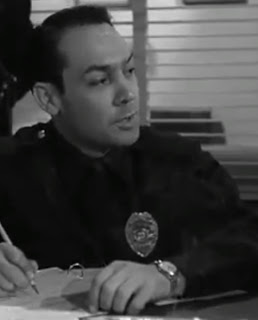
Paul Marco as Kelton the Cop
The backstory: The exact circumstances behind the making of Bride of the Monster are controversial and highly disputed, even today. Like the characters in Akira Kurosawa's Rashomon (1950), the cast and crew members of Bride of the Monster all tell differing accounts of what happened, when it happened, who did what, and why. Critics and film historians have only clouded matters by adding their own interpretation of the events.

Here is what we know for sure. Although Bride was shot on an extremely tight budget, it took Ed quite a while, possibly a whole year, to raise the money. This partially accounts for his two-year drought between features. Ed Wood very strongly believed that Loretta King, the film's female lead, was wealthy and would invest heavily in the film, but this did not come to pass. Bela Lugosi -- by all accounts very ill and frail during filming -- was paid somewhere between $750 and $1000 a day for his participation and may have negotiated for more money during the production process.

Meat packing tycoon Donald McCoy did put up most of the money for it, and his son, Tony, played the lead and acted as associate producer. Work on the film did come to a halt at one point, but then resumed once Ed Wood procured completion funds. Some footage for Bride was shot at the studio of renowned Hollywood cinematographer Ted Allan, but it appears that Ed's regular cameraman, William C. Thompson, took over after that. Judging from behind-the-scenes photos, Thompson was the cameraman for Bride's location footage, which was shot at Los Angeles' Griffith Park.

Ed was not an astute businessman and apparently sold more than 100% of the film to various backers, and when the film eventually received national distribution and enjoyed a healthy run on the drive-in circuit, neither the director nor his original backers saw much or any of the profits. The businessmen who handled the film wound up forming American International Pictures (AIP), so some film historians credit Ed Wood with inadvertently giving that important company its start.

Cast-wise, Bride features many returning Wood veterans: Lugosi, Dolores Fuller (though in a much smaller role than she would have wanted), Harvey B. Dunn, Don Nagel, Conrad Brooks, and Bud Osborne. Future Plan 9 cast member Ben Frommer turns up as a belligerent suspect at a police station, "borrowing" some of his dialogue from 1945's Dillinger.

The two truly significant additions to the Ed Wood repertory company this time around were Paul Marco and Tor Johnson. Marco, a short, dark-haired character actor with the voice of a Daws Butler cartoon character (half-Yogi Bear, half-Snagglepuss), portrayed the bumbling, cowardly Officer Kelton in the first of three such appearances for Ed Wood. Tor Johnson, a bald, 400-pound Swedish wrestler (with movie credits going back to 1934), portrayed Bela Lugosi's mute henchman Lobo, a part he'd reprise once for Wood and once for Boris Petroff, an independent director who would collaborate with Wood on a number of future projects. Tor, of course, would also go on to his iconic role as cop-turned-zombie Inspector Clay in Plan 9 from Outer Space a few years down the line.

Conflict resolution: Tor Johnson and Bela Lugosi.
So far, so good. Nothing too contentious yet, right? Well, once you start delving into specifics, that's when the history of Bride of the Monster becomes a baffling maze with no entrance, no exit, and a thousand blind alleys. A crew member swears that Ed Wood never drank while working. A backer says Ed was intoxicated every day. Wood himself says he was planning to marry Loretta King for her money. Loretta says she didn't have any money and was hired because Ed wanted to work with someone outside his usual circle. Ed's relationship with Dolores Fuller came to an end during this era, but was it before or after he awarded her role to another actress? Depends whom you ask.

Tim Burton's 1994 biopic Ed Wood would have you believe that Tony McCoy only came on board as Bride's male lead after the movie resumed production with new money from Tony's father, Donald. But some of the footage with Tony seems to predate the production stoppage.

Even the film's authorship is in doubt. During the Bride DVD commentary and intro, Ted Newsom repeatedly states that much of the credit for the film's screenplay should go to Ed's writing partner at the time, Alex Gordon, a British expat with whom Ed had previously written Jail Bait. However, direct quotes from both Wood and Gordon dispute this theory.

"I wrote Bride of the Monster for Lugosi," said Wood. "I wrote every line in that. I gave Alex Gordon a credit because he gave me an idea."

Gordon concurs: "Eddie rewrote the script The Atomic Monster and made a very low budget picture based vaguely on it." Another Gordon quote: "Bride of the Atom was a title Eddie thought up. My title was The Atomic Monster. Later on the script was completely rewritten."

Is Gordon being modest? Is Ed Wood being greedy? It's not for me to say. The version of Bride of the Monster's history that most of us know comes from Ed Wood. It's an entertaining and satisfying story, even if it bears only a passing resemblance to the truth. Even there, however, screenwriters Scott Alexander and Larry Karaszewski had to be extremely careful with the wording of the scenes involving Loretta King and her status as a potential backer for Bride of the Monster. Their script tactfully frames it as a simple misunderstanding.

Whether or not Loretta King was rich, Ed Wood certainly believed she was. His own words, quoted in Nightmare of Ecstasy, prove that. "She had a million dollars," he once claimed. Did she... or was this all in Ed's imagination? One is reminded of Bela Lugosi's Glen or Glenda speech: "No one can really tell the story. Mistakes are made. But there is no mistaking the thoughts in a man's mind!"

The viewing experience: Hallucinatory and surprisingly poignant. With its mushroom cloud finale and repeated references to atomic tests which may be affecting the weather, Bride of the Monster is Ed Wood's attempt to capitalize on the paranoia of the Cold War era. But it is just as rooted in the "old dark house" films of decades past, with most of its action centered around the spooky, decrepit "old Willow place" on "Lake Marsh" (or "Marsh Lake") in some scenes.

The film's principal location is a weather-beaten mansion occupied by exiled mad scientist Dr. Eric Vornoff (Lugosi), who dreams of creating "a race of atomic super beings" (shades of Nazism). Vornoff carries out his experiments on any traveler unlucky enough to trespass on his property, but he has thus far only succeeded in killing his test subjects, whose irradiated corpses are then fed to the doctor's pet octopus. The octopus, represented by a combination of stock footage and an actual rubber prop swiped from Republic Studios, is apparently the "monster" of the title, but another interpretation of the story is that Vornoff himself is the story's real monster.

Bela Lugosi's multifaceted character shows the schism occurring in Ed Wood's brain. On the one hand, given that this is supposedly Wood's "atomic age" film, Dr. Eric Vornoff should remain rooted in the world of science, albeit preposterous movie science. But the character's hypnotic stare and trance-inducing hand movements, imported from Dracula (1931) and White Zombie (1932) respectively, also place him in the world of the supernatural and romantic.

Wood has stated that the script was written "for Lugosi," and in fact, the plight of the central character -- he has been banned from his homeland and forced to seek refuge in a swamp many thousands of miles away -- mirrors that of Lugosi. Ed Wood's friend, John Andrews, explains:
"George [Becwar] plays this foreign agent, Strowski, whatever he is, in Bride of the Monster. And he goes to the swamp to visit Bela. He's trying to get Bela to go back to Hungary or wherever it is. Which the Hungarian communists actually tried to get Bela to do. They actually sent for him to come back to Hungary to be Minister of Culture. Plays, museums, stuff like that. And he told Eddie he was afraid to go over there, that they'd send him to a gulag."
Knowing this -- and knowing how close to death Lugosi was at the time of filming -- makes viewing Bride of the Monster a rather thought-provoking, even somewhat melancholy experience, despite its inherent silliness and rather slipshod construction. As the romantic leads, Tony McCoy and Loretta King are flat and uninspiring, engendering little sympathy with the audience.

The plot unfolds with a sort of free-associative dream logic and makes little narrative sense. The film's use of "stock footage" creatures -- not only the aforementioned octopus but also a snake and an aligator -- is extremely unconvincing, as is Dr. Vornoff's laboratory, which is constructed like the set of a high school play with its notorious two-dimensional "stone wall" backdrop and kitchen appliances and photograph enlargers in place of actual science equipment.

The ridiculous finale, a confusing jumble of incongruous shots capped by one of the most infamous last lines in movie history (Harvey B. Dunn's simplistic proclamation, "He tampered in God's domain.") pushes Bride of the Monster into the realm of camp. But I'll be damned if William C. Thompson (or possibly Ted Allan) doesn't manage to create some truly striking, evocative images along the way, helped along by the quasi-Universal-type score by Frank Worth.

And then, of course, there is Bela with his accent and his eyes and his wiggling fingers. There are some actors who qualify as "human special effects," and Bela is one of them, even in this weakened condition. As Ted Newsom rightly points out, Bela gave it his all in this film, even if the script did not merit it.

To be honest, Bride has never been among my favorite Ed Wood films, despite its prominence in his catalog and the fact that many of his fans like it best because it's the closest thing to a "real" movie Eddie ever made. It's too stifling and depressing for me, and it seems like a great deal of the running time is wasted in newspaper offices and police stations, listening to characters drone on and on about the plot. These days, I'm more likely to watch the MST3K episode in which this film is used as cannon fodder. The quips of Joel, Servo, and Crow help to relieve the tedium a bit. Sorry, Ed.

P.S. - For you serious Wood-ologists out there, take note please of Lobo's interest in Janet Lawton's fuzzy hat. Whether or not it's angora (Ed's preferred fabric), I don't know. But it preserves the writer's eternal interest in "feathers, furs, and fluff."

~~~~~~~~~~~~~

The month before Bride's premiere in May 1955, Ed shot some of the silent Bela Lugosi footage which would become the foundation for Plan 9 from Outer Space, but that film would not see the light of day until 1959. As always, "idea man" Ed had a number of potential projects in the works, few of were ever completed or even started. Would-be films from this era include the enticingly-named Rock and Roll Hell, which would have reunited him with Glenda producer George Weiss, plus Piranhas, The Dead Never Die, and Trial By Terror. While these scripts moldered in the grave, one of Ed's screenplays did reach theaters... to financial success, no less! Unfortunately, it was for another director. Which brings us to...

THE VIOLENT YEARS (1956)

Playboy Playmate Jean Moorhead in The Violent Years.

Alternate titles: Female; Violent Years; Teenage Killers; Teenage Girl Gang; Girl Gang Terrorists

Availability: Again, this one is available as part of S'More Entertainment's Big Box of Wood. Ted Newsom provides an introduction to this edition, but there is no commentary. The film is paired with Robert C. Dertano's 1954 film Girl Gang on a single DVD entitled Teenage Terror Drive-In Double Feature (Something Weird Video, 2001). Alpha Video released a bare-bones single-disc version in 2003.

Perusing various editions of the movie online and on DVD, I found one copy with the opening credits superimposed over a shot of the four main girls in the cast, one with the credits over a static shot of a generic city, and one with no opening credits whatsoever. The S'More Entertainment version has no opening credits.

Back again: Timothy Farrell.
The backstory: A distinguished editor whose resume includes such prominent films as Tarantula (1955), Song of the South (1948), and Of Human Bondage (1934), British-born William L. Morgan had a somewhat less distinguished career as a director, i.e. thirteen forgotten features released between 1940 and 1943, then a 13-year drought, and then this movie, his swan song. He would drop off the Hollywood radar entirely after another year.

Produced and distributed by tiny independent Headliner Productions, The Violent Years was a surprise box office hit in 1956. As would be the case again and again in his career, though, Ed did not share in the film's success. Naive and too trusting (in the words of Glen or Glenda? producer George Weiss), Wood was paid a flat fee for his script and did not get a cut of the film's box office revenue.

The film was a successful attempt to cash in on the public's fascination with juvenile delinquency, shamelessly exploiting the seedier aspects of the phenomenon while pretending to pass moral judgment upon wayward youths and their negligent parents.

Though Ed himself was not directly involved in the film's production, two seasoned veterans of Wood projects did work on The Violent Years: actor Timothy Farrell, who plays a cop named Lt. Homes and provides the obviously Dragnet-inspired narration, and our good friend, cinematographer William C. Thompson. The most prominent member of the cast is Jean Moorhead, who was Playboy's Playmate of the Month for October 1955 and who had a decade-plus career in film and television.

The rest of the cast is filled out by actors who had prolific but unremarkable careers in low-budget independent films. I. Stanford Jolley, normally a bad guy in "B" westerns, had probably the most prominent role of his career as the pious Judge Clara, whose droning, halting delivery was much mocked on Mystery Science Theater 3000 when this film appeared there.

Another pic of lovely Jean Moorhead.
The viewing experience: Folks, what can I tell you? I loved The Violent Years. I'd never seen it, not even in its MST3K incarnation, until this project. Now I don't know how I ever lived without it. Though not actually directed by Ed Wood, it's unmistakably his work. Structured very much like Reefer Madness (1936) and I Accuse My Parents (1944), The Violent Years features a humorless authority figure (in this case, a judge) who lectures the characters and the audience about the importance of morality, while the script doles out severe punishments to those who stray from the path of righteousness. But the movie, like Reefer Madness before it, doesn't forget to show the sinners having a hell of a lot of fun before the heavy consequences.

The main sinner, of course, is poor little rich girl Paula Parkins (Moorhead), whose father is an overworked newspaper editor and whose mother is a charity-obsessed socialite. Mr. and Mrs. Parkins give their daughter everything... everything but love, that is. To fill the emptiness inside her, Paula adopts a nihilistic attitude -- "So what?" is her credo -- and forms an all-girl gang who rob gas stations and have scandalous co-ed pajama parties. In one particularly absurd plot point, Paula and her gang are hired by "foreign" interests (read: communists) to trash a school room, which somehow leads to a shootout with the cops and fatalities on both sides of the law.

I have no idea if Ed was sincere when he wrote this script (based on a story by B.L. Hart) or whether he was laughing like a maniac after every stilted, artificial line. I kind of hope both are true. Jean Moorhead is absolutely gorgeous and gives a terrific, spirited performance, aided immensely by Bill Thompson's flattering cinematography.

So many of Ed's motifs are here, from alcohol (booze plays a prominent role in the girls' social life) to The Daily Chronicle (a fictional newspaper also seen in Glen or Glenda?, Jail Bait, and Bride of the Monster). The fact that the four main girls all use masculine nicknames based on their own names (Paula becomes "Paul," Georgia "George" and so on) and dress as men while committing crimes is an interesting reversal of the gender fluidity in Glen or Glenda? A scene in which a young woman is forced at gunpoint to hand over her angora sweater is a shocking variation on another famous Glenda scene.

Even more fascinating is the insight the script gives us into the mind of its author. In Glenda and Jail Bait, Wood tried to explain the odd or aberrant behavior of his heroes by analyzing the issues they had with their parents. In the first film, Glen was unloved by his parents, an indifferent father and a mother who wanted a girl, and so grew up to be a cross-dresser. In the second, Don Gregor's mother died early in his life, so he grew up to be a small-time thug.

In this film, Mr. and Mrs. Parkins seem like perfectly nice people, but they just don't spend enough quality time with their daughter. So spoiled Paula becomes a thief, murderess, and unwed mother. Other than Paula herself and the completely unhinged Judge Clara (whose speech advocating religion and a return of the "woodshed," i.e. corporal punishment, is completely inappropriate under the circumstances), the most intriguing character in this movie is Paula's mother, Jane (played by B-movie stalwart Barbara Weeks in one of her last roles).

Eternally optimistic, childishly innocent, and in a constant state of denial, Mrs. Parkins reminds me very much of Lillian Wood, Ed's own mother, the one who dressed her son as a girl to punish him. She might have scarred him for life, but in interviews, she seems to have no idea that her actions had any impact whatsoever on her son. She's completely insulated from reality. "They didn't know what the hell they were doing to me," Ed once confided to a friend when talking about his own parents. That's exactly the theme of The Violent Years.

Next week: Ed's magnum opus, Plan 9 from Outer Space, was still three years away. In the interim, Ed completed (but failed to sell) a fascinating television pilot and saw yet another one of his scripts brought to cinematic life by another director. I hope you will join me next week for coverage of Final Curtain (1957) and Bride and the Beast (1958).