|
| These days, you're most likely to find Venus Flytrap under the inaccurate title The Revenge of Dr. X. |
"Science fiction, double feature. Dr. X will build a creature."
-Richard O'Brien, The Rocky Horror Show (1973)
May the gods of drive-in cinema bestow their benevolent blessings upon Fred Olen Ray. The director of
Hollywood Chainsaw Hookers (1988),
Attack of the 60 Foot Centerfolds (1995) and dozens of other features, Ray was born in 1954 in Wellston, Ohio, a humdrum little iron-and-coal-producing town whose only other alumnus of real note was Kansas City Royals relief pitcher Jeff Montgomery. That horsehide hurler's 304 career saves notwithstanding, Fred Olen Ray is clearly the community's most distinguished ex-citizen, even though the lad actually did most of his growing up in Florida.
I wonder what Wellston thinks of its renowned native son, who currently directs made-for-TV and direct-to-DVD comedies and sci-fi films (e.g.
Abner the Invisible Dog; Super Shark) under his own name and churns out softcore sexploitation flicks (e.g.
Bikini Jones and the Temple of Eros; Tarzeena: Jiggle in the Jungle) under assumed names like "Nicholas Medina" and "Sherman Scott." Ray's also been known to wrestle under the name "Fabulous" Freddie Valentine from time to time.
Like Edward D. Wood, Jr., Fred Olen Ray was obsessed with movies from his early childhood. While Ed was weaned on the Bela Lugosi movies he saw at the local bijou, Fred's young mind was warped by monster model kits,
Famous Monsters of Filmland magazine, and the horror and sci-fi flicks he watched on television, including a couple of the films Eddie had directed back in the 1950s, most likely
Bride of the Monster (1955) and
Plan 9 from Outer Space (1959). When Ray grew up, there was no doubt about his career choice. The die had been cast.
 |
| A scene from Beach Blanket Bloodbath (1978). |
Fred Olen Ray directed
, produced, and wrote his first film,
The Brain Leeches, in 1978. He was 24, the very same age Ed Wood had been when he'd shot his own would-be debut,
Crossroads of Laredo, thirty years previously.
Crossroads was the first of Eddie's many ill-fated Hollywood projects, doomed never to go before an audience in its creator's lifetime. Among the very last was
Beach Blanket Bloodbath (1978), a horror-comedy spoof Ed wrote for Fred Ray, who shot a few minutes of the proposed feature in a fruitless attempt to secure funding. (This footage can be glimpsed in Ted Newsom's
Look Back in Angora.) Three decades of thwarted ambitions, missed opportunities, ever-worsening alcoholism, and just plain rotten breaks separated
Crossroads and
Bloodbath.
By the time battle-scarred veteran Ed met eager up-and-comer Fred in the late 1970s, there was almost nothing left of the once-promising young man who'd come to Tinsel Town with such high hopes in 1947. Just as Ed had once done with a down-and-out Bela Lugosi in the 1950s, however, Fred Olen Ray took an interest in this forgotten old-timer and did what little he could to revive his career. The humble, unassuming Ray later admitted that he had no idea how famous Ed would become in just a few years. As he told interviewer Giovanni Spada:
Early in my career, I wanted to make films and get people to put money into films, and I wanted to associate myself with people who had already made films that other people might know. And someone introduced me to Ed Wood, Jr., who had made some films with Bela Lugosi in the 1950s, and I hired Ed Wood to write a script for a movie called Beach Blanket Bloodbath. And I sent him some money, and he got started on the script. And I sent him a Christmas card, 1978, and the card came back, "Moved. No longer at this address." And I later find out that Ed had died. And where my script is, no one knows. But he was a very friendly guy, a very outgoing guy. He laughed a lot. And little did we know that years later, Ed Wood would become so famous.
From the 1960s on, Ed Wood was often either uncredited or billed under a pseudonym for much of his film work, which by then mainly consisted of writing screenplays for others to direct. How do we know, then, which movies Ed worked on? Well, for one thing, he apparently kept a record of them himself and added them to his résumé or CV (curriculum vitae), which he kept updated even during his declining years, still optimistic enough to be planning ahead for the next job opportunity. Though I've never had the chance to peruse these documents myself, I've seen references in print to Ed Wood résumés dated 1970 and 1974. If Rob Craig's book,
Ed Wood, Mad Genius:A Critical Study of the Films (McFarland, 2009), is to be believed, the consummately professional Eddie presented his CV to the young Fred Olen Ray back in 1978. And it is from this list of accomplishments that we can now trace Ed Wood's connection to a curious Japanese-American co-production whose very origins remain shrouded in mystery today.
VENUS FLYTRAP (1970)
 |
| The Rifftrax edition of the film. |
Alternate titles: The Revenge of Dr. X, The Revenge of Doctor X, The Venus Flytrap, Body of the Prey, The Double Garden, The Devil Garden, The Revenge of the Venus Flytrap.
Availability: Take your pick. After being distributed by various labels, including Reel Classic Films, Regal Video, and New Horizons, the film has fallen into the public domain and is available freely under the completely inaccurate title
The Revenge of Dr. X.
In this version, the opening credits are for another movie entirely, specifically
Mad Doctor of Blood Island (1968). Despite what the opening titles say,
Venus Flytrap was
not produced by Eddie Romero and Kane W. Lynn, written by Ruben Canoy, or co-directed by Romero and Gerry DeLeon. Furthermore, the cast does not include John Ashley, Angelique Pettyjohn, or Ronald Remy. Again, all of these wonderful folks worked on
Mad Doctor of Blood Island, which is an entirely different movie. Perhaps
Venus Flytrap and
Mad Doctor were intended to run as a double feature.
In any event,
The Revenge of Dr. X (which pointedly features neither revenge nor a character named Dr. X) is available as part of the
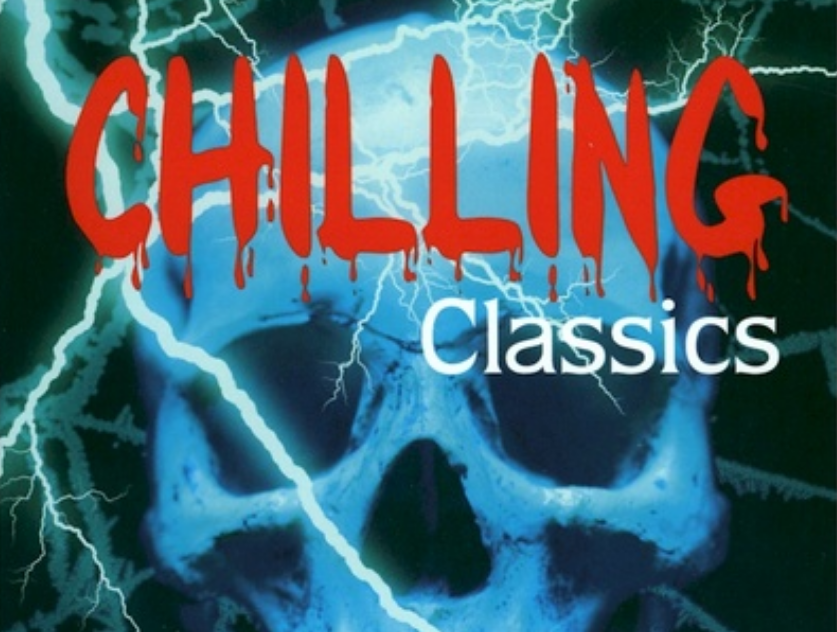
Chilling Classics 50 Movie Pack (Mill Creek, 2005) for about the same price as you can buy it as a
standalone DVD (Syngergy, 2007). Through Amazon Instant Video, you can
download the movie for eight bucks or rent it for three. For ten bucks, you can download
the Rifftrax version of the film, with humorous commentary by Mike Nelson, Kevin Murphy, and Bill Corbett.
 |
| Regal Video's VHS version. |
The backstory: Hoo boy. This is a tricky one. More so than with any previous film in this series, I will have to rely on third-hand information, rumors, and hearsay in my discussion of
Venus Flytrap. Let's start with a basic question: who directed this movie? Well, it was not Ed Wood. On that issue, all sources are in agreement. Ed's authorship of the screenplay seems no longer to be in dispute, and reference books which include this film also acknowledge that it was made in Japan in either 1966 or 1967. The appearance of a slightly-worn 1966 Chrysler in the film is a reliable indicator of its age. Where the 1970 release date comes from, I do not know, as the film does not seem to have achieved widespread theatrical release under any of its multiple titles.
By most accounts, the film acquired the title
The Revenge of Dr. X as well as the totally inaccurate credits during the 1980s, when it was released on VHS tape by a company called Regal Video. The rumor mill has it that Regal was founded by furniture retailers and that the company carelessly disposed of the original master, which had no opening credits at all, after transferring the film to videotape. Whether or not this is true, the only version of the movie currently available was clearly made from a rather murky VHS copy. No better prints of the film have surfaced, if in fact they even exist at all.
The identities of the filmmakers are still up for debate as well. Several reference works -- including Rob Craig's
Ed Wood, Mad Genius and Thomas and Yuko Weisser's
The Japanese Cinema Encyclopedia (Vital Books, 1997) -- claim that the film was directed by
Kenneth G. Crane (1907-1995)
, who also helmed
The Manster (1959) and
Monster from Green Hell (1957) and was chiefly employed as an editor by the mid-to-late 1960s. The IMDb's current director of record is
Norman Thomson (1916-2000)
aka Earl Norman aka Norman Earl Thomson, a pulp novelist and stage/screen actor who had been part of Orson Welles' Mercury Theater Players, including their infamous
War of the Worlds broadcast. Thomson spent most of his career in Tokyo, Japan, where for thirty years he served as the entertainment supervisor for all American military bases in the Far East under the direction of the US Department of Defense.
Thomson's daughter, Patricia Ayame Thomson, was born in Tokyo during this time and grew up to become an actress herself, with appearances on
Days of Our Lives and
Seinfeld. Her
IMDb biography discusses her father's career somewhat.
The Toei Company, a prominent Japanese film and TV studio incorporated in 1950 (and responsible for such MST3K favorites as
Invasion of the Neptune Men and
The Green Slime as well as the highly-regarded
Battle Royale), may have been involved in the production of
Venus Flytrap.
While the company has officially disavowed any connection to it, as have all Japanese studios, an Ed Wood scholar identified as
Doctor Kiss has stated that there is paperwork indicating that the company did finance
Venus Flytrap. For what it's worth, the IMDb currently lists the movie as a Toei production.
The case for Norman Thomson as the movie's director is strengthened by some vintage articles from
Stars & Stripes, the American military's official newspaper. On page 13 of the October 6, 1967 edition is an article by
Miami serviceman and columnist Al Ricketts, who has a prominent and pivotal role in the film as an eccentric, grease-stained gas station attendant. In the piece, which was part of his regular column called On the Town, Ricketts writes about Atsuko Rome, the film's lead actress. In particular, the article describes the making of one of the movie's many diving scenes, which were apparently as grueling as they appear to be in the finished movie:
 |
| Atsuko Rome on film and in print. |
I would imagine that most girls in the world, regardless of their vital statistics, dream of becoming movie stars. Or Miss Universe. Or maybe even the Playmate of the Month in the centerfold of Playboy Magazine.
But there's one girl I know currently making her debut in motion pictures who really doesn't care whether she becomes another Marilyn Monroe or not. I'm referring to the pert and shapely Atsuko Rome, who is actor James Craig's co-star in Earl Norman's "Body of the Prey." The Tokyo-born daughter of a well-known pottery artist (her husband is a retired Army colonel) is in the seaside city of Shimoda right now getting her first taste of what it's like to work in a Hollywood-type atmosphere of cables, bright lights, angry shouts from the director and numerous retakes.
I found her dripping wet, wrapped in a blanket, her hair an absolute mess -- and shivering -- after repeated plunges into a cold salt water aquarium. To make matters worse, the tank was at least 20-feet deep and the pressure on the eardrums at the bottom was fierce.
Yet, Asuko was in good spirits and quite excited about her first day as a movie star. "I'm nervous," she said, "and a little frightened. The water is not so cold ... but the pressure on the ears is terrible. And I almost freeze to death every time I come out of the water."
Does she like the idea of becoming an actress? "It has been exciting -- this first day. And I think I will like it. But I don't want to go to Hollywood. And I won't care if I never make another picture ... At least I don't think so right now.
"Maybe I am being too honest? I don't know what to say. Maybe I'm saying all the wrong things. I really don't know how to handle these things. I just feel that I have to be myself, that I must tell the truth. Is that wrong/"
It's not wrong, Atsuko. It's refereshing. But you would cause a Hollywood press agent to have a heart attack by making remarks like that. Like it ain't show biz, baby.
 |
| Venus Flytrap's ultra-manly star, James Craig |
Neither Mr. Ricketts nor Ms. Rome
ever had occasion to step in front of a motion picture camera again after this film was completed. The other few performers in this movie who can be identified -- such as John Stanley and Edward M. Shannon (likely backers who play "Dr. Stanley" and "Dr. Shannon" respectively), plus Lawrence O'Neill and Tota Kondo -- are one film wonders with no other movie or TV credits. American-born James Yagi, who plays the level-headed Dr. Paul Nakamura, did rack up a number of Hollywood credits in the 1950s and 1960s, mostly on TV shows like
Dobie Gillis and
My Three Sons. It is also possible, though not positively confirmed, that Miyoshi Umaki (1929-2007) of
Flower Drum Song and TV's
The Courtship of Eddie's Father, has a bit role in the production as well.
As Al Ricketts mentions in his article, however, the real star of
Venus Flytrap (or
Body of the Prey) and easily its most recognizable face is James Craig (1912-1985), an actor who by then was nearing the end of a 35-year movie career. Named by exhibitors as the second-most-likely new star of 1944 (just behind
perennial punchline Sonny Tufts), Craig appeared in a few high-profile productions like
Kitty Foyle (1940) and
The Devil and Daniel Webster (1944) early in his career, but was more often relegated to low-budget "B" features and serials. By taking whatever parts came his way, he managed to stay employed for several decades before finally bottoming out with 1972's pitiful
Doomsday Machine.
In 1968, after the production of
Venus Flytrap but before its release, Craig appeared in arguably his most popular film, the David L. Wolper-produced war story
The Devil's Brigade, alongside such manly actors as William Holden, Cliff Robertson, and Richard Jaeckel. By that time, with his slicked-back hair and neatly-trimmed pencil mustache, Craig bore a striking resemblance to the older Clark Gable but apparently did not have Gable's effortless magnetism or broad appeal with audiences. After producers stopped calling and the offers dried up, Craig retired from acting and made his living as a successful real estate agent. Interestingly, this parallels the career of another Ed Wood graduate, Tom Keene, who got out of show business to sell life insurance in his autumn years.
 |
| Is this character intended to be a "sneaky Jap?" |
The viewing experience: Venus Flytrap offers everything you would expect from an Ed Wood movie from the 1950s -- including highly quotable dialogue, lovably naive special effects, and a baffling, nonsensical plot -- except that it takes place in Japan in the late 1960s. It is possible that the film's exotic setting is a remnant of Ed's own haunting WWII experiences in which he was forced to kill Japanese soldiers. Or it may be that the plot of Ed's script was simply transplanted to Japan by the filmmakers because that's where they were stationed. The island nation provides an intriguing backdrop to the film, with its looming volcanoes and deferential women, but it is not actually essential to the story. This is simply a mad doctor movie which happens to take place in Japan.
Rob Craig comments on the "creeping racism" of the resulting film, but I feel he's overreaching with this observation. Easily the film's most negative character, agitated NASA rocket scientist turned botanist Dr. Bragan (James Craig), is American. The Japanese characters are presented in a neutral-to-positive way throughout the film. Yes, Bragan does have a leering, creepy, hunchbacked assistant who is Japanese, but I feel this character owes far more to the deformed servants played by Dwight Frye in
Frankenstein (1931) and
The Bride of Frankenstein (1935) than to the "sneaky Jap" stereotype as Rob Craig suggests. And the hunchback is in no way representative of the film's other Asian characters, who are mostly helpful, sane, and reasonable, especially in contrast to the temperamental, volatile, and selfish American Dr. Bragan.
Apart from the Universal Frankenstein films,
the clearest antecedents of
Venus Flytrap are Roger Corman's
The Little Shop of Horrors (1960) and Ed Wood's own
Bride of the Monster (1955). As the movie opens, NASA scientist Dr. Bragan is severely stressed out by the many delays and miscaluclations which threaten the agency's space shuttle launches. (Bragan's most famous line is reminiscent of
Plan 9's haughty alien Eros, only less polite: "How in the
hell can anybody be so
utterly stupid as to build a rocket base on the coast of Florida?") Bragan throws temper tantrums, yells at his subordinates, and seems to be experiencing migraines or even blackouts which are affecting his work, so his partner, Dr. Paul Nakamura, suggests a lengthy sabbatical in Japan and arranges for his lovely cousin, Noriko Hanamura (Atsuko Rome), to meet Bragan at the airport and serve as his assistant during his visit.
On the way to the airport in Wilmington, North Carolina, Bragan suffers a clogged fuel line and stops at a backwoods filling station to have the vehicle repaired. There, he meets the establishment's filth-encrusted but friendly owner (Ricketts, in a role Ed must have been intending for Harvey B. Dunn) who encourages Bragan to examine his collection of snakes while the car is being repaired. The doctor isn't much interested in snakes but is fascinated by some Venus flytraps he finds growing on the property and, with the owner's blessing, takes a few samples along with him on the plane trip to Japan.
 |
| Dr. Bragan chats with a topless diver in Venus Flytrap. |
Once Bragan gets to Japan, the incredibly accommodating Noriko informs him that her father has a neglected resort with a functioning and well-maintained greenhouse high up in the mountains. Rock slides and volcanic eruptions make the place as impractical a vacation spot as
The Shining's Overlook Hotel, but Noriko's family has held on to the place and kept the hunchback on salary as the hotel's full-time caretaker. (In their quite-funny commentary on the film, the Rifftrax guys repeatedly point out how unlikely and impractical this business model truly is.) Once Dr. Bragan has his new greenhouse laboratory set up, he begins an experiment to prove that human beings evolved from plant life. To accomplish this, he plans to splice together the Venus flytrap, a land plant, with the "Venus Vesiculosa," a large, tube-like sea plant, to create an ambulatory, carnivorous hybrid he dubs "Insectivorus."
Noriko assists Bragan in this utterly-insane scheme, but she is increasingly unsettled by his erratic behavior. There are several sequences in which she gets out of bed in the middle of the night, goes to the window, and watches the white-coat-wearing Bragan traipse off into the woods in search of... something. (One possible justification for these scenes is that they provide an excuse to show Atsuko Rome silhouetted in a sheer nightgown against the window.)
The side trip that Bragan and Noriko take to locate the elusive "Venus Vesiculosa," offers one of movie's few concessions to the era in which it was made. Namely, the two are assisted in their underwater scavenger hunt by the lovely, topless maidens of Chiba. In a weird detail seemingly cribbed from an old Disney animated movie, Bragan totes the rare plant around in what looks like a glass coffin once he's "liberated" it from the ocean floor, as if the plant were Snow White or Sleeping Beauty awaiting a kiss from Prince Charming.
From there, the movie progresses pretty much like you'd expect for a mad scientist film of this vintage... or, more accurately, of a mad scientist film from the 1940s. The Insectivorus, a huge, lumbering humanoid creature with Venus flytraps for hands and dreadlock-ish stalks growing out of its onion-like head, escapes from the lab and goes on a killing spree in a nearby village. This, in turn, attracts the attention of a torch-wielding mob (led by the father of one of the creature's victims) and leads to the downfall of both the doctor and his incredible creation. It's the standard "he tampered in God's domain" deal.
The movie swipes quite a bit from the
Frankenstein films, especially a "creation" scene in which the monster is raised on a platform toward a skylight during a thunderstorm. In
The Ghost of Frankenstein (1942), Bela Lugosi's Ygor famously described the Monster's origins: "The lightning! It is good for you! Your father was Frankenstein, but your mother was the lightning!" Well, Ed Wood has Dr. Bragan cycle through several variations on this line, including:
- "Your mother was the soil ... perhaps the lightning will become your father!"
- "The earth was your mother. Your blood will be the rain. Your father, the lightning!"
- "Your mother was the earth, the rain your blood, the lightning your power!"
As indicated previously, Dr. Bragan also has a great deal in common with Bela Lugosi's Dr. Eric Vornoff from
Bride of the Monster. Vornoff is a grouchy, short-tempered mad scientist who once worked for the government and who has now isolated himself in a remote, creepy house where he spends his time making monsters in an attempt to prove some kind of asinine theory about the essence of life.
The Insectivorus, for its part, seems derived in equal measures from the Frankenstein Monster (at least the less-sympathetic version of that character played by Glenn Strange) and Audrey, Jr., the man-eating, bloodthirsty killer plant from
The Little Shop of Horrors. Like the leafy menace from the seminal Corman film, the Insectivorus at first appears to be weak and fragile until it feasts on something living (in this case, sadly, a puppy) and grows strong. The plant gains control over its human master, and just like the hapless Seymour (Jonathan Haze) did in 1960, Dr. Bragan embarks upon furtive, late-night missions to acquire fresh blood for the hungry plant. In Bragan's case, this involves going to a Sanitarum and extracting the vital life fluid from a sleeping female patient, affording the filmmakers another chance to work in some gratuitous nudity. (Though as Joe Bob Briggs once pointed out, no nudity is ever truly gratuitous as long as it's any damned good.)
Whatever its title,
Venus Flytrap seems deserving of a larger cult following. It contains all the elements that "B" movie fans would want, including a discordant and truly odd musical score, a profoundly silly monster, some very clumsy camera work, and acting which ranges from apoplectic (James Craig) to narcoleptic (Atsuko Rome, who seems to have learned her lines phonetically). But it also gives us some insight into the obsessions and diversions of Edward D. Wood, Jr. Many of Ed's pet motifs appear here, including alcohol, lightning, snakes, dogs, and frilly nightgowns. And in some of Dr. Bragan's lunatic ranting, there is even some existential Wood-ian philosophy evident. During a quiet moment with Noriko, Bragan looks up to the heavens -- the source of his livelihood -- and muses:
"My life has been out there, and it still seems to be. It's my probe, my project, that speeds on its way to another planet, to search its depth, its soil, its life perhaps, its mysteries... when there are so many mysteries right here on our own planet we haven't even solved."
This very project has taught me just how true that statement is.
Next week: Edward D. Wood, Jr. has had more "final films" than the Who have had "farewell tours." If you'll cast your minds back nine years, you might remember that there was a minor media sensation in 2004 when Fleshbot Films (a now-defunct spinoff of a still-existent porn blog) released Ed Wood's supposed "last movie "on DVD in both its softcore and hardcore versions. At the time, Fleshbot was owned by Gawker Media, so the story got around quite a bit. In fact, this particular title was not Ed's last directorial effort of all time. Heck, it wasn't even his last directorial effort of 1971! But it is, for now, the last movie written and directed by Edward D. Wood, Jr. to receive an official DVD release. And now, dear readers, it has found its way to this blog. Meet me back here in seven days for an uncensored examination of Necromania: A Tale of Weird Love (1971).