Showing posts with label SNL. Show all posts

Wednesday, December 11, 2024

2024 Fun Comics Advent Calendar, Day 11: Tina and the Comedy Factory

I just noticed that I never actually mentioned Tina Fey's last name in this comic. Whoops!

This was originally going to be a much longer piece. I had planned to do the complete ending scene from Willy Wonka and the Chocolate Factory with Lorne Michaels as Willy Wonka and Tina Fey as Charlie Bucket. I even had dreams of selling it to a humor website for $50 or so. But as I got further into it, I realized my plan wouldn't be practical and that no editor would buy it anyway. So I just kind of bailed on it after a few panels. Those panels are visible above. I think this is about as good as it was ever going to be. Sorry or you're welcome, I don't know which.

Wednesday, October 31, 2018

Ed Wood Wednesdays, week 74: The Canned Film Festival (1986)

Laraine Newman (fourth from left, in usherette costume) heads the cast of The Canned Film Festival.

Let's face it. Old B-movies, especially those of the horror and sci-fi variety, are inherently funny to many viewers. The plots are often far-fetched, the dialogue improbable, the acting dubious, and the special-effects shoddy. Audiences see these films, and their first instinct is to laugh. And yet the characters onscreen are required to take themselves and their situations very seriously indeed. Which, in turn, makes the movies even funnier.

This is the central truth that has fueled the Ed Wood cult for decades. People come to his movies mainly to laugh at their cheapness and naivete. I've been in these theaters. I've heard the laughter. I've done some of the laughing myself. I couldn't help it.

Vampira: One of the early horror hosts.
This phenomenon hardly began with the publication of Harry and Michael Medved's The Golden Turkey Awards in 1980. Television horror hosts have been poking fun—and not always in a gentle way—at sci-fi and horror movies since the 1950s and 1960s. One such wisecracking host was Maila "Vampira" Nurmi, who actually appeared in Ed Wood's Plan 9 from Outer Space (1959) and forever after became associated with the director, much to her embarrassment. In Tim Burton's Ed Wood (1994), Eddie complains that Vampira "doesn't show [the movies] the proper respect."

A certain level of kidding is present, too, in the fan magazines of that period. Rudolph Grey maintains that the Ed Wood cult really began in the pages of Forrest J. Ackerman's Famous Monsters of Filmland magazine, where stills from Eddie's movies would run with captions like "one of the un-best movies of all time." Ackerman's readers were the ones who grew up and and alerted the authors of The Golden Turkey Awards to the existence of Edward D. Wood, Jr. and Plan 9.

The Medved book brought this type of humor into the mainstream, and it introduced Ed Wood's movies to a larger audience, too The "bad movie" cult thrived in the 1980s as never before. In 1982, Paramount released It Came From Hollywood, a compilation of vintage "Grade Z" movie clips hosted by a gaggle of comedians, including Gilda Radner and Dan Aykroyd from Saturday Night Live. That film devoted an entire segment to Eddie. In 1988, Mystery Science Theater 3000 debuted as a local program in Minneapolis before going national on Comedy Central the next year. That series eventually dissected several of Eddie's films, including Bride of the Monster (1955), The Violent Years (1956), and The Sinister Urge (1960).

The Canned Film Festival
A less-heralded, indeed largely forgotten, example of this trend was a syndicated series called The Canned Film Festival. Lasting for 13 wacky weeks in the summer of 1986, it was hosted by another Saturday Night Live veteran, Laraine Newman, whose thin frame and Los Angeles twang had typecast her somewhat as a Valley Girl ditz. The show's title served as both a pun on the famed Cannes Film Festival and a reference to the program's sponsor, Dr. Pepper. The soft drink maker had long prided itself on its eccentricity (see the "I'm a pepper!" spots with David Naughton), so underwriting a series built around wild and woolly B-movies somehow seemed a natural fit for the brand.

At the time, Dr. Pepper was running its own ambitious Mad Max-inspired science-fiction ad campaign. That campaign, like The Canned Film Festival itself, was devised by a New York-based marketing firm called Young & Rubicam. This company had handled Dr. Pepper's marketing since 1969. Y&R finally lost the Dr. Pepper account in 2008 after nearly 40 years of truly creative, memorable advertising.

If The Canned Film Festival hadn't debuted two years before Mystery Science Theater 3000, one might almost be tempted to call it an MST3K ripoff. Like that series, Canned has its own high-concept premise, explained at length in the introduction. Laraine Newman plays Laraine, the owner of a small, struggling movie theater called the Ritz in the fictional town of Limekirk, Texas. She runs the place with her reclusive, rarely-seen mother—Mom running the projector, daughter serving as usherette—but business is lousy. At first, Laraine tries to lure customers by adding laundry facilities and selling eccentric snacks at the concession stand. (Chocolate Covered Lug Nuts, anyone?)

An announcer (Bill St. James, uncredited) informs us: "And that didn't work, so she gathered together a collection of the strangest, silliest, most unusual movies ever made, stocked every refreshment imaginable, and she called it The Canned Film Festival! Will she pull it off? Will Laraine and her mom survive?" Based on the show's short shelf life, the answer was obviously no. While MST3K lasted a decade and has recently been revived on Netflix, Canned came and went in a few months. The two series covered a lot of the same territory. Of the 13 films shown on Canned, seven wound up on MST3K. And one of those was Ed Wood's Bride of the Monster.

Tor: The ultimate door prize?
The Bride of the Monster episode gives you a good idea of what The Canned Film Festival was all about. Running an hour and a half with commercials, the show intersperses movie segments with sitcom-like vignettes centered around Laraine and her group of zany regulars who come in to wash their clothes and watch the flicks. Of these supporting players, I recognized amiably dopey character actor Patrick Garner from his appearances on Chappelle's Show, where he made an ideal "clueless white guy" stereotype. (You Square One Television fanatics might remember him as "Simon Legume" on Mathnet.) Kathryn Rossetter and Phil Nee have also had durable careers in TV and film without ever becoming household names. Unlike MST3K, there is no commentary from the cast during the movie portions.

At the outset of the show, Laraine Newman is proudly handing out genuine Tor Johnson masks from Don Post Studios. Perky, naive Becky (Laura Galusha, whose resume is largely barren) is freaked out by Tor's visage, while gossipy Doris (Rossetter) is thoroughly unimpressed. Two nerds, talkative Fitzy (Garner) and taciturn Chan (Nee), are more enthusiastic. Laraine's character, meanwhile, can be described as a trivia-spouting film fanatic. She describes the feature to her patrons this way: "Tonight's film is Bride of the Monster, written and directed in 1953 by the legendary Edward Wood. It stars Bela Lugosi. You know, he was hoping this movie would launch his comeback, but it never did." And, yes, the film really was made in 1953 despite not being released until 1955. Good catch, Canned Movie Festival.

Both the announcer and Fitzy point out that Bride of the Monster was Bela's "last speaking role." This is something I hadn't considered, but it turns out to be true. After Bride, Bela appeared in The Black Sheep (1956) for director Reginald Le Borg but was not given any dialogue. His final role in Plan 9 was obviously silent. So, yeah, Bride is the last time Bela speaks in a movie. After staggering out of the theater, Fitzy and Chan debate what Bela's ultimate line actually is. Chan seems to think it was "AWWWWW!" but Fitzy insists it was more like "AHHHHHH!" ("AWWWWW!" was Tor's last line, Fitzy clarifies.)

Later, swapping trivia with Fritzy and Chan, Laraine drops this bombshell: "When [the filmmakers] rented the sea monster from the Disney studios for this film, they didn't have enough money to rent the motor to make it move. They had to make it move themselves!" Where she got the part about Disney, I have no idea. Maybe writers Ken Smith and Mike Wilkins thought the monster was from Disney's 20,000 Leagues Under the Sea (1954). For the record, the rubber octopus came from Republic's Wake of the Red Witch (1948) with John Wayne

In a lot of ways, The Canned Film Festival serves as a snapshot of the Ed Wood cult as it stood in 1986. This was six years before Rudolph Grey's Nightmare of Ecstasy: The Life and Art of Edward D. Wood, Jr., the first comprehensive book about the director, so there were a lot of rumors, half-truths, and urban legends circulating about Eddie. Some of those stories are so entertaining, they've become permanent parts of the myth. When Fitzy mentions Tor Johnson breaking Ed's toilet seats, Laraine counters with: "He directed all his films wearing women's clothes! And no one knows where he's buried!" The toilet seat thing appears to be true, but the rest is hooey.

The show also tries to discuss Wood's movie from a critical/analytical standpoint. Fitzy opines that Bride "shows how absolute power corrupts absolutely. And never let a stranger strap a spaghetti strainer to your head!" For her part, Becky identifies with the Janet Lawton character. She's going through a rough patch with her boyfriend Jack (F. Richards Ford, largely absent from this episode) and offers this feminist interpretation of Bride of the Monster:
I see a woman who has taken charge of her own destiny. Well, she's engaged to Tony, but she goes out on her own. She's not afraid. She... she turns down dinner, and she goes to the swamp! The forbidden swamp! The swamp that everybody's afraid of! Oh, the men don't like the swamp. The men stand around outside the swamp, smoking cigarettes and talking about the weather and how much they don't like the swamp. But she... she rushes right in! Maybe that's what I have to learn! I have to learn how to go into the swamp all by myself and find out what it is I'm really afraid of. And then what? Go home and change and go out to dinner. (laughs) Is that what it's really all about?

The female characters wander away from the movie from time to time to check on their laundry. The Canned Film Festival does show its age during a scene when Doris comments about Chan: "For a Chinaman, he doesn't know diddly about laundry!" Becky helpfully keeps her pal updated on the plot: "Tor Johnson throws a scientist to the sea monster, then he took the girl up to Bela Lugosi's room." And just like Johnny Depp in Ed Wood, actress Laura Galusha attempts to imitate Bela's hypnotic hand gestures.

"I and my so called droogs wore our maskies."

The episode ends on a hopeful note. Lovers Becky and Jack have reunited, and Laraine has even persuaded her hermit-like mother to come out of hiding and play the calliope at a nearby benefit show, though the diminutive old lady hides her face behind a Tor Johnson mask before slowly exiting the Ritz. The other characters all don their Tor masks and cheerfully follow her, except Doris, who doesn't want to mess up her pristine hairdo.

The Canned Film Festival was clearly a non-starter for both Dr. Pepper and Laraine Newman, so there was no second season. Maybe it was difficult for producers to sell an oddball, 90-minute program like this to stations across America. The show is nowhere near as well known as Mystery Science Theater 3000, and it lags behind such comparable series as Mad Movies with the L.A. Connection (1985-1986), Jay Ward's Fractured Flickers (1963-1964), and Joe Bob Briggs' MonsterVision (1991-2000) in terms of popularity.

Judging by its highly detailed Wikipedia page, however, The Canned Film Festival obviously has its fans. And it's pretty easy to see why. The series offered up some memorable B-movies at a time when those were not readily accessible on home video. The wraparound segments, while not staggeringly brilliant, are quite amiable. Laraine Newman is clearly having fun here; she probably didn't get a lot of opportunities to play know-it-all film buffs. The Bride of the Monster episode is a terrific time capsule item. Besides the movie and the vignettes, it includes a variety of truly loopy, sci-fi-inspired Dr. Pepper spots plus some promos for Tobe Hooper's The Texas Chainsaw Massacre 2 (1986). And keep an eye peeled for a Sports Illustrated ad with a very young Rob Morrow.

Saturday, October 28, 2017

Oh my god, I've been watching SNL wrong my whole life.

David Koechner and Mark McKinney as the Fops on Saturday Night Live

The cast of SNL in the early 1980s. Eddie Murphy in foreground.
My parents weren't lenient about everything, but they were very understanding about letting me stay up late and watch TV as long as I didn't have school the next day. In the summers during my elementary school years, for instance, I got to watch The Tonight Show Starring Johnny Carson and even Late Night With David Letterman. I had the same privilege on Friday nights during the school year, so it really bothered me that Dave's show originally only ran from Monday to Thursday, ceding its place on the NBC schedule to Friday Night Videos once a week. But I still saw plenty of after-hours talk shows back then. By junior high, I was already writing my own Top 10 lists. So thanks for that, Mom and Dad.

As near as I can figure, I must have started watching Saturday Night Live when I was 8 or 9. It was the early 1980s. Dick Ebersole was running the show then, and Eddie Murphy was the star attraction. I've been a faithful SNL viewer ever since, regardless of the show's quality. Whether it's good, bad, or (most likely) mediocre, I'm there for every new episode. I'll keep watching SNL until either it expires or I do.

So what? Well, I've come to realize that my way of watching SNL is actually all wrong and directly in opposition to the wishes of the show's creator, Lorne Michaels. Except on those rare nights when the cast and crew are firing on all cylinders, Saturday Night Live  can be a chore to watch. With commercials, it's 90 minutes long -- almost the length of a feature film -- and most weeks, you can feel every minute of that. The musical guests are often of little interest to me, so I wind up muting them. When the show isn't hosted by a comedian, the opening monologue is often torturous, too.

Even the sketches -- the jewels in the show's crown -- can be painful. We've all heard the stories about how cast members and writers compete ferociously to get their sketches on the air, and yet SNL often feels like it's desperately filling up time with any material it has available. Many sketches follow a pattern I call "ever-escalating variations." This means that the performers do different versions of the same basic joke over and over for five minutes, only making the central joke slightly more intense with each repetition. SNL studio audiences have become so familiar with this formula that, occasionally, they won't laugh at a joke until it's repeated. They're waiting for the pattern to emerge. Over four decades, essentially, the show has trained them how to watch sketches.

This problem is more noticeable in the sketches that involve recurring characters. From the Coneheads to Stefon, SNL has had many, many, many, many such characters over the years. They're the lifeblood of the series. And each of these characters generally has his or her own catchphrases and signature routines that become well-known to viewers. A classic SNL recurring character typically does the same exact things in the same exact order in each appearance. Even if you love the character, it can get a bit boring for the every-episode viewer like myself because you can predict exactly what this person is going to do well in advance.

But here is where I've been screwing up. Check out this 2013 interview with comedian Mark McKinney, who served as a writer on SNL in the 1980s and came back as a cast member in the 1990s. This guy knows what he's talking about from an insider's perspective. And here's what he says about Lorne Michaels and recurring characters:
"Lorne pointed out, and I think this is absolutely true, that even if you have big fans who are really into your show, they'll probably only see every second one. Or sometimes every third one. So that's the logic, at least on SNL I know, about why they sort of repeat characters."
So there you have it, folks. Straight from the source. I've been watching SNL incorrectly for decades. Lorne wants you to watch every second or third episode. Maybe you're not even supposed to watch all 90 minutes each week. I've noticed that, the Sunday after a new episode airs, there are highlight videos all over YouTube and the rest of the internet. And, generally, it's only two or three sketches that get any real attention out of any given show.

SNL usually is well-served by judicious editing, i.e. cutting away all the filler and getting to the handful of funny sketches. The earliest episodes of the show -- with Belushi, Aykroyd, etc. -- were just a little bit before my time, but I saw highlights from this era through a half-hour syndicated series (called, I believe, The Best of Saturday Night and masterminded by Lorne himself) that played both on a local affiliate and, later, on Nick at Nite. I loved it. It wasn't until years later that I finally saw full-length episodes with the original cast. I thought it would be even better, but I realized I greatly preferred the condensed half-hour editions. Even "classic" SNL had a lot of dead time.

The weird thing is, I probably won't change the way I watch SNL, even if it prevents me from fully enjoying the show. I'll still be there for every new episode, and I'll still watch from beginning to end each time. Sorry, Lorne.

Sunday, April 3, 2016

How 'SCTV' made the most of its celebrity impersonations

Dave Thomas (left) and Martin Short on SCTV.

One of the delusions under which Saturday Night Live continues to operate is that celebrity impressions are inherently funny on their own. On SNL, it's generally enough for cast members to look, talk, and dress like well-known public figures. Actually doing anything interesting with the impressions is secondary or tertiary at best. The show usually concocts some very contrived reason for its imitations, i.e. "What if [so-and-so] auditioned for Star Wars/James Bond/Back To The Future/whatever? Wouldn't that be wacky?" Sometimes, if they're really desperate, they'll throw together an all-star Family Feud sketch and just burn off a whole bunch of celebrity impressions at once.

The whole point seems to be recognition. We're supposed to watch in utter stupefaction and say, "Hey! That guy sounds just like that other guy! Amazing!" Never mind that celebrity impressions are so commonplace that YouTube has a seemingly endless supply of them or that the IT guy at your workplace probably does a halfway decent Christopher Walken.

SCTV did things a little differently. More so than SNL, SCTV was concerned with developing full personalities and lives for its recurring characters, rather than reducing them to a few easily identifiable tics and catchphrases. It's amazing, in retrospect, how much we learned about Bobby Bittman, Johnny LaRue, Edith Prickly, Guy Caballero, Lola Heatherton, and others.

And that thoroughness occasionally extended to the show's celebrity impersonations, at least the ones that made multiple appearances. It's not enough on SCTV to simply mimic another performer's way of talking; the show's best sketches make a study of the person's thinking and behaving as well.

The supreme example of this is Dave Thomas' Bob Hope impression. Bob wasn't locked into one sketch or format on SCTV, so he could pop up in all kinds of places. He might unexpectedly drop by during The Sammy Maudlin Show, casually ruining Bobby Bittman's set. Or he might be hosting a pro-am golfing tournament in the Middle East or mentoring Rick Moranis' nervous, adoring Woody Allen.

One of my favorite Hope skits from SCTV is a talk show parody called "Stars In One," which teams Thomas with Martin Short as probing interviewer Brock Linahan, a parody of genuine Canadian TV personality Brian Linehan. Like his real world counterpart, Short's character has an eerie talent for keeping his guests off-balance with a combination of flattery and acrimony, buttering them up one moment and undercutting them the next. In the sketch, there is palpable tension between Linahan and Hope, the latter an old-school showbiz lifer who barely speaks the same language as his verbose, wide-eyed inquisitor.

This sketch just floors me. It would be impossible to imagine on SNL. "Stars In One" never goes for an obvious punchline, though SCTV's trusty laugh track chortles away somewhere in the background. It's an honest-to-goodness character piece about two guys with very different ways of looking at the world. Is one right and the other wrong? Are they both right and wrong simultaneously? It's tough to pinpoint a favorite line here, but I'll nominate this beauty from Hope: "You know, you have a way of asking a question that makes you forget what it's about by the time you get to the end. When you stop talking, it's like walking to the edge of a cliff. I have no idea what you just asked."

What's amazing here is that Brock Linahan has managed to rattle Bob Hope a little with his ridiculously wordy query about the Vietnam War. Hope, understandably, wants to rely on glib one-liners, but Linahan is throwing his rhythm off. In just four minutes, the sketch manages to reveal Hope's philosophy about movies, comedy, politics, and more.

Monday, September 21, 2015

About the time John Simon appeared on 'Saturday Night Live'

Simon says: Infamous critic John Simon lampoons his own image on Saturday Night Live.

The 1985-86 season of Saturday Night Live marked producer Lorne Michaels' somewhat uneasy return to the long-running program after a half-decade hiatus. Michaels' own skit-com, The New Show (1984), had bombed badly in the interim, so he agreed to return to his old job upon the departure of showrunner Dick Ebersol at the end of SNL's tenth season. Although he'd eventually turn things around in a big way, Michaels' second reign at SNL was anything but an immediate triumph.

For reasons known only to him, the returning producer loaded the cast with actors from John Hughes movies, including Robert Downey, Jr., Anthony Michael Hall, and Randy Quaid, none of whom were known for sketch comedy. (Remember that Quaid and Hall had worked together in the Hughes-scripted Vacation, while Hall and Downey had crossed paths in Hughes' Weird Science.)

During that tumultuous, critically-panned season, considered by some to be among SNL's worst, the show was once again in critical danger of cancellation due to flagging ratings and general lack of audience interest. Most of the newly-signed cast members were dutifully fired at the end of the year, but the ones who survived (including Nora Dunn and Jon Lovitz) would soon become part of perhaps the strongest ensemble in SNL history, buoyed by the addition of Phil Hartman, Jan Hooks, and Dana Carvey the very next year.

SNL was on the verge of a Reagan-era renaissance, but that was hardly apparent during the blighted '85-'86 season. Back then, it looked the show had finally had it after 11 years on the air.

But even during those dark times, there were occasional bright spots. Case in point: a mock trailer for a film called Critic, starring Jon Lovitz as an incorruptible movie critic for a fictional newspaper called The New York Trumpeter. Yes, Lovitz portrays a New York film reviewer in the sketch, but there is otherwise no thematic connection to his familiar role as portly, disheveled loser Jay Sherman in the similarly-named animated series, The Critic, which aired nearly a decade later on ABC. No, in the SNL sketch, Lovitz portrays Victor LaSalle, an absolutely incorruptible critic whose steely, humorless demeanor shows just how seriously he takes his job.

While The Critic was a comedy about a likable bumbler, Critic (there's no "the" in its tersely-worded title) is presented as a tense, nail-biting drama in the tradition of Network and All the President's Men. There's even a touch of Citizen Kane in there, too, as the noble LaSalle bravely pans a movie financed by the same corporation that publishes his newspaper... and promptly loses his job over it!

The most unusual feature of Critic is a cameo by infamous Yugoslavian-born theater and film reviewer John Simon, who at the time was one of the most hated men in his profession for his scathing, often cruel critiques. Simon's "style" was marked by vicious personal attacks on actors, writers, and directors. Here, in the upside-down world of sketch comedy, Simon is a simpering, insecure wannabe who got into film criticism because he didn't have enough talent to make it in show business. Lovitz's character, the pompous, pipe-smoking LaSalle, looks upon him with utter contempt.

Critic is a high-concept sketch, and the audience doesn't quite seem to get it. They clearly don't know who the hell John Simon is, as his appearance generates no reaction whatsoever. The only big laugh in the sketch is a cheap fat joke at the expense of Roger Ebert, which to me is the only low point in the proceedings. While writing about his heavy Eastern European accent, Simon dished a little about his SNL appearance in a blog post from 2011:
"Certainly I sounded foreign enough to Lorne Michaels when I appeared on Saturday Night Live. It was a skit about a good critic played by Jon Lovitz, and a dishonest critic played by me. Chatting backstage, Lorne asked whose army I was referring to when I spoke of my military service. “Ours, of course,” I replied, feeling at that moment very patriotic. “How else do you think we could have won the war?”
Modest as always, John.

Sunday, December 7, 2014

SNL is so original sometimes I could just puke

Is a good joke worth repeating? SNL sure seems to think so.

Here is a scene from Family Guy's Star Wars parody, "Blue Harvest," which aired on Fox over seven years ago.
Princess Leia (as portrayed by Lois Griffin) stands in a corridor facing R2D2 (as portrayed by Cleveland Brown). 
LEIA: (plaintively) Help me, Obi Wan Kenobi. You're my only hope. (crouching down) Okay, now what do I click? 
R2D2: Click 'Preferences.' 
She presses a button on R2D2's control panel. 
LEIA: Okay, I clicked 'Preferences.' 
R2D2: Now go to 'Default Media Browser.'
LEIA: Okay. There's a little hourglass and it's, it's not letting me do anything. It, it says, "Buffering." What is that? 
R2D2: Just give it a minute. 
LEIA: (testily) Well, all I'm trying to do is make an MPEG! 
R2D2: All I'm trying to do is tell you to wait a minute! 
LEIA: (backing off) Okay, relax. 
R2D2: Now click 'Import Video File.' 
LEIA: All right. (She presses another button on R2D2.) It's, it's telling me I have to download Real Player 7. 
R2D2: You know what? I'll just bring it to him myself.

And here's a scene from a Star Wars parody which aired on NBC's Saturday Night Live just last night:

Princess Leia (Bobby Moynihan in drag) stands in a corridor, opposite R2D2. She crouches down and tentatively pushes a button on the droid's control panel. It beeps. She puts on a pair of reading glasses, which had been dangling from her neck, and presses further buttons. She looks frustrated. 
LEIA: (softly, to herself) This is the menu. I don't want the menu. I want to record. 
She stands upright again and yells to someone off camera. 
LEIA: Hey, Han! How do you work this friggin' thing? 
The droid beeps again. She slaps it. A blinking red "12:00" display appears on the machine's control panel. Leia gives up.

Same basic gag, no? As she did in the classic 1977 film, Princess Leia wants to use R2D2 to record a video message. But in both these parodies, she runs into the kinds of technical snags and snafus associated with modern-day computers. The Family Guy version is more specific, with its references to buffering and Real Player, while SNL goes the generic route. Saturday Night Live gets away with this kind of bullshit on a regular basis. Normally, though, they filch their jokes from the Internet or cable. It's relatively rare for them to so blatantly copy another network comedy show like this. I guess they figured Family Guy was small enough potatoes to get away with it. But as far as the rest of the world is concerned, a comedy idea isn't "real" until SNL does it. There might be two dozen or more fake Wes Anderson trailers floating around on YouTube, Vimeo, and Funny or Die for months, but when Saturday Night Live does one, it's a big deal for some reason. It's good to be the king. (I stole that line from Mel Brooks, by the way.)

Saturday, November 3, 2012

My greatest challenge: Battling the mediocrity monster

Bill Murray and Chevy Chase in Caddyshack

One of the most infamous anecdotes in Saturday Night Live's turbulent history occurred during the 1977-1978 season when the notoriously-contentious Chevy Chase returned to host the program after bailing on the series early in its run to pursue a movie career. Bill Murray had replaced Chevy in the cast by that point, and the two comedians did not get along well during a stormy week of rehearsal. In fact, they came to blows backstage. During that altercation, Murray made one of show business' all-time great retorts to his cleft-chinned rival: "Medium talent!"

Ouch, Bill. That stings.

Gossamer a.k.a. Mediocrity
Mediocrity is the fate which ultimately frightens me the most. I realize that only a tiny fraction of the world can truly be "great" and that there are only so many "geniuses" out there, but I don't know how the rest of the population deals with that fact. It scares the hell out of me. In fact, I think of Mediocrity as being a big, hairy monster following me around. If you want to picture him (yes, Mediocrity is male), imagine the character of Gossamer from the old Looney Tunes. That's the creature hovering over me every time I try to create something or accomplish something of significance, constantly reminding me that I simply do not have the talent, the drive, or the ambition to be included among the greats. 

It's a fear which I have already discussed indirectly on this blog, incidentally in a way which also referenced SNL. Check out this November 2011 post in which I discuss the relationship between Eddie Murphy and Joe Piscopo and compare it to that of Mozart and Salieri in Amadeus. What I didn't say at the time was that those stories resonated with me because I'm secretly worried I'm the Salieri/Piscopo to someone else's Mozart/Murphy. Even my spellchecker agrees here, because it recognizes the words "Amadeus," "Mozart," and "Murphy" but not "Salieri" or "Piscopo." Sorry, Salieri and Piscopo, you lose.

My one anthology appearance.
I have been a musician (my instrument, the euphonium, was chosen for me in elementary school) for two-thirds of my life, and yet I don't have to look beyond my own section of the community band to find people younger than I am who play better than I do or ever will. I've done sketches and cartoons since childhood, and I have a big portfolio of work in a drawer of my bureau, but there are literally small children who can out-draw me. 

As a blogger, I have amassed over 800,000 page views, but most of that is random Google traffic rather than people specifically visiting this blog for me and my work. 

As a writer, I have produced reviews, scripts, plays, essays, and stories for the Internet since the mid-1990s. I even have one terrible, unreadable novel to my credit. (And when I say it is "unreadable," I mean that I myself cannot make it past the first chapter.) I felt for a while that my niche might be in creating short stories. To date, I have exactly one such story in a published anthology, the rather obscure and disreputable collection entitled First Time Dead 2. I contributed a few short stories to the now-dormant Unloosen website a few years ago and generated a smattering of interest there, but when I re-edited and repurposed those stories as entries on this blog, the silence with which they were greeted was deafening. To date, they're among the least-viewed articles in this blog's history. If you'd like to read them, I will add a "short stories" tag to the bottom of this article. Just click on it, and you'll find them all.

Thirsty Lad
Incidentally, I made my own crude stab at doing a wholly-original comic strip a few years ago, just ball point pen on notebook paper and strictly for the amusement of my coworkers. It was called Trolleytown Frolics, and the original main characters were two talking animals: the hard-partying, often-crude Rabbit Sam and the eerily calm and evil Uncle Penguin. 

The basic idea was that Rabbit Sam would come to Uncle Penguin for advice, and the nefarious penguin would intentionally steer the rabbit's life in the wrong direction. My initial concept was to draw it once and then just change the dialogue each time, but I wound up abandoning that plan very quickly. The cast soon grew to include a number of human characters, largely based on my own coworkers at the time. There was Rabbit Sam's impatient girlfriend, Maxine, and her best friend, Sadie Nightingale (who moonlighted as a super-heroine called The Sylph), officious wunderkind Skippy, and Thirsty Lad, a hapless mascot for a line of off-brand paper towels. Thirsty was my surrogate in the strip. 

Ultimately, Skippy and Thirsty took over Trolleytown Frolics, forming a kind of Bert & Ernie comedy team. By then, though, most of the people on whom the strip was based had either transferred to other departments or left the company entirely, so the strip came to an end. Like everything else I've done, it fell well short of greatness. I still have a big folder of loose notebook pages with old strips on them, and it dwells in the same bureau as my portfolio of sketches. The one lasting legacy of the strip is that I've used "Rabbit Sam" and "Thirsty Lad" as aliases at a few online forums.

Maybe I have not found my calling yet. Maybe I never will. The work should be and often has been its own reward, but I cannot help but want to make some kind of permanent mark on this world I inhabit. I want something which will say, "JOE WAS HERE!" Who knows when I'll find it?


P.S. - I was supposed to "get out there" and experience some of that famous "fresh air" and "exercise" today, but instead I spent nearly the entire day in bed. Whoops!

Wednesday, November 9, 2011

(today's zomby) PLUS EDDIE MURPHY, JOE PISCOPO, AND MOZART


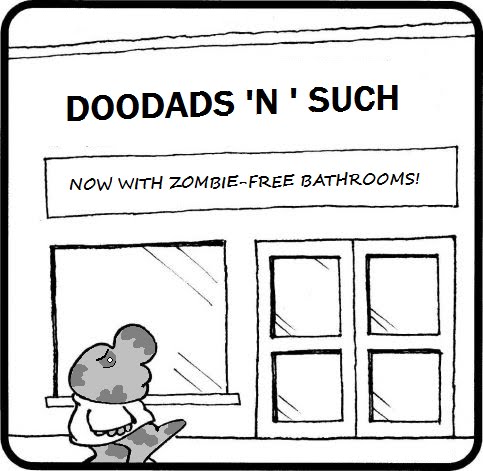
This is basically a reference to Zombieland. Those who have seen that movie will know why Doodads 'n' Such is making that promise.

And speaking of cultural references...

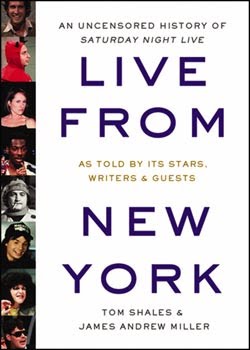
Not long ago, I read Doug Hill and Jeffrey Weingrad's fascinating 1985 book about the backstage history of Saturday Night Live, and it inspired to me to read another book on that very same topic. I'm currently about halfway through Live From New York: An Uncensored History of Saturday Night Live by Tom Shales and James Andrew Miller. The Shales/Miller book came out in 2002, about 17 years after the Hill/Weingrad book, and is therefore able to cover about 17 more seasons of SNL history. The first book ends just as producer/creator Lorne Michaels was returning to the show after a five-year absence. Lorne's been running the show ever since, of course. Of the two books, though, I'd say that Backstage History is actually a better, more compelling read than Uncensored History even though the latter covers more ground. The first book takes a tougher, more journalistic approach to the subject matter, while the Shales/Miller book is -- in the author's own words -- a "tribute" to SNL and Lorne Michaels, warts and all. Even so, both books contain a lot of dirt about the venerable late-night show, and in the latter book I found this great quote by SNL writer Bernie Blaustein describing the relationship between Eddie Murphy and Joe Piscopo. Piscopo and Murphy were the only two cast members who survived the show's disastrous 1980 season, and they became friends in real life and frequent comedic partners on the show until Eddie Murphy's ascent into superstardom changed their dynamic.
I think it was hard for Joe. It was hard for both of them. I think when Joe saw Eddie eclipsing him tremendously, it was hard. The relationship changes. They're no longer equals. Joe was a really good impressionist. He worked really hard on mannerisms, to get an impression down. And Eddie would then just be able to do that same impression -- boom -- like that.
That quote really struck me, because it reminded me so much of one of my very favorite movies, Milos Forman's 1984 Oscar winner Amadeus, which coincidentally was made right around the time that Eddie Murphy was becoming a Hollywood superstar. Amadeus is probably the best movie ever made about the creative process and professional jealousy. Please, please go read Roger Ebert's 2002 essay about it. (Wow, Ebert's essay came out the same year as that second SNL book. Freaky.) Anyway, I'd like to show you my very favorite scene from Forman's film, one which perfectly captures the relationship between Salieri and Mozart. As Ebert points out, Salieri makes composing look so difficult, while Mozart makes it look like a game:


PLEASE NOTE: I am well aware that Amadeus is mostly fictional. Its truths about the creative process are universal nevertheless. One might say that the movie fictionalizes in the interest of a greater truth.


Friday, October 21, 2011

(today's zomby) AND AN EQUALLY UNFUNNY UNSOLD TV PILOT!


What can I say, folks? They can't always be funny. Speaking of which...

Lately, I've been reading a fascinating book called Saturday Night: A Backstage History of Saturday Night Live by Doug Hill and Jeff Weingrad. It came out in 1986 and covers in great detail the early years of SNL -- the controversy, the backbiting, the infighting, the truly staggering intake of cocaine, etc. I'm just at the part when the original SNL is ending after five tumultuous seasons. This prompts the question, "Is there life after Saturday Night Live?" For the show's on-air performers, the answer is: "Maybe, if you're lucky." The question is a little trickier for the show's behind-the-scenes talent. Today, you and I are going to take a look at a clip by two talented men who struggled a bit after their SNL days were over, namely writer Michael O'Donoghue and filmmaker Walter Williams.

The two men could hardly be more different, temperamentally. Williams is the man behind the beloved Mr. Bill skits and other filmed pieces for SNL like Elvis Presley's Coat, in which the King's jacket goes on tour without him after the singer's death. By all accounts, Williams was a sweet, even-tempered guy, possibly a little naive when it came to the cutthroat ways of show business. O'Donoghue, on the other hand, was SNL's Dark Prince of Comedy, a temperamental but brilliant satirist who served as the show's first head writer and whose tantrums and mood swings were legendary. Some of O'Donoghue's problems may have been medical; he suffered severe migraines all his life and died of a cerebral hemorrhage at the age of 54 in 1994.

A mere two years before his death, O'Donoghue wrote a pilot for a potential sketch comedy show on the Fox Network. Walter Williams was brought on to direct. Clearly, Fox was looking to replicate the success of the early SNL. The resulting show, simply called TV, was not picked up, and looking at the existing footage from the pilot, it's (unfortunately) easy to see why. O'Donoghue's script is tired, and Williams' direction is flat. Almost nothing works, although you do get to see cameos by such luminaries as Brian Keith and Rutger Hauer. I'm sure they didn't know what they were doing in this show either. TV is a near-total failure as comedy, but it's fascinating as a historical document. Here, have a look: